




X Close

Yale braces for deportations as ICE campus crackdown escalates

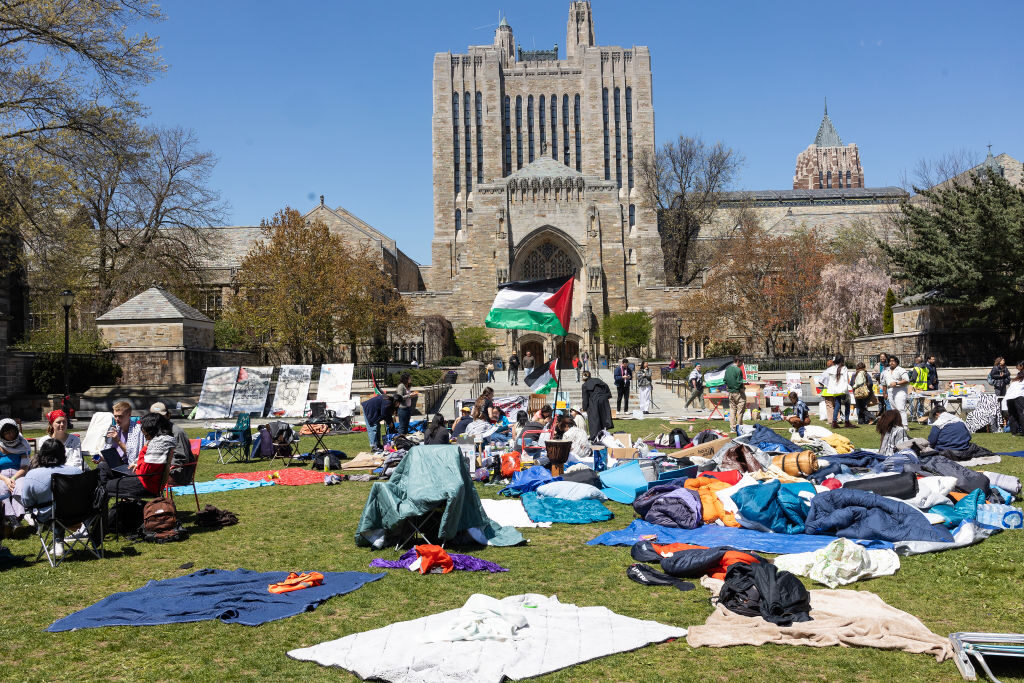
Pro-Palestine demonstrations at yale have attracted the Trump administration's attention. Credit: Getty

Pro-Palestine demonstrations at yale have attracted the Trump administration's attention. Credit: Getty

April 3 2025 - 7:20pm

New Haven, Connecticut

This week at Yale University, students received emails from their department heads professing “Support and Solidarity” as the threat of student deportations beckons. They issued new instructions to students on what to do if and when Immigration and Customs Enforcement (ICE) shows up on campus: ask for an officer’s credentials and call the campus police to try and delay detention.

Before this week, there was no mention of ICE in student immigration resources. However, following the high-profile detention of students at other universities, Yale is preparing to be next. Emails said the university in New Haven, Connecticut would not allow ICE officers in any “non-public” spaces, but that it would “comply” if the agency issues a warrant. Access to academic buildings, except libraries and museums, is now restricted to student ID holders. Students on visas, the emails said, must carry their immigration documents with them at all times and have their passport easily available. One department head wrote: “We want to affirm, unequivocally, our support for you — not only as students and scholars but as individuals with the right to think, speak, and act according to your conscience.”

All this serves to demonstrate the Trump administration’s widening presence on America’s elite campuses. ICE officers were not previously allowed on university grounds, but changing this policy is part of the President’s larger crackdown on colleges with significant pro-Palestinian protests.

Yale’s emails anticipate a crackdown like that witnessed at Columbia, where pro-Palestinian activist Mahmoud Khalil was detained last month. Though Khalil has a green card, and was arrested as a threat to national security, he faces deportation for failing to state that he was an unpaid intern at the United Nations. At Tufts last week, PhD student Rumeysa Ozturk was dragged into an unmarked van by masked ICE officers. She has yet to be charged with an offense.

Amid swirling rumors of an ICE sighting on campus, an international student at Yale described himself as “terrified” and “afraid to walk alone” for fear of abduction by officers. Another told me she was “seriously considering” leaving America. Almost a thousand Yale students turned up to a “know your rights” webinar this week, while student organizers have sought out pro-bono lawyers.

Alongside threats of withdrawing funding for universities, ICE officers and the State Department are going above college administrators to deport students, often without informing the universities. Trump is keeping good on his promise, having posted on 4 March that “All Federal Funding will STOP for any College, School, or University that allows illegal protests. Agitators will be imprisoned/or permanently sent back to the country from which they came.”

Yale is preparing for a federal funding investigation like the one Columbia recently faced; and the week before the ICE emails were sent out, administrators asked all department chairs and directors of graduate studies to send a report of the DEI initiatives in their programs. In light of Trump’s plan to review billions in funding for Harvard, Yale officials believe that their college could be next. As Yale’s president Maurie McInnis said on Wednesday: ‘”We will always follow the federal law. We have to.”

Even on campuses without an ICE presence, over the past week hundreds of international students across the country have received emails from the State Department asking them to “self-deport“, citing social media posts and involvement in campus protests as reasons for their visa being revoked. Secretary of State Marco Rubio said he had revoked more than 300 visas, telling reporters: “They’re here to go to class. They’re not here to lead activist movements that are disruptive and undermine our universities. I think it’s lunacy to continue to allow that.”

What increasing ICE presence on college campuses shows is that the administration doesn’t need to make many deportations to scare away students who were involved in Palestine protests. The threatening sight of high-profile deportations across the country is sufficient deterrent even for those who haven’t committed a crime. Yale is far from an isolated case: universities across America are locking their doors and sending out emails, preparing for the arrival of ICE. More deportations surely lie ahead.

Jane Roberts is a student at Yale University.


China is threatening America in the AI race

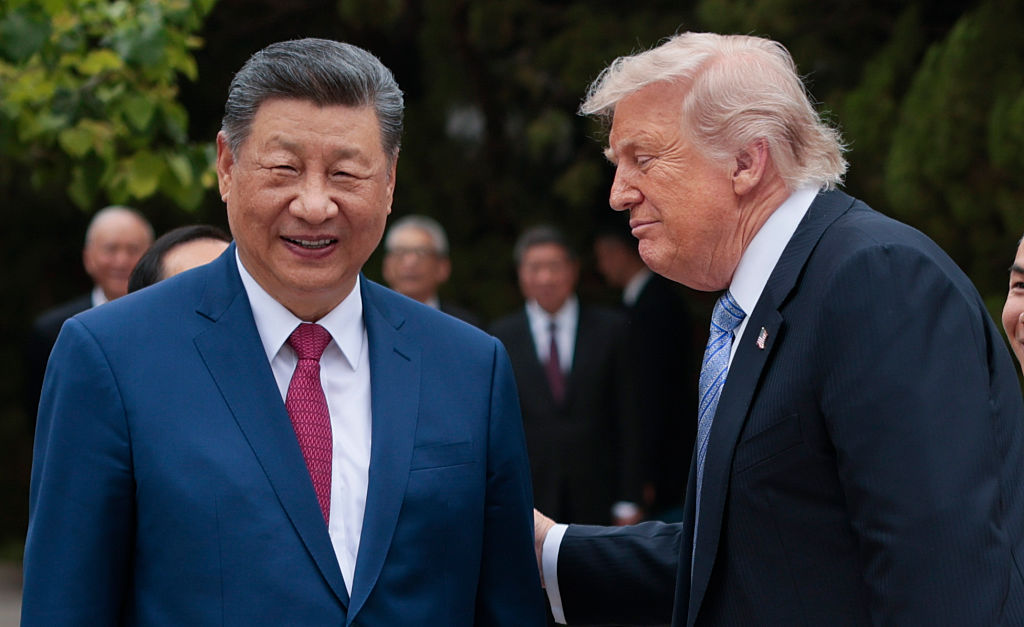
Reports sugget Zhipu AI  has released a new model that can rival leading US systems. Credit: Getty

Reports sugget Zhipu AI has released a new model that can rival leading US systems. Credit: Getty

July 1 2026 - 10:18am

China is trying to catch up with America on artificial intelligence. The Wall Street Journal has reported that Zhipu AI — one of China’s six “AI tiger” LLMs — has released a new model that can rival leading US systems, including Anthropic’s Mythos, in cybersecurity tasks such as pinpointing security bugs. While this marks a milestone in China’s drive to catch up with Western AI capabilities, strong performance on a single benchmark does not mean it has taken the lead. Chinese models still lag behind their Western counterparts in broader capabilities, such as autonomous operation. Skepticism is therefore warranted before resorting to hysterical conclusions, but complacency about the geopolitical implications of China’s AI advances would be an even greater mistake.

On the infrastructure side, Chinese AI is still constrained by access to advanced chips, with American labs way ahead in computing capacity as well as investment. Analysis from earlier this year suggests that Chinese models are likely to be at least a few months behind those in the US. But they are still continuing to make progress, or that the geopolitical importance of AI will be decided only by whose LLM has ventured deeper into the technological frontier. The practical applications of AI, countries’ to capture foreign markets, and the application of AI into the real economy will matter just as much.

Here, China may hold an advantage. As with its dominance across many critical supply chains, Beijing may not need to produce the most advanced AI systems — only those that are affordable and widely deployable. In doing so, it could consolidate global influence by supplying functional, low-cost AI at scale.

Beijing seems to be pursuing exactly that path, developing an AI “open-source” strategy that offers affordable, widely available AI models for companies and individuals to use and modify as they wish. The production of the DeepSeek AI model, which matched the performance of Silicon Valley tools such as ChatGPT at a fraction of the cost for users, created goodwill among Chinese models with developers.

The four most popular models on OpenRouter, an AI hardware platform for developers, are now all Chinese. The goal for China is not only to win the frontier-model race, but to make its systems the default layer of AI adoption across industries and global markets. For most economies, the choice is increasingly between an affordable tool they can deploy now and a more robust one that may be out of reach.

And while the countries adopting Chinese models may be exposed to political pressure and cyber threats from Beijing, safer and more capable alternatives matter little if they are unaffordable. American AI companies are already under pressure to monetize products whose operating costs are rising. If Chinese open-source models become the cheap default for startups, universities, governments and businesses across the developing world, then America’s AI lead will be eroded from below.

Perhaps more concerning for America in the long run is how AI can give Chinese manufacturing even more strength, through the ongoing integration of AI as a general-purpose technology. China’s new Five-Year Plan mentioned AI more than 50 times and includes an “AI+” action plan aimed at spreading AI across the economy.

Beijing has been pioneering automation of its critical infrastructure for years, with promising recent results in increasing warplane production capacity. In that regard, China’s open-model strategy and manufacturing dominance will reinforce each other. Cheap, adaptable models accelerate deployment across the real economy while those deployments generate real-world data and use cases that can feed back into further model improvement.

The United States should not dismiss the importance of its lead in the AI race. That lead worries Beijing, not least because a more automated Chinese economy would also become more vulnerable to AI-generated cyber threats. But nor should Washington assume that China cannot catch up with American capabilities over time.

This AI competition represents part of a broader struggle over tech supply chains and geopolitical influence. Decisions over whether to adopt US or Chinese models could produce a more fragmented global reality, with different regions relying on different cloud providers, chips and security structures. The result will likely be a global economy which is divided into competing spheres, rather than one which produces a single winner.


Miquel Vila is a political and geopolitical risk consultant focusing on industrial strategy, critical infrastructure and global supply chains.

miquelvilam