



X Close

Will Trump‘s ‘Big Beautiful Bill’ come back to haunt him?

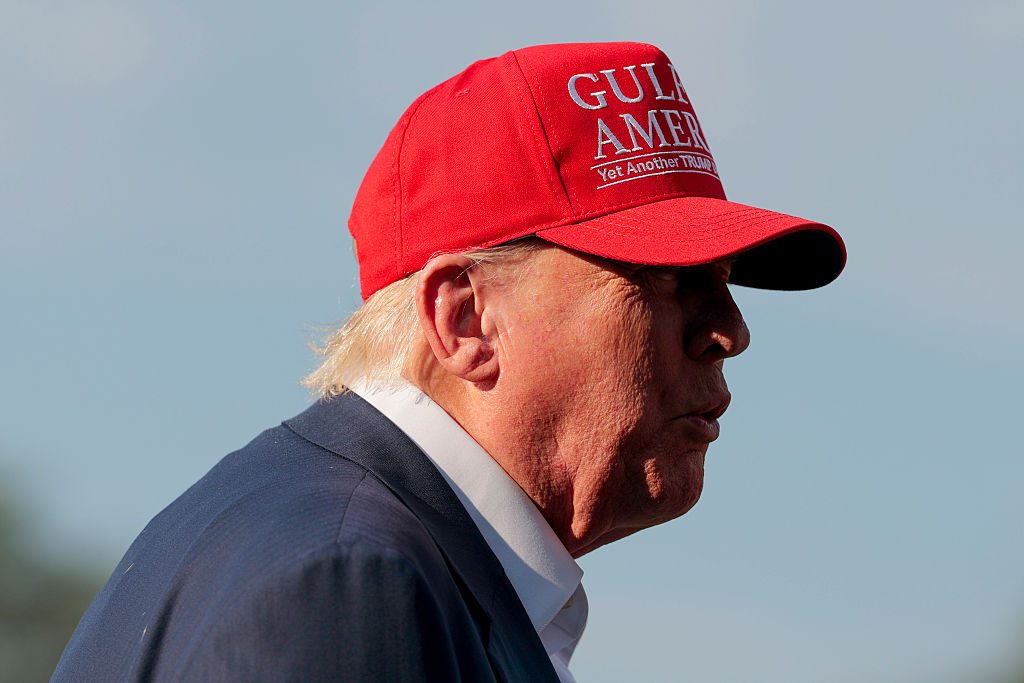
A Pyrrhic victory? Credit: Getty

A Pyrrhic victory? Credit: Getty

July 3 2025 - 7:30pm

Republicans were finally able to muscle the “One, Big Beautiful Bill” across the finish line today. Their only choices were to do nothing or to do something messy. If they went into the August recess without extending Donald Trump’s 2017 tax cuts, the congressional calendar would have made it less likely for a reconciliation package to come together. Failing to extend those tax cuts would have resulted in significant hikes, and that would have meant the “Liberation Day” tariffs would have lingered in the economy without major new incentives for domestic investment.

It was a Catch-22 for the GOP. The only way to do anything, given their slim majorities, was a reconciliation package, and the reconciliation process was always going to involve compromises that kept moderates on board with populists. As Rep. Jim Jordan said yesterday on CNN: “This is probably as good as it’s going to get.”

Trump and the GOP leadership sweetened the deal by including substantial funding for immigration enforcement, meaning that the bill could practically be sold as border legislation. For the populists, the President’s no-tax-on-tips and no-tax-on-overtime proposals were included, along with baby bonuses and a boosted child tax credit. Fiscal hawks got work requirements for Medicaid, which were swallowed by New Right officials like Sen. Josh Hawley who were forced to conclude a flawed bill was still better than no bill.

But while the bill is a clear political win for Donald Trump, House Speaker Mike Johnson, and Senate Majority Leader John Thune, it still leaves them with ownership of a massive piece of legislation that is projected to increase the debt and pays for tax cuts that ultimately benefit wealthy Americans more than other brackets, while making cuts to Medicaid.

The Economist put it well by arguing the OBBB “sutures to a body of government-shrinking Reaganism an appendage of populist Trumpism, both disfigured by carve-outs and fillips for individual lawmakers.” This bill is the manifestation of a party lurching through a transformation, saddled with the baggage of the past and present all at once, forced to balance both. The bill does not represent a coherent populism or coherent austerity. It’s a little bit of both, just enough to keep everyone happy, and just enough to make everyone mad.

While the chattering class is acting like Republicans had a choice, they painted themselves into a corner slowly over the course of a decade. There is nothing significant to be done about the national debt in one bill, though Elon Musk seemed to get the wrong impression that Trump would usher in a new era of fiscal responsibility with slim majorities in Congress. There is no world in which the White House could pass a Vance-endorsed populist’s dream bill without the makeup of the Senate being greatly altered.

At the end of the day, the one factor that manages to unite almost every Republican in Congress is Donald Trump. As soon as the deal got his stamp of approval, the party leadership had what it needed to start winding down the clock. The operating ideology of the GOP is whatever the President needs it to be.


Emily Jashinsky is UnHerd‘s Washington correspondent.

emilyjashinsky

China is threatening America in the AI race

Reports sugget Zhipu AI  has released a new model that can rival leading US systems. Credit: Getty

Reports sugget Zhipu AI has released a new model that can rival leading US systems. Credit: Getty

July 1 2026 - 10:18am

China is trying to catch up with America on artificial intelligence. The Wall Street Journal has reported that Zhipu AI — one of China’s six “AI tiger” LLMs — has released a new model that can rival leading US systems, including Anthropic’s Mythos, in cybersecurity tasks such as pinpointing security bugs. While this marks a milestone in China’s drive to catch up with Western AI capabilities, strong performance on a single benchmark does not mean it has taken the lead. Chinese models still lag behind their Western counterparts in broader capabilities, such as autonomous operation. Skepticism is therefore warranted before resorting to hysterical conclusions, but complacency about the geopolitical implications of China’s AI advances would be an even greater mistake.

On the infrastructure side, Chinese AI is still constrained by access to advanced chips, with American labs way ahead in computing capacity as well as investment. Analysis from earlier this year suggests that Chinese models are likely to be at least a few months behind those in the US. But they are still continuing to make progress, or that the geopolitical importance of AI will be decided only by whose LLM has ventured deeper into the technological frontier. The practical applications of AI, countries’ to capture foreign markets, and the application of AI into the real economy will matter just as much.

Here, China may hold an advantage. As with its dominance across many critical supply chains, Beijing may not need to produce the most advanced AI systems — only those that are affordable and widely deployable. In doing so, it could consolidate global influence by supplying functional, low-cost AI at scale.

Beijing seems to be pursuing exactly that path, developing an AI “open-source” strategy that offers affordable, widely available AI models for companies and individuals to use and modify as they wish. The production of the DeepSeek AI model, which matched the performance of Silicon Valley tools such as ChatGPT at a fraction of the cost for users, created goodwill among Chinese models with developers.

The four most popular models on OpenRouter, an AI hardware platform for developers, are now all Chinese. The goal for China is not only to win the frontier-model race, but to make its systems the default layer of AI adoption across industries and global markets. For most economies, the choice is increasingly between an affordable tool they can deploy now and a more robust one that may be out of reach.

And while the countries adopting Chinese models may be exposed to political pressure and cyber threats from Beijing, safer and more capable alternatives matter little if they are unaffordable. American AI companies are already under pressure to monetize products whose operating costs are rising. If Chinese open-source models become the cheap default for startups, universities, governments and businesses across the developing world, then America’s AI lead will be eroded from below.

Perhaps more concerning for America in the long run is how AI can give Chinese manufacturing even more strength, through the ongoing integration of AI as a general-purpose technology. China’s new Five-Year Plan mentioned AI more than 50 times and includes an “AI+” action plan aimed at spreading AI across the economy.

Beijing has been pioneering automation of its critical infrastructure for years, with promising recent results in increasing warplane production capacity. In that regard, China’s open-model strategy and manufacturing dominance will reinforce each other. Cheap, adaptable models accelerate deployment across the real economy while those deployments generate real-world data and use cases that can feed back into further model improvement.

The United States should not dismiss the importance of its lead in the AI race. That lead worries Beijing, not least because a more automated Chinese economy would also become more vulnerable to AI-generated cyber threats. But nor should Washington assume that China cannot catch up with American capabilities over time.

This AI competition represents part of a broader struggle over tech supply chains and geopolitical influence. Decisions over whether to adopt US or Chinese models could produce a more fragmented global reality, with different regions relying on different cloud providers, chips and security structures. The result will likely be a global economy which is divided into competing spheres, rather than one which produces a single winner.


Miquel Vila is a political and geopolitical risk consultant focusing on industrial strategy, critical infrastructure and global supply chains.

miquelvilam
