




X Close

Why is the media silent about Iryna Zarutska’s murder?

Iryna Zarutska was murdered on a bus in Charlotte, North Carolina. 
Credit: X

Iryna Zarutska was murdered on a bus in Charlotte, North Carolina. Credit: X

8 September 2025 - 10:00am

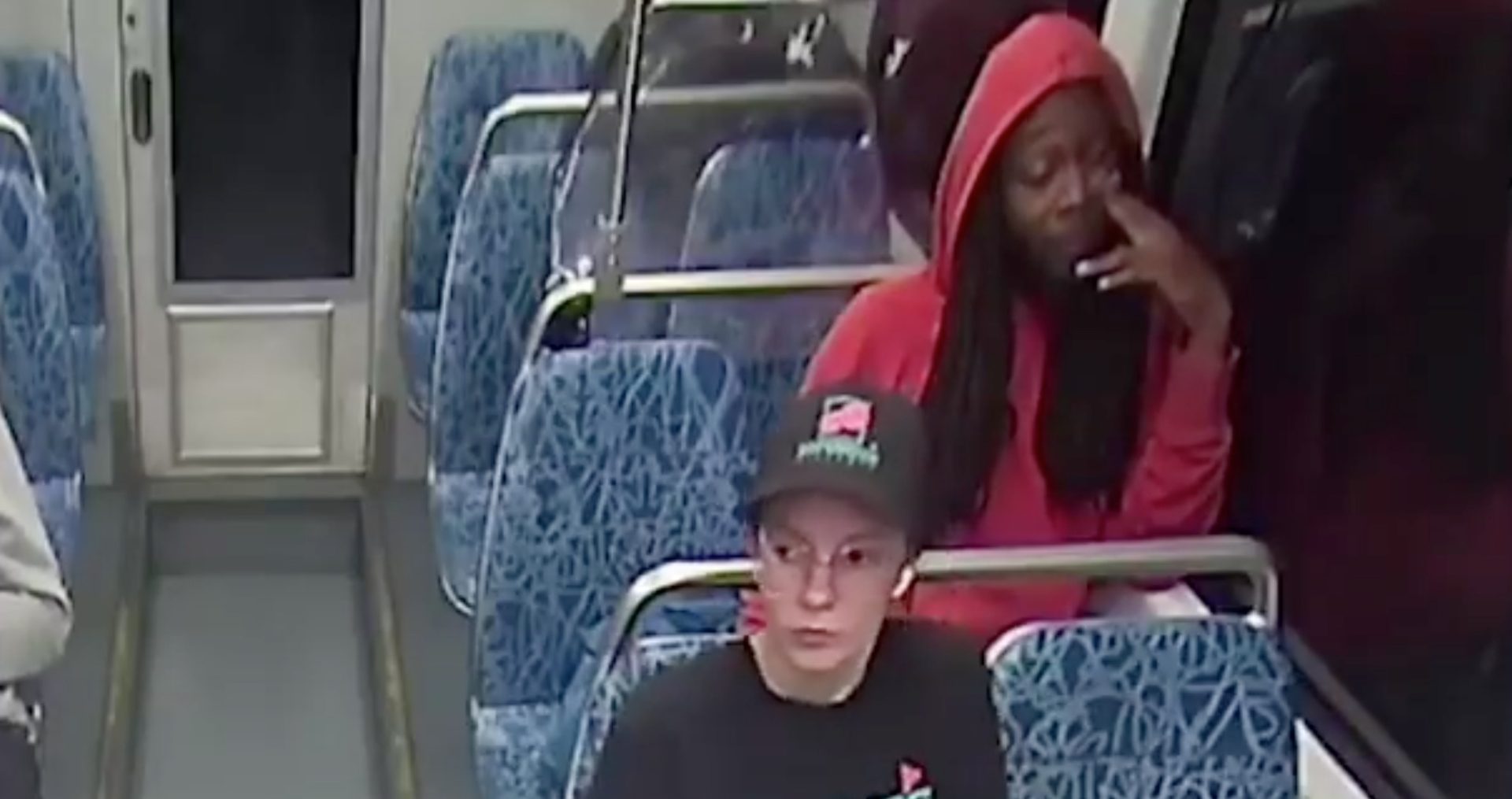
A video showing the murder of 23-year-old Ukrainian refugee Iryna Zarutska on public transport in Charlotte, North Carolina, has sent shockwaves round the world. It has also reignited debate over the widening ideological gulf in news reporting. The video shows Zarutska sitting alone, scrolling her phone, while behind her Decarlos Williams, a 35-year-old black man with a long history of arrest and diagnosed schizophrenia, rises to his feet and swings a knife toward her unsuspecting neck.

The incident reached viral escape velocity when Elon Musk reposted a comment on X noting the dearth of coverage in progressive outlets, a media omertà that still largely holds at the time of writing. But this relative silence is perhaps unsurprising. Every detail of the incident cuts against the received progressive worldview, on so many angles and with so total an absence of confounding counter-narrative, that no Left-wing outlet could report on it without fearing its weaponisation by the Right, within the perennially sensitive topic of American race politics.

This unhappy subject could — and does — fill whole libraries, but is especially bitter where crime statistics are concerned. Debate over the reality, aetiology, and proper response to documented per-capita disparities in criminal violence between white and black Americans is itself too bottomless a source of partisan online discourse to be readily summarised. But this subject periodically bubbles up in the culture war: among other recent controversies, this topic shaped partisan interpretations of George Floyd’s death in 2020, the subsequent Black Lives Matter craze, efforts to “defund the police”, and ongoing debates over urban homelessness, drug use, and shoplifting.

Latterly, too, it provided the subtext to high-profile incidents such as the death of Jordan Neely, who was black, while restrained on a NYC subway by white military veteran Daniel Penny. Penny was later tried for homicide, and finally acquitted. It also fuelled public debate around the death by stabbing of 17-year-old high school athlete Austin Metcalf, who was white, by black fellow student Karmelo Anthony at a school athletics event.

In addition to alleging a racialised disparity in propensity to criminal violence, the Right also claims that the progressive press seeks methodically to report cases so as to invert this disparity. That such violence is preponderantly and unjustly perpetrated by white people, especially police officers, against black Americans, was the animating claim that drove the Black Lives Matter protests and subsequent calls to “defund the police”. In a similar vein, there are dozens of New York Times articles on the Daniel Penny trial, while I could find none on the death of Austin Metcalf.

It is hardly surprising, in this febrile context, that Zarutska’s murder has been so widely reported by Right-wing outlets, not just for its shocking brutality but also as an example of this media bias in action. The victim’s slenderness, youth and prettiness makes her the perfect martyr. Nor should we be surprised that the progressive press has struggled to frame the attack. Unlike the Daniel Penny incident, there is no ambiguity over what happened: the video shows an unprovoked and senseless attack on a defenceless lone white woman by a black man with a knife. Worse still, the victim isn’t even the privileged white woman of progressive demonology, but a refugee who, in a different context, would automatically elicit progressive protective instincts.

Putting all this together, there is simply no obvious way to make her murder intelligible within American race politics in a way that does not serve Right-wing narratives. It thus appears that those outlets which most zealously oppose such narratives have either not registered it as having occurred, or opted not to report it.

The world is full of stories, and no publication can document them all. But the difficulty today is that all such selection mechanisms now coexist online, in readily searchable form; anyone who so wishes can toggle back and forth between perspectives, and draw their own conclusions about how, and from what ingredients, the sausage of “news” is made. For those who set any stock at all in the need for a polity to inhabit an at least somewhat shared reality, this is not a reassuring picture.

Especially in the age of viral AI slop, no one should celebrate or seek to hasten the disintegration of a shared reality or commitment to truth in the media. Notwithstanding any putative political bias, my sense is that this is well understood across the legacy press, including the progressive side. Such outlets would do well to consider that a reputation for objectivity turns not just on how a story is reported but also if it is — especially where a story challenges comfortable ideological narratives.


Mary Harrington is a contributing editor at UnHerd.

moveincircles

Why British farmers love Farage

Reform UK has made significant inroads into the rural vote. Credit: Getty

Reform UK has made significant inroads into the rural vote. Credit: Getty

3 June 2026 - 7:00am

“I don’t think there’s a farmer alive who’s Labour anymore,” celebrity petrolhead turned agricultural champion Jeremy Clarkson told Times Radio earlier this week.

Dramatic stuff, although it does raise the question of how many Labour-supporting farmers there were in the first place. The extinction of the dinosaurs was significant because they once ruled the world. Farmers who vote Labour, meanwhile, have long been a tiny minority. Though the most recent Farmers Weekly Sentiment Survey, published in January, found just 1% support for Labour among the group, this collapse came from the towering peak of… 4% at the last general election.

Paper after paper has been produced on “Labour’s Rural Problem”, a turn of phrase coined by Angela Eagle in a 2015 report that has defined all the party’s subsequent faltering efforts at countryside reconnection. “Rural” does not, however, necessarily mean “farming”. Despite its torrid years of rural rejection and 4% support among farmers, Labour managed to win 135 rural and semi-rural seats in 2024. A bright new dawn for red rosettes on country lanes appeared to be at hand.

Or not. Earlier this year, More in Common produced an MRP poll that predicted a rural wipeout for Labour. A generational opportunity for an electoral reset has seemingly been squandered in less than two years. The pollster chalked the countryside collapse up to the same issues vexing the rest of the country, but noted one vital accelerant to the bonfire of Labour support: the imposition of the family farm tax. Farmers may not deliver the rural vote singlehandedly, but farming is a totemic issue in the countryside, a signal of a Government’s priorities.

More in Common also pointed to the beneficiaries of the Labour retreat, the “formidable advance” of Reform UK. The latest Farmers Weekly Sentiment Survey found that backing for Reform had shot up from 15% in 2024 to 40% by the end of 2025, with Tory support falling from 57% to 28%. Clarkson made the same observation. Historically, the great majority of those votes could be expected to flow to the Conservative Party, yet Clarkson says the farmers he knows, particularly younger ones, are turning to Nigel Farage.

To an extent, this is likely an extension of the “ordinary voter” rule formulated this week by Labour MP Connor Naismith, commenting on trade-unionist support for Reform. Naismith is not surprised, because trade unionists are “normal working people”, and right now “normal working people” are clearly opting for Reform. The same is apparently true of farmers, probably more so because farmers are historically small-c conservative and Reform is at present the ascendant Right-wing party.

Another factor, as true for farmers as for everyone else, is the baggage of 14 years of Conservative government. The Tories carry with them the whiff of failure to deliver a post-Brexit settlement that works for farmers. The muddle-headed attempt to replace European Union payments with a system that rewarded environmental efforts, while negotiating trade deals with New Zealand and Australia, was characterised at the time as raising standards at home while lowering standards overseas.

So while young farmers feel personally targeted by Labour’s inheritance tax, which threatens their ability to take over their family farms, this uncertainty did not hit a farming sector confident in its own future. Farming was already suffering economic shocks, workforce issues and broken supply chains, for which many farmers lay the blame at the Tory door.

Reform UK is shiny and new, with no record to defend. No record, that is, other than Brexit itself. In 2023, a different Farmers Weekly survey found that 69% of farmers were “counting the cost of Brexit”, noting a negative impact on their business. Brexit is baked into the Reform brand, and while many farmers can look past this, some might view farmers climbing aboard the Farage train as akin to turkeys voting for Christmas.

A clean sweep of the farming community is therefore far from inevitable for Reform. Various agricultural woes stem from a Brexit many see as mishandled, though one thing we learned from the 2016 referendum is that appeals to economic pragmatism don’t fare well against campaigns that speak to the heart.

People often assume farmers will always “follow the money”, but there is a cultural thickness around agriculture that insulates it from utilitarian argument yet makes it hungry for rhetoric that honours the efforts of British farmers to feed the nation. Right now, Reform is winning that rhetorical battle with a patriotic, pro-farming message.


Liam Stokes is a writer and environmentalist.

LNJStokes