



X Close

Was Rishi Sunak right all along?

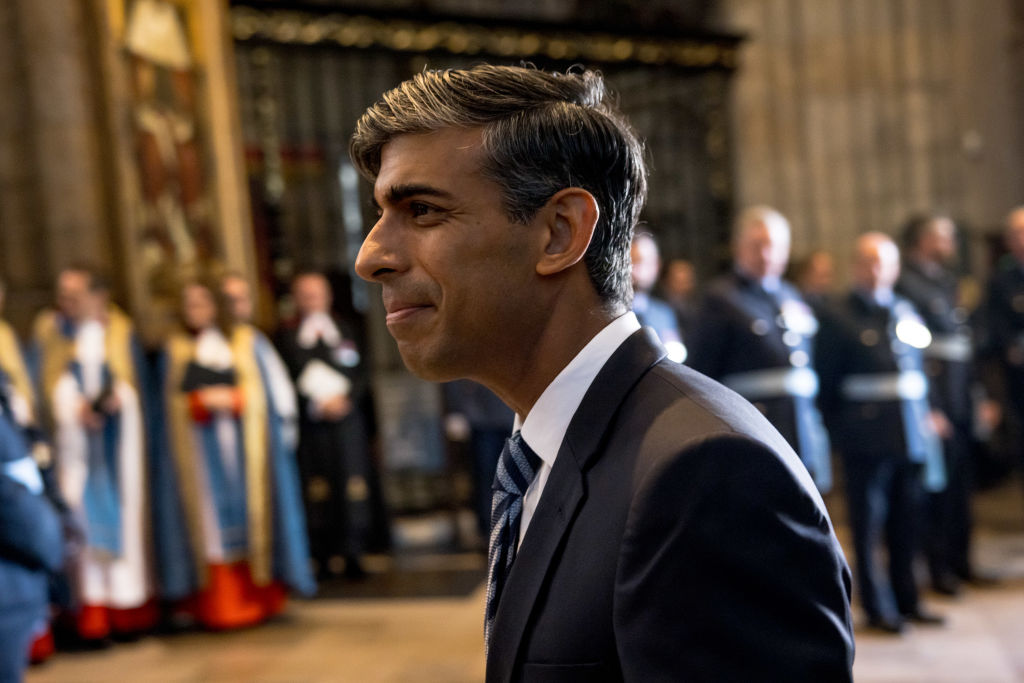
The Tory Cassandra. Credit: Getty

The Tory Cassandra. Credit: Getty

31 October 2024 - 7:00am

In his response to Wednesday’s Budget, we saw a flash of what Rishi Sunak could have been. His final appearance as Tory leader was energetic and animated. He cut into Labour’s tax plans incisively and buoyed the spirits of the Opposition MPs behind him. It was a side we rarely saw during his time in Downing Street, but it would have been welcome.

More than that, Sunak was once again proven correct. He had spent the summer warning that Labour would bring in unheralded tax rises, testing its pledges around “working people to the limit”. He was vindicated. It wasn’t the first time, either. In another contest two years ago, he spent a summer warning the world about his opponent’s plans, only to be roundly beaten before being proven right in the autumn. Unlike with Liz Truss, however, this time he won’t be handed a second chance.

Instead, it is now time for Sunak to ponder his legacy. For most prime ministers, it seems, being out of office reflects well on them. Theresa May has enjoyed a particular rehabilitation, perhaps in light of those who came after. For Rishi, you can see it shaping up already — more focus on the praise he received for his Covid-19 response as Chancellor, an acknowledgement that the Tory Party he took over was already sunk, added to those correct positions on the economy, and in hindsight he perhaps doesn’t look that bad.

Perhaps Sunak’s real tragedy was the speed of his ascendancy. It is really quite remarkable that he is a washed-up has-been of Westminster already. An ex-prime minister at just 44 years old, less than a decade after becoming an MP, is an amazing speed-run of political life. It is perhaps also a sign that the chaos of the Conservative Party wasted his talents.

Sunak had his strengths but was let down both by himself and by those around him. He took over a party that had worn through its talents and its enthusiasm for governing. His own limitations didn’t help. He had little instinct for what he wanted to do with power, making his government listless. He was also quite bad at politics, from making unforced errors such as the D-Day debacle to failing to find a proper strategic vision for his premiership.

With a little more time, he might have avoided this. He was party leader in a difficult time, but also before he was ready. He’d barely experienced general elections from the inside, nor had time in junior ministries to hone his political viewpoints. His radical rise, first to chancellor, then PM, came at the expense of learning the slower lessons of Westminster. In an alternative world, Sunak is perhaps an entrant in the current leadership contest, pitching to rebuild the party after someone else broke it.

Unfortunately for politicians, they don’t get to choose the hand dealt to them. The rapid rise and deep fall is probably not what Sunak would have planned for himself, but it’s what fortune thrust upon him. He might be commended for taking on the leadership in dire straits, but the records will always show the disastrous election he presided over. In the brutality of Westminster, being right rarely makes up for losing.

Sunak has used his time as leader of the Opposition as a useful valedictory. He has probably enjoyed it more than the difficulties of governing and has equipped himself well. It may not be enough to save his reputation, but it has perhaps been a glimpse of what he could have achieved in different circumstances. Now, he will likely slip into quiet on the backbenches and then out of Westminster altogether, his experience serving as a warning to the next Westminster wunderkind that too much too soon can be a disastrous thing.


John Oxley is a corporate strategist and political commentator. His Substack is Joxley Writes.

Mr_John_Oxley

China is threatening America in the AI race

Reports sugget Zhipu AI  has released a new model that can rival leading US systems. Credit: Getty

Reports sugget Zhipu AI has released a new model that can rival leading US systems. Credit: Getty

1 July 2026 - 10:18am

China is trying to catch up with America on artificial intelligence. The Wall Street Journal has reported that Zhipu AI — one of China’s six “AI tiger” LLMs — has released a new model that can rival leading US systems, including Anthropic’s Mythos, in cybersecurity tasks such as pinpointing security bugs. While this marks a milestone in China’s drive to catch up with Western AI capabilities, strong performance on a single benchmark does not mean it has taken the lead. Chinese models still lag behind their Western counterparts in broader capabilities, such as autonomous operation. Skepticism is therefore warranted before resorting to hysterical conclusions, but complacency about the geopolitical implications of China’s AI advances would be an even greater mistake.

On the infrastructure side, Chinese AI is still constrained by access to advanced chips, with American labs way ahead in computing capacity as well as investment. Analysis from earlier this year suggests that Chinese models are likely to be at least a few months behind those in the US. But they are still continuing to make progress, or that the geopolitical importance of AI will be decided only by whose LLM has ventured deeper into the technological frontier. The practical applications of AI, countries’ to capture foreign markets, and the application of AI into the real economy will matter just as much.

Here, China may hold an advantage. As with its dominance across many critical supply chains, Beijing may not need to produce the most advanced AI systems — only those that are affordable and widely deployable. In doing so, it could consolidate global influence by supplying functional, low-cost AI at scale.

Beijing seems to be pursuing exactly that path, developing an AI “open-source” strategy that offers affordable, widely available AI models for companies and individuals to use and modify as they wish. The production of the DeepSeek AI model, which matched the performance of Silicon Valley tools such as ChatGPT at a fraction of the cost for users, created goodwill among Chinese models with developers.

The four most popular models on OpenRouter, an AI hardware platform for developers, are now all Chinese. The goal for China is not only to win the frontier-model race, but to make its systems the default layer of AI adoption across industries and global markets. For most economies, the choice is increasingly between an affordable tool they can deploy now and a more robust one that may be out of reach.

And while the countries adopting Chinese models may be exposed to political pressure and cyber threats from Beijing, safer and more capable alternatives matter little if they are unaffordable. American AI companies are already under pressure to monetize products whose operating costs are rising. If Chinese open-source models become the cheap default for startups, universities, governments and businesses across the developing world, then America’s AI lead will be eroded from below.

Perhaps more concerning for America in the long run is how AI can give Chinese manufacturing even more strength, through the ongoing integration of AI as a general-purpose technology. China’s new Five-Year Plan mentioned AI more than 50 times and includes an “AI+” action plan aimed at spreading AI across the economy.

Beijing has been pioneering automation of its critical infrastructure for years, with promising recent results in increasing warplane production capacity. In that regard, China’s open-model strategy and manufacturing dominance will reinforce each other. Cheap, adaptable models accelerate deployment across the real economy while those deployments generate real-world data and use cases that can feed back into further model improvement.

The United States should not dismiss the importance of its lead in the AI race. That lead worries Beijing, not least because a more automated Chinese economy would also become more vulnerable to AI-generated cyber threats. But nor should Washington assume that China cannot catch up with American capabilities over time.

This AI competition represents part of a broader struggle over tech supply chains and geopolitical influence. Decisions over whether to adopt US or Chinese models could produce a more fragmented global reality, with different regions relying on different cloud providers, chips and security structures. The result will likely be a global economy which is divided into competing spheres, rather than one which produces a single winner.


Miquel Vila is a political and geopolitical risk consultant focusing on industrial strategy, critical infrastructure and global supply chains.

miquelvilam
