



X Close

Was Biden’s cancer diagnosis covered up?

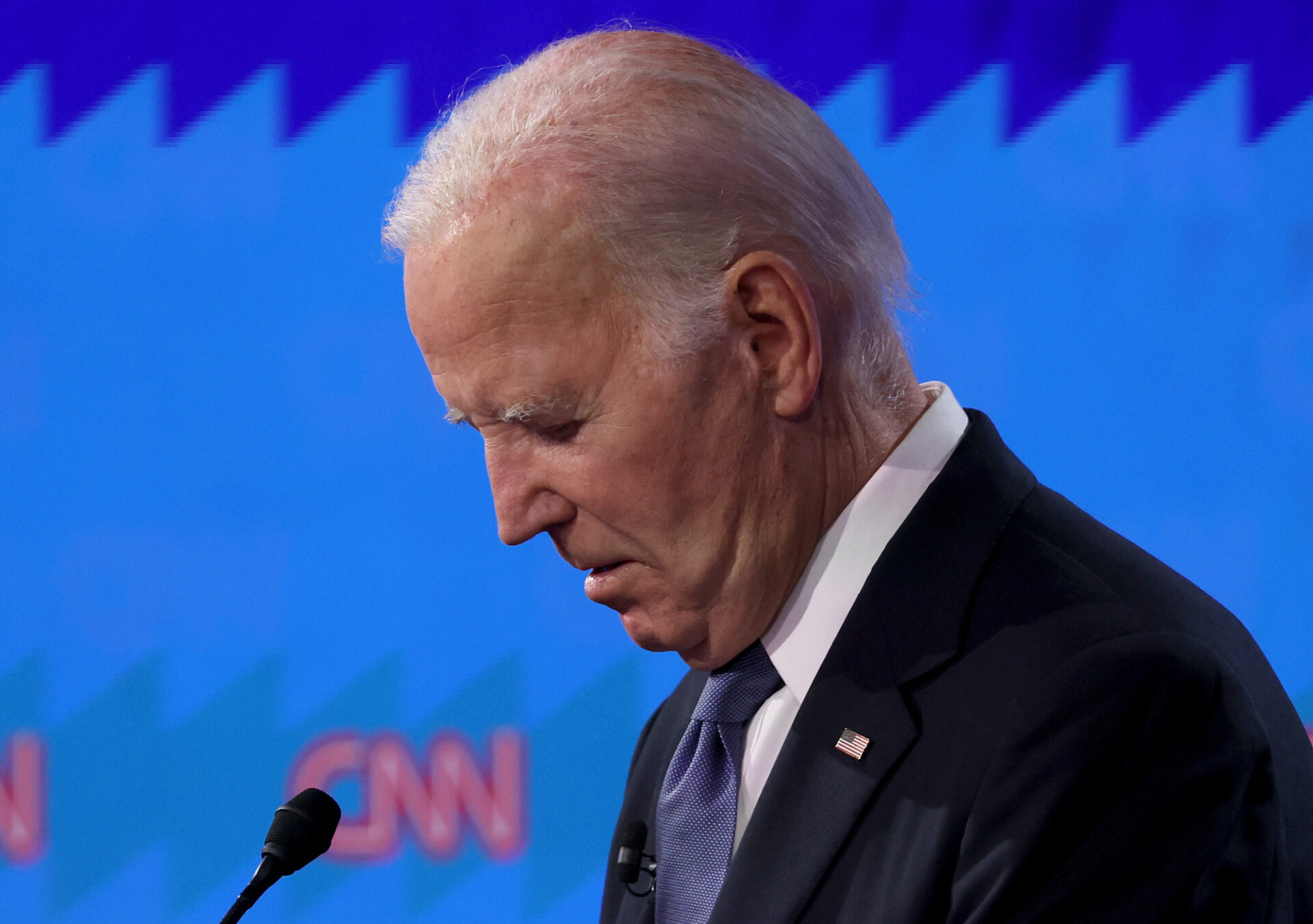
Joe Biden was diagnosed with stage 4 prostate cancer. Credit: Getty

Joe Biden was diagnosed with stage 4 prostate cancer. Credit: Getty

19 May 2025 - 9:30pm

The news of Joe Biden’s aggressive prostate cancer diagnosis, complete with bone metastasis and an exceedingly high Gleason score of 9 (a 1-10 system used to grade prostate cancer based on how abnormal the cancer cells look under a microscope), has created an awkward moment for Democrats. Those Right-wing voices who spent years speculating about Biden’s declining health — often dismissed as conspiracy theorists peddling outlandish claims — now find themselves in the position of being partially vindicated.

While we can debate the motives behind their assertions, the central claim that Biden was suffering from a serious health condition beyond normal ageing appears increasingly difficult to deny. Even The New York Times concedes as much.

Take Laura Loomer, the controversial Right-wing provocateur who claimed last July that Biden was in the “terminal stage of his illness,” citing an unnamed “medical source in DC.” At the time, her comments were widely dismissed as baseless fear-mongering. Now, less than a year later, those same assertions have an uncomfortable new resonance. A 2022 gaffe where Biden mentioned having cancer — previously explained away as a reference to minor skin cancers removed in 2021 — suddenly seems less like a verbal slip and more like the accidental disclosure of a more serious underlying condition.

What’s most damning about the current situation isn’t the diagnosis itself but the reaction from medical professionals. Dr. Howard Formman noted in The New York Post that it is “inconceivable” that Biden’s condition wasn’t being monitored before he left office. Dr. Steven Quay went further, suggesting it would constitute “malpractice” for a patient to first be diagnosed at such an advanced stage. Perhaps most pointedly, urologist Dr. David Shusterman compared Biden’s late-stage diagnosis to what he would expect from “a patient who hasn’t had medical attention in 10 years.”

At this point, we aren’t talking about fringe voices — these and others like them are medical professionals expressing genuine bewilderment at how the most closely monitored man in America could have such an advanced cancer diagnosed only after leaving office. The statement from Biden’s team that the diagnosis came after he “started having urinary symptoms” strains credulity. This is especially true when measured against standard medical practice for men over 50, which typically includes routine PSA blood tests capable of detecting prostate cancer long before it reaches such an advanced stage.

This pattern of presidential health concealment has a long and bipartisan history in American politics. When Woodrow Wilson suffered a debilitating stroke in 1919, his wife Edith effectively ran the executive branch for months, keeping the President’s condition hidden from Congress and the public. Franklin D. Roosevelt’s paralysis from polio was carefully managed through staged photo opportunities and press cooperation. John F. Kennedy’s severe back pain and Addison’s disease were concealed with the help of a cocktail of medications and accommodating media.

The difference today is that modern medical expectations and a more aggressive media make such concealment vastly more difficult — and potentially more scandalous. For Democrats, continuing negative disclosures about Biden’s wellbeing undermine trust in future messaging. If voters believe information about Biden’s condition was concealed, they’ll be more sceptical of other claims, from candidates’ health to the integrity of elections and the need to trust government-appointed experts. Meanwhile, for Republicans, it risks reinforcing a troubling pattern where even the most outlandish claims of their wildest provocateurs are entertained on the assumption that some kernel of truth might eventually emerge.

No campaign wants to admit vulnerability — every attempt to question Trump’s health has been met with aggressive pushback — and no administration wants to sow doubt about its leadership. But as Biden’s case shows, concealment can prove far more damaging once exposed. Ultimately, it’s the weakness that does the most damage — not the denial.


Oliver Bateman is a historian and journalist based in Pittsburgh. He blogs, vlogs, and podcasts at his Substack, Oliver Bateman Does the Work

MoustacheClubUS

China is threatening America in the AI race

Reports sugget Zhipu AI  has released a new model that can rival leading US systems. Credit: Getty

Reports sugget Zhipu AI has released a new model that can rival leading US systems. Credit: Getty

1 July 2026 - 10:18am

China is trying to catch up with America on artificial intelligence. The Wall Street Journal has reported that Zhipu AI — one of China’s six “AI tiger” LLMs — has released a new model that can rival leading US systems, including Anthropic’s Mythos, in cybersecurity tasks such as pinpointing security bugs. While this marks a milestone in China’s drive to catch up with Western AI capabilities, strong performance on a single benchmark does not mean it has taken the lead. Chinese models still lag behind their Western counterparts in broader capabilities, such as autonomous operation. Skepticism is therefore warranted before resorting to hysterical conclusions, but complacency about the geopolitical implications of China’s AI advances would be an even greater mistake.

On the infrastructure side, Chinese AI is still constrained by access to advanced chips, with American labs way ahead in computing capacity as well as investment. Analysis from earlier this year suggests that Chinese models are likely to be at least a few months behind those in the US. But they are still continuing to make progress, or that the geopolitical importance of AI will be decided only by whose LLM has ventured deeper into the technological frontier. The practical applications of AI, countries’ to capture foreign markets, and the application of AI into the real economy will matter just as much.

Here, China may hold an advantage. As with its dominance across many critical supply chains, Beijing may not need to produce the most advanced AI systems — only those that are affordable and widely deployable. In doing so, it could consolidate global influence by supplying functional, low-cost AI at scale.

Beijing seems to be pursuing exactly that path, developing an AI “open-source” strategy that offers affordable, widely available AI models for companies and individuals to use and modify as they wish. The production of the DeepSeek AI model, which matched the performance of Silicon Valley tools such as ChatGPT at a fraction of the cost for users, created goodwill among Chinese models with developers.

The four most popular models on OpenRouter, an AI hardware platform for developers, are now all Chinese. The goal for China is not only to win the frontier-model race, but to make its systems the default layer of AI adoption across industries and global markets. For most economies, the choice is increasingly between an affordable tool they can deploy now and a more robust one that may be out of reach.

And while the countries adopting Chinese models may be exposed to political pressure and cyber threats from Beijing, safer and more capable alternatives matter little if they are unaffordable. American AI companies are already under pressure to monetize products whose operating costs are rising. If Chinese open-source models become the cheap default for startups, universities, governments and businesses across the developing world, then America’s AI lead will be eroded from below.

Perhaps more concerning for America in the long run is how AI can give Chinese manufacturing even more strength, through the ongoing integration of AI as a general-purpose technology. China’s new Five-Year Plan mentioned AI more than 50 times and includes an “AI+” action plan aimed at spreading AI across the economy.

Beijing has been pioneering automation of its critical infrastructure for years, with promising recent results in increasing warplane production capacity. In that regard, China’s open-model strategy and manufacturing dominance will reinforce each other. Cheap, adaptable models accelerate deployment across the real economy while those deployments generate real-world data and use cases that can feed back into further model improvement.

The United States should not dismiss the importance of its lead in the AI race. That lead worries Beijing, not least because a more automated Chinese economy would also become more vulnerable to AI-generated cyber threats. But nor should Washington assume that China cannot catch up with American capabilities over time.

This AI competition represents part of a broader struggle over tech supply chains and geopolitical influence. Decisions over whether to adopt US or Chinese models could produce a more fragmented global reality, with different regions relying on different cloud providers, chips and security structures. The result will likely be a global economy which is divided into competing spheres, rather than one which produces a single winner.


Miquel Vila is a political and geopolitical risk consultant focusing on industrial strategy, critical infrastructure and global supply chains.

miquelvilam
