




X Close

Trump’s travel ban is a challenge to the liberal order

Is free movement a universal right? Credit: Getty

Is free movement a universal right? Credit: Getty

16 March 2025 - 9:50pm

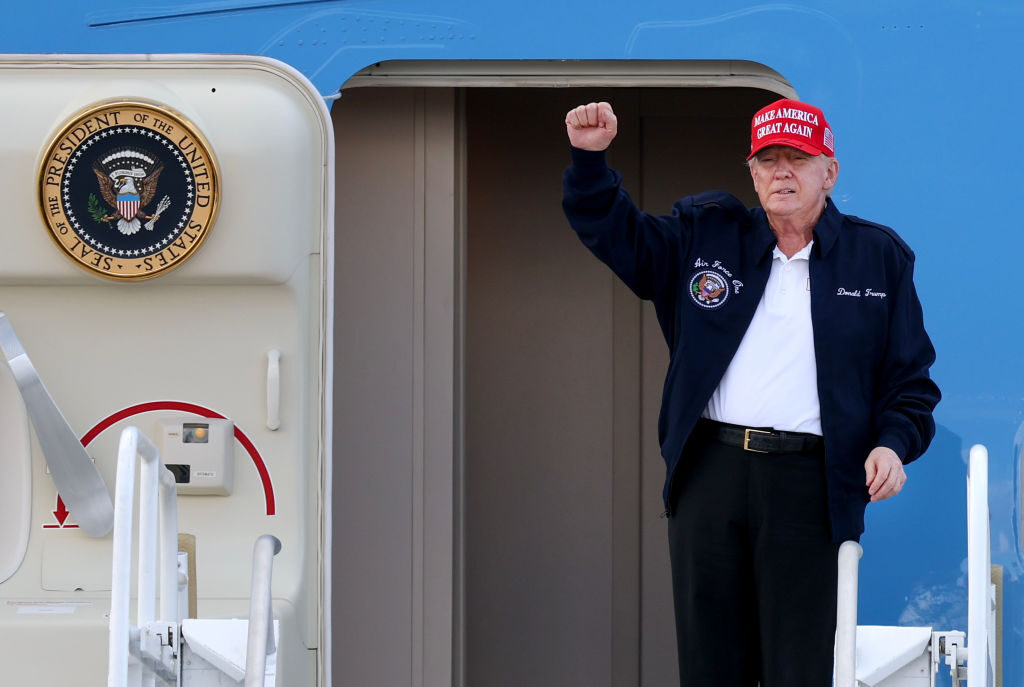
Donald Trump outraged critics early in his first presidential term by implementing what they called a “Muslim ban”. Really, it was nothing of the sort: the ban restricted travel from seven nations with active insurgencies or revolutionary anti-American governments. All were Muslim-majority countries — Iran, Iraq, Syria, Yemen, Libya, Somalia, and Sudan — but that was hardly the most notable thing they had in common.

Trump now appears set to expand the policy in his new administration. The New York Times has reported that there are 43 countries which might be subjected to travel restrictions, with 11 up for outright travel bans. These include such distinctly non-Muslim countries as North Korea, Cuba, and Bhutan.

Bigotry wasn’t the principle behind the first-term travel bans, and isn’t the motive for the new restrictions, either. There are obvious national-security concerns about almost all of the countries cited. The new list consists of Afghanistan, Cuba, North Korea, and Venezuela, as well as second-time designees Iran, Libya, Somalia, Sudan, Syria, and Yemen, with only Bhutan standing out as a puzzling inclusion. There are reasonable arguments against barring entry to America from all visitors from these states — for one thing, the bans apply indiscriminately to opponents of the anti-American elements in these countries, as well as to children and others who pose no conceivable threat. But most Americans would need little convincing that 10 of the 11 countries on the new ban list are likely sources of trouble.

The same applies to the 10 countries on the “orange” list for increased restrictions but not outright travel bans: Russia, Belarus, Turkmenistan, Pakistan, Myanmar, Laos, South Sudan, Eritrea, Sierra Leone, and Haiti. A further 22 countries, however, are on a “yellow” list and would get 60 days to resolve the administration’s concerns about them or they, too, would be placed on the orange or red lists. This probationary litany consists of developing countries in Africa, the Caribbean, and the Pacific. Some states included, such as the Democratic Republic of Congo, are hotspots of rebellion or insurgency. But the island nations of the Caribbean and Pacific are not.

Along with the questionable security value of complete bans where even some of the red-list states are concerned, the scope of the yellow list suggests the Trump administration has in mind something more than the risk of terrorists getting into the country on travel visas. Two ideological motives are also at play. One is simply a Right-wing tendency to inflate threats, particularly where such inveterate foes as Iran and Cuba are involved. If Iran is a hostile regime, as indeed it is, all Iranians must be threatening — or so the logic goes.

The other ideological motive is something new. Freedom to travel is a pillar of the liberal international order, with nations expected to treat movement as a right to be restricted only for a very good reason. For those in the Trump administration who want to dismantle liberalism as a system, curtailing freedom of travel from any country is a step toward ending the overall presumption in favour of free movement — a presumption that undergirds liberal arguments for immigration, among other things. Whether many immigrants come from the countries earmarked for bans or not, the principle to be established is that restriction is a default.

Hostile countries provide an easy precedent but, to get the point across, these bans can’t be seen as mere exceptions to a norm of free movement. Hence the value of including some apparently innocuous countries on the red and yellow lists. If travel from them can be curbed, why not travel from, say, Europe — or Canada? In practice, the volume of travel between the rest of the developed world and America is too great and too economically important to be subjected to arbitrary restrictions. But the principle is what counts for ideological purposes.

The public might not be quick to rally to the liberal presumption in favour of free movement, given all the abuses it has led to — from immigration crises to the 9/11 attacks, which were perpetrated by men who overstayed their visas and might never have been let into the country in the first place under less liberal presumptions. But officials who want to uproot liberalism as a governing philosophy should take heed: the public may not feel the principled outrage liberals do over limitations on free movement.

Still, if other nations adopt illiberal visa policies toward Americans and an administration like Trump’s is unable to keep the world open to tourists and businessmen, US citizens’ anger over losing their own freedom to travel will be visited on Republicans. Americans may not subscribe to free movement as a principle, but they expect to be able to go wherever they like.


Daniel McCarthy is the editor of Modern Age: A Conservative Review

ToryAnarchist

China is threatening America in the AI race

Reports sugget Zhipu AI  has released a new model that can rival leading US systems. Credit: Getty

Reports sugget Zhipu AI has released a new model that can rival leading US systems. Credit: Getty

1 July 2026 - 10:18am

China is trying to catch up with America on artificial intelligence. The Wall Street Journal has reported that Zhipu AI — one of China’s six “AI tiger” LLMs — has released a new model that can rival leading US systems, including Anthropic’s Mythos, in cybersecurity tasks such as pinpointing security bugs. While this marks a milestone in China’s drive to catch up with Western AI capabilities, strong performance on a single benchmark does not mean it has taken the lead. Chinese models still lag behind their Western counterparts in broader capabilities, such as autonomous operation. Skepticism is therefore warranted before resorting to hysterical conclusions, but complacency about the geopolitical implications of China’s AI advances would be an even greater mistake.

On the infrastructure side, Chinese AI is still constrained by access to advanced chips, with American labs way ahead in computing capacity as well as investment. Analysis from earlier this year suggests that Chinese models are likely to be at least a few months behind those in the US. But they are still continuing to make progress, or that the geopolitical importance of AI will be decided only by whose LLM has ventured deeper into the technological frontier. The practical applications of AI, countries’ to capture foreign markets, and the application of AI into the real economy will matter just as much.

Here, China may hold an advantage. As with its dominance across many critical supply chains, Beijing may not need to produce the most advanced AI systems — only those that are affordable and widely deployable. In doing so, it could consolidate global influence by supplying functional, low-cost AI at scale.

Beijing seems to be pursuing exactly that path, developing an AI “open-source” strategy that offers affordable, widely available AI models for companies and individuals to use and modify as they wish. The production of the DeepSeek AI model, which matched the performance of Silicon Valley tools such as ChatGPT at a fraction of the cost for users, created goodwill among Chinese models with developers.

The four most popular models on OpenRouter, an AI hardware platform for developers, are now all Chinese. The goal for China is not only to win the frontier-model race, but to make its systems the default layer of AI adoption across industries and global markets. For most economies, the choice is increasingly between an affordable tool they can deploy now and a more robust one that may be out of reach.

And while the countries adopting Chinese models may be exposed to political pressure and cyber threats from Beijing, safer and more capable alternatives matter little if they are unaffordable. American AI companies are already under pressure to monetize products whose operating costs are rising. If Chinese open-source models become the cheap default for startups, universities, governments and businesses across the developing world, then America’s AI lead will be eroded from below.

Perhaps more concerning for America in the long run is how AI can give Chinese manufacturing even more strength, through the ongoing integration of AI as a general-purpose technology. China’s new Five-Year Plan mentioned AI more than 50 times and includes an “AI+” action plan aimed at spreading AI across the economy.

Beijing has been pioneering automation of its critical infrastructure for years, with promising recent results in increasing warplane production capacity. In that regard, China’s open-model strategy and manufacturing dominance will reinforce each other. Cheap, adaptable models accelerate deployment across the real economy while those deployments generate real-world data and use cases that can feed back into further model improvement.

The United States should not dismiss the importance of its lead in the AI race. That lead worries Beijing, not least because a more automated Chinese economy would also become more vulnerable to AI-generated cyber threats. But nor should Washington assume that China cannot catch up with American capabilities over time.

This AI competition represents part of a broader struggle over tech supply chains and geopolitical influence. Decisions over whether to adopt US or Chinese models could produce a more fragmented global reality, with different regions relying on different cloud providers, chips and security structures. The result will likely be a global economy which is divided into competing spheres, rather than one which produces a single winner.


Miquel Vila is a political and geopolitical risk consultant focusing on industrial strategy, critical infrastructure and global supply chains.

miquelvilam