
X Close

Trump isn’t to blame for Australian Liberals’ defeat

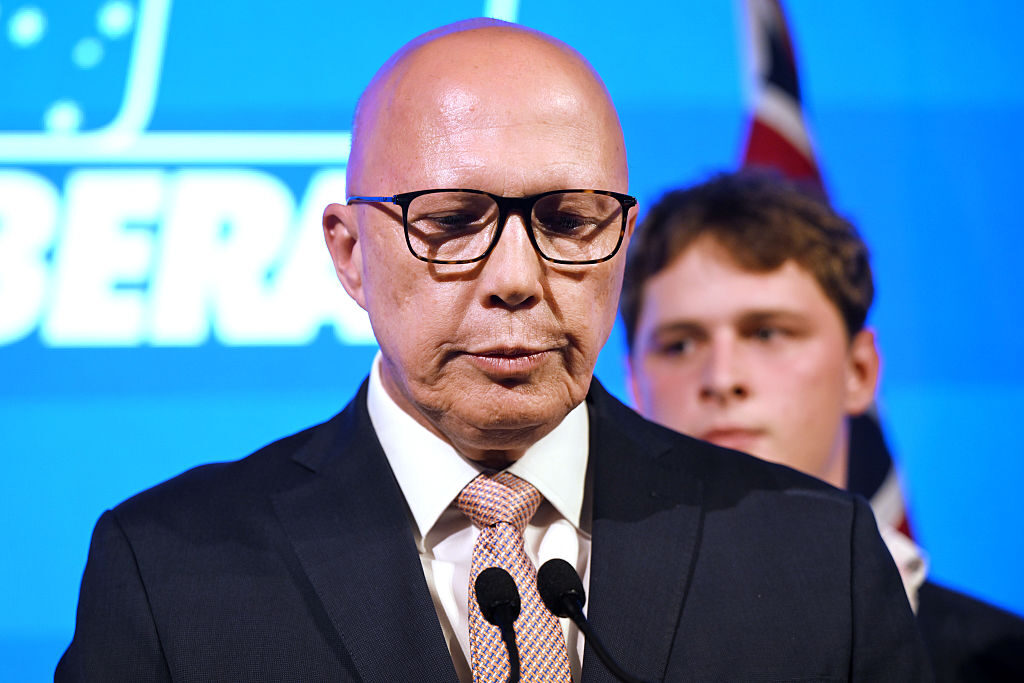
Less MAGA Down Under, more Labor-lite. Credit: Getty

Less MAGA Down Under, more Labor-lite. Credit: Getty

4 May 2025 - 4:00pm

A year ago, things were looking so bad for Australian Prime Minister Anthony Albanese’s prospects that he splashed out on a multimillion-dollar seaside property for his retirement. There was even speculation he would be toppled as Labor leader.

The scene was set for the conservative-led Coalition to win big. First, ultra-harsh lockdowns had smashed the country’s economy along with its reputation as an island paradise of resilient larrikins. Then, after decades of steadily climbing up the global prosperity league tables, Australians endured the sharpest fall in living standards in the OECD, as prices raced ahead of wages just as the China-powered resource boom began to abate. Real household disposable income per capita has collapsed by almost 10% since the end of 2021, and the Australian dollar by an even bigger margin against the US dollar, the pound and the euro. Per capita GDP has shrunk for seven quarters since 2022.

On returning to government in 2022 Labor eschewed any major reforms, instead launching a divisive referendum to insert an indigenous advisory body in the constitution to be called The Voice, a vote which failed spectacularly at the ballot box.

Yet, despite all these missteps, Albanese’s party decisively won re-election in Saturday’s federal contest. Most commentators have focused on the Trump factor, and there’s no doubt it played a significant role. Labor’s relentless attempts to paint Opposition leader Peter Dutton as a MAGA acolyte worked well, and the comparison proved poisonous. A YouGov poll issued a week before the election found two thirds of Australians no longer trust the US, up from 39% a year earlier.

The bulk of the blame for the Coalition’s historic loss, however, must lie with Dutton’s own uninspiring leadership. His campaign was timid and clumsy, filled with policy proposals which embarrassed many of the party’s traditional supporters.

Dutton failed to challenge the Albanese government on its rapid hike in public spending, the fastest such rise in half a century. Economically, the supposed party of smaller government opted for a small-target strategy, matching Labour’s spending promises while offering a slew of temporary political bribes in answer to the “cost of living crisis” which animated much of the campaign.

Some first-home buyers would be able to deduct their home loan repayments against their income for five years. Meanwhile, petrol tax would be cut for 12 months, and middle-income taxpayers would enjoy a one-off $1,200 tax rebate. The Coalition promised to reverse a modest Labor tax cut to help finance an increase in defence spending, and Dutton would only “aspire” towards indexing Australia’s income tax bracket to inflation. The global surge in inflation had been handing Canberra billions in extra revenue.

On energy, at a time when even Tony Blair is questioning the wisdom of Net Zero in the UK, Australia’s Coalition contented itself with promising to follow in the footsteps of other G20 nations in setting an emissions target for 2050. While the party made some positive noises about winding down Labor’s climate programme, as well as introducing nuclear energy to the domestic electricity grid, specific policy proposals were often in short supply during the campaign.

Culturally, Dutton was unable to mobilise the widespread irritation with progressive self-flagellation which saw the Voice referendum defeated by a 60:40 margin in 2023. Only in the very last week of the campaign did the Liberal leader push back on the growing ubiquity of “welcome to country” ceremonies at public events, during which Aboriginal elders perform a welcome to their land and permit the event to take place. Notably, during his victory speech this weekend Albanese made a point of saying: “I acknowledge the traditional owners of the land, and I pay my respect to elders past, present and emerging today and every day.”

Comparisons with Trump will no doubt have undermined Dutton’s offering to Australians, but the Coalition’s problems go much deeper. The party could have run on a platform of fiscal prudence and a more robust style of cultural conservatism. In the end, however, the match-up amounted to Labor versus Labor-lite. Is it any wonder voters ultimately opted for the real thing?


Adam Creighton is a Senior Fellow and Chief Economist at the Institute of Public Affairs, and a columnist for The Australian.

Adam_Creighton

China is threatening America in the AI race

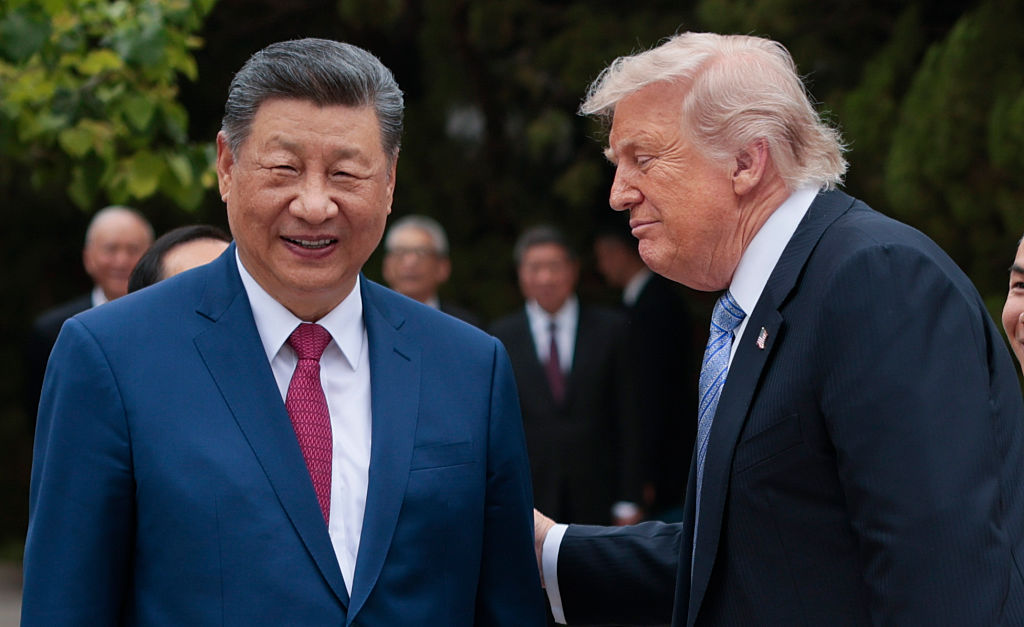
Reports sugget Zhipu AI  has released a new model that can rival leading US systems. Credit: Getty

Reports sugget Zhipu AI has released a new model that can rival leading US systems. Credit: Getty

1 July 2026 - 10:18am

China is trying to catch up with America on artificial intelligence. The Wall Street Journal has reported that Zhipu AI — one of China’s six “AI tiger” LLMs — has released a new model that can rival leading US systems, including Anthropic’s Mythos, in cybersecurity tasks such as pinpointing security bugs. While this marks a milestone in China’s drive to catch up with Western AI capabilities, strong performance on a single benchmark does not mean it has taken the lead. Chinese models still lag behind their Western counterparts in broader capabilities, such as autonomous operation. Skepticism is therefore warranted before resorting to hysterical conclusions, but complacency about the geopolitical implications of China’s AI advances would be an even greater mistake.

On the infrastructure side, Chinese AI is still constrained by access to advanced chips, with American labs way ahead in computing capacity as well as investment. Analysis from earlier this year suggests that Chinese models are likely to be at least a few months behind those in the US. But they are still continuing to make progress, or that the geopolitical importance of AI will be decided only by whose LLM has ventured deeper into the technological frontier. The practical applications of AI, countries’ to capture foreign markets, and the application of AI into the real economy will matter just as much.

Here, China may hold an advantage. As with its dominance across many critical supply chains, Beijing may not need to produce the most advanced AI systems — only those that are affordable and widely deployable. In doing so, it could consolidate global influence by supplying functional, low-cost AI at scale.

Beijing seems to be pursuing exactly that path, developing an AI “open-source” strategy that offers affordable, widely available AI models for companies and individuals to use and modify as they wish. The production of the DeepSeek AI model, which matched the performance of Silicon Valley tools such as ChatGPT at a fraction of the cost for users, created goodwill among Chinese models with developers.

The four most popular models on OpenRouter, an AI hardware platform for developers, are now all Chinese. The goal for China is not only to win the frontier-model race, but to make its systems the default layer of AI adoption across industries and global markets. For most economies, the choice is increasingly between an affordable tool they can deploy now and a more robust one that may be out of reach.

And while the countries adopting Chinese models may be exposed to political pressure and cyber threats from Beijing, safer and more capable alternatives matter little if they are unaffordable. American AI companies are already under pressure to monetize products whose operating costs are rising. If Chinese open-source models become the cheap default for startups, universities, governments and businesses across the developing world, then America’s AI lead will be eroded from below.

Perhaps more concerning for America in the long run is how AI can give Chinese manufacturing even more strength, through the ongoing integration of AI as a general-purpose technology. China’s new Five-Year Plan mentioned AI more than 50 times and includes an “AI+” action plan aimed at spreading AI across the economy.

Beijing has been pioneering automation of its critical infrastructure for years, with promising recent results in increasing warplane production capacity. In that regard, China’s open-model strategy and manufacturing dominance will reinforce each other. Cheap, adaptable models accelerate deployment across the real economy while those deployments generate real-world data and use cases that can feed back into further model improvement.

The United States should not dismiss the importance of its lead in the AI race. That lead worries Beijing, not least because a more automated Chinese economy would also become more vulnerable to AI-generated cyber threats. But nor should Washington assume that China cannot catch up with American capabilities over time.

This AI competition represents part of a broader struggle over tech supply chains and geopolitical influence. Decisions over whether to adopt US or Chinese models could produce a more fragmented global reality, with different regions relying on different cloud providers, chips and security structures. The result will likely be a global economy which is divided into competing spheres, rather than one which produces a single winner.


Miquel Vila is a political and geopolitical risk consultant focusing on industrial strategy, critical infrastructure and global supply chains.

miquelvilam