







8 August 2024 - 7:00pm
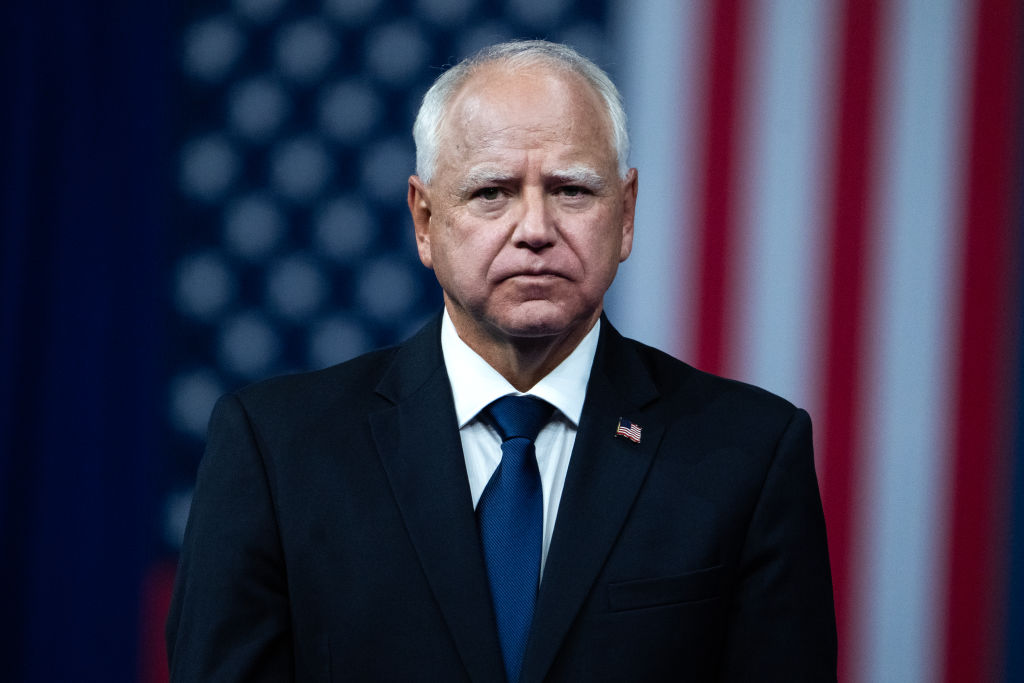
In a recent clip that has garnered significant attention on social media, Tim Walz, Kamala Harris’s recently announced running mate, told MSNBC that “misinformation” is not protected speech. The clip has sparked debate about Walz and where he believes the boundaries of free speech lie. But it’s also raising questions about what free speech would look like under a possible Harris-Walz administration.
In reality, the issue goes far beyond Walz and Harris, extending deep into the Democratic Party’s revised stance on freedom of expression. For decades Democrats were seen as the free speech party, with institutional allies like the American Civil Liberties Union (ACLU) going to lengths — like defending the rights of neo-Nazis to march — to prove the point. But it’s evidence that the political dynamic has flipped as Democrats now equate free speech with the Right.
That Tim Walz falsely believes the free speech guarantee doesn’t include what he considers to be ‘misinformation’ or ‘hate speech’ will bother almost no Dem supporters, since the vast majority of them want the state to be empowered to censor dissent.pic.twitter.com/z74vizL9HT
— Glenn Greenwald (@ggreenwald) August 7, 2024
As Glen Greenwald wrote in a post on X: “That Tim Walz falsely believes the free speech guarantee doesn’t include what he considers to be ‘misinformation’ or ‘hate speech’ will bother almost no Dem supporters, since the vast majority of them want the state to be empowered to censor dissent.”
Until recent years, Democrats enjoyed a virtual monopoly on information governance since their only real pipeline for information distribution, the mainstream media, sat squarely in their political camp. The media proved itself willing to play ball at almost any cost, a phenomenon that culminated in the media-wide effort to spread mostly unsubstantiated claims about Donald Trump’s ties to Russia.
For most of the past 20 years, Big Tech companies that controlled the major social media platforms were similarly aligned with the Democratic Party. The social platforms were often in lock step with the media — and, as it were, the Democratic Party — on key issues, like the effort to censor and discredit as “Russian disinformation” the Hunter Biden laptop. Major platforms including Twitter, Instagram and Facebook also indefinitely suspended President Trump after 6 January.
But the media monopoly on information distribution is over. With Zuckerberg’s “vibe shift” away from the technocratic Left and towards a patriotic, pro-Americanism, which includes calling Trump’s reaction to his attempted assassination “badass,” and Twitter, now rebranded as X, in the hands of Elon Musk, the misinformation party is over for Democrats. What remains is a blunt campaign to clamp down on content through the use of law and regulation or third-party pressure groups like the Global Alliance for Responsible Media, a media pressure group being sued by Musk for unfairly targeting X with an advertiser boycott.
Walz’s stance on this issue is not entirely surprising given his actions during the Covid-19 pandemic, when he implemented a “snitch line” where citizens could report businesses and individuals violating pandemic restrictions. This approach drew criticism for encouraging surveillance and potentially stifling dissent.
Harris doesn’t fare much better when it comes to the question of freedom of speech. As California’s Attorney General, the Vice President faced criticism for allegedly misusing her power to target conservatives by demanding the disclosure of donor lists from nonprofit organisations, a move seen as an attempt to intimidate and silence political opponents. The Supreme Court ultimately ruled against her, reaffirming the importance of donor privacy and free association.
In the media, a growing narrative holds that Harris has been targeted by purveyors of disinformation on account of her race and sex. NPR turned to Nina Jankowicz, former head of the Biden administration’s ill-fated Disinformation Governance Board, who told the Left-wing news outlet that Harris is being unfairly targeted. This kind of positioning of speech as a weapon used against vulnerable people (even when that “vulnerable” person is one of the most powerful people in the country) could enable further crack downs.
Given Walz’s clearly stated views on speech coupled with Harris’ record, there’s a serious question about what kind of policies a Harris-Walz administration would advance. The ticket raises significant concerns about the potential erosion of free speech and the expansion of governmental power at a moment when not just Americans but people around the world are rallying for their right to speak openly and without fear of government-directed reprisals.
Ashley Rindsberg is author of The Gray Lady Winked: How the New York Times’ Misreporting, Distortions and Fabrications Radically Alter History
 AshleyRindsberg