







4 September 2025 - 7:30pm
Tuesday’s news that Moscow and Beijing have agreed to build a major new pipeline to pump natural gas from Russia’s Arctic to China was light on detail, but the direction of travel is clear. Since Russia’s invasion of Ukraine in 2022, the world has shifted to a two-tier energy market where countries willing to buy Russian energy in defiance of Western sanctions benefit from sizeable discounts to global price benchmarks. The Power of Siberia 2 deal demonstrates how this two-tier market is set to remain in place for the long haul, conferring significant economic advantages on buyers of Russian oil and gas, in what might be termed a new “axis of energy”.
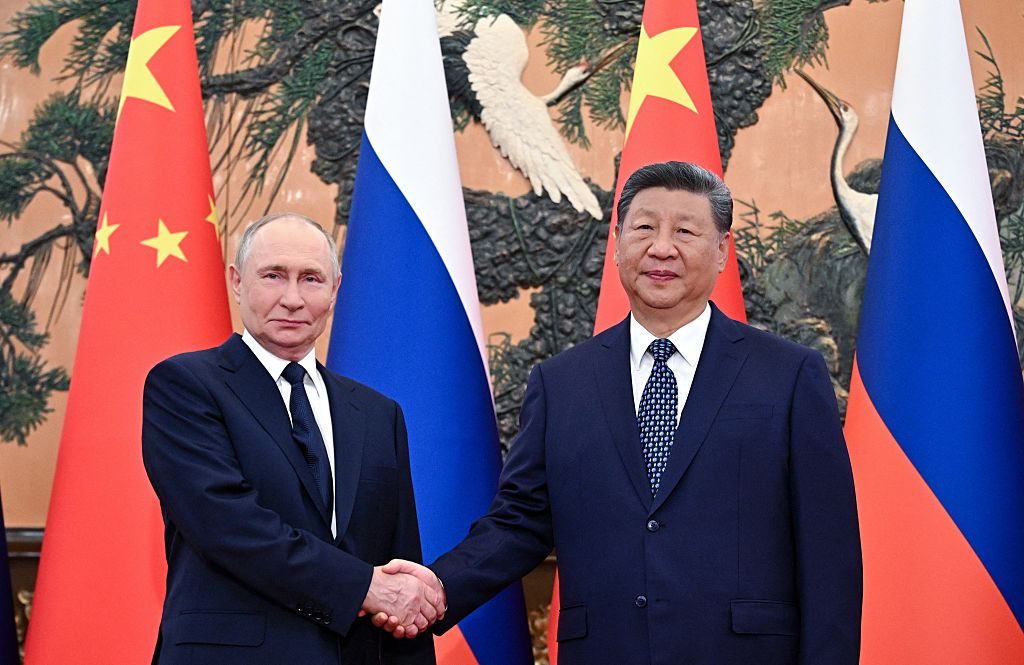
The POS2 proposal is hardly new. The project to build the 3,000 km pipeline capable of pumping 50 billion cubic meters each year — roughly the capacity of Europe’s defunct Nord Stream 2 pipeline — has long been stalled as Moscow and Beijing have bickered over financing and contract prices. Many of these details have still to be settled. But it appears the logjam has now been broken. According to Alexei Miller, CEO of Russia’s state energy giant Gazprom, the two countries signed “a legally binding memorandum” to build POS2 during Russian President Vladimir Putin’s visit to China this week.
Putin no doubt wanted to mark his trip with a high-profile announcement. But it is likely the breakthrough was attributable to an agreement in principle on the price of the gas to be pumped. According to Miller, this will be cheaper than the price of Russian gas sold to Europe, a discount he attributed to the higher cost of pumping gas to China. But this is disingenuous. In a seller’s market, higher transport costs would mean higher prices. However, Russian energy is a buyer’s market, in which countries prepared to defy Western sanctions against the Kremlin can command highly favourable terms.
Both the seller and the two big buyers — China and India — were assembled in Tianjin this week for the Shanghai Cooperation Organisation’s summit. While the meeting produced little of substance that was new aside from the POS2 announcement, the rhetoric was all about a new international order to challenge the established system headed by the United States.
The clearest manifestation of this new order can be found in energy markets. Last Thursday, China took delivery of its first cargo of liquefied natural gas shipped from Russia’s new Arctic LNG 2 terminal, despite an array of US and EU sanctions on the project.
Meanwhile, India has also been parading its rejection of US sanctions, after Washington’s secondary tariffs went into effect last week as a punishment for New Delhi’s continued purchases of Russian crude oil. Although these latest measures push the US tariff rate on most Indian goods to 50%, Indian ministers remain defiant, arguing that the country’s purchases of Russian oil are entirely legal and insisting New Delhi will not bow to pressure from the White House.
In recent months, India has imported between 1.5 million and 1.6 million barrels per day of Russian crude oil, second only to China, which buys around 2.2 million barrels a day. The perverse effect of Western sanctions is that India’s imports of Russian oil are now likely to increase. The immediate reason is that EU sanctions against the Russian-owned Nayara Energy mean that regular vessels carrying crude from Middle Eastern producers have stopped delivering cargoes to the company’s Gujarat oil refinery — India’s second largest. As a result, Nayara is likely to make up the shortfall of some 100,000 barrels a day by buying more oil from Russia.
It remains to be seen what damage US secondary tariffs will inflict on India’s economy over the longer run, and whether Indian ministers will waver. But it is likely that Russia’s oil producers will attempt to stiffen their resolve by offering bigger discounts than the modest $3-4 per barrel which India-based buyers receive today. Given that the new $46.70 per barrel EU price cap on Russian oil shipments which came into effect on Wednesday is 32% below the current market price for Brent of $68.90 per barrel, Russian sellers have considerable scope to offer discounts to buyers who are prepared to take delivery of shadow fleet cargoes while still earning a handsome premium over the EU price cap.
With little sign of a ceasefire in Ukraine any time soon, there is every reason to believe that the dynamics on display over the last week — with China and India making a political point of defying Western pressure and continuing to buy cheap Russian energy — will strengthen in the long term.
Over time, this means that the Chinese and Indian economies will benefit at the margin relative to the West from cheaper energy prices. This will only reinforce the trend of recent years in which energy-intensive industries such as petrochemicals have shifted away from Western economies including Germany, where they used to benefit from cheap Russian gas, and towards Asian economies such as China, where in future they will benefit from even cheaper Russian gas. The world has a new axis of energy, and it does not revolve around Western economies.
This is an edited version of an article which originally appeared on Gavekal.