




X Close

Robert Roberson does not deserve the death penalty

The Texas Supreme Court issued Roberson a temporary stay. Credit: YouTube

The Texas Supreme Court issued Roberson a temporary stay. Credit: YouTube

19 October 2024 - 5:00pm

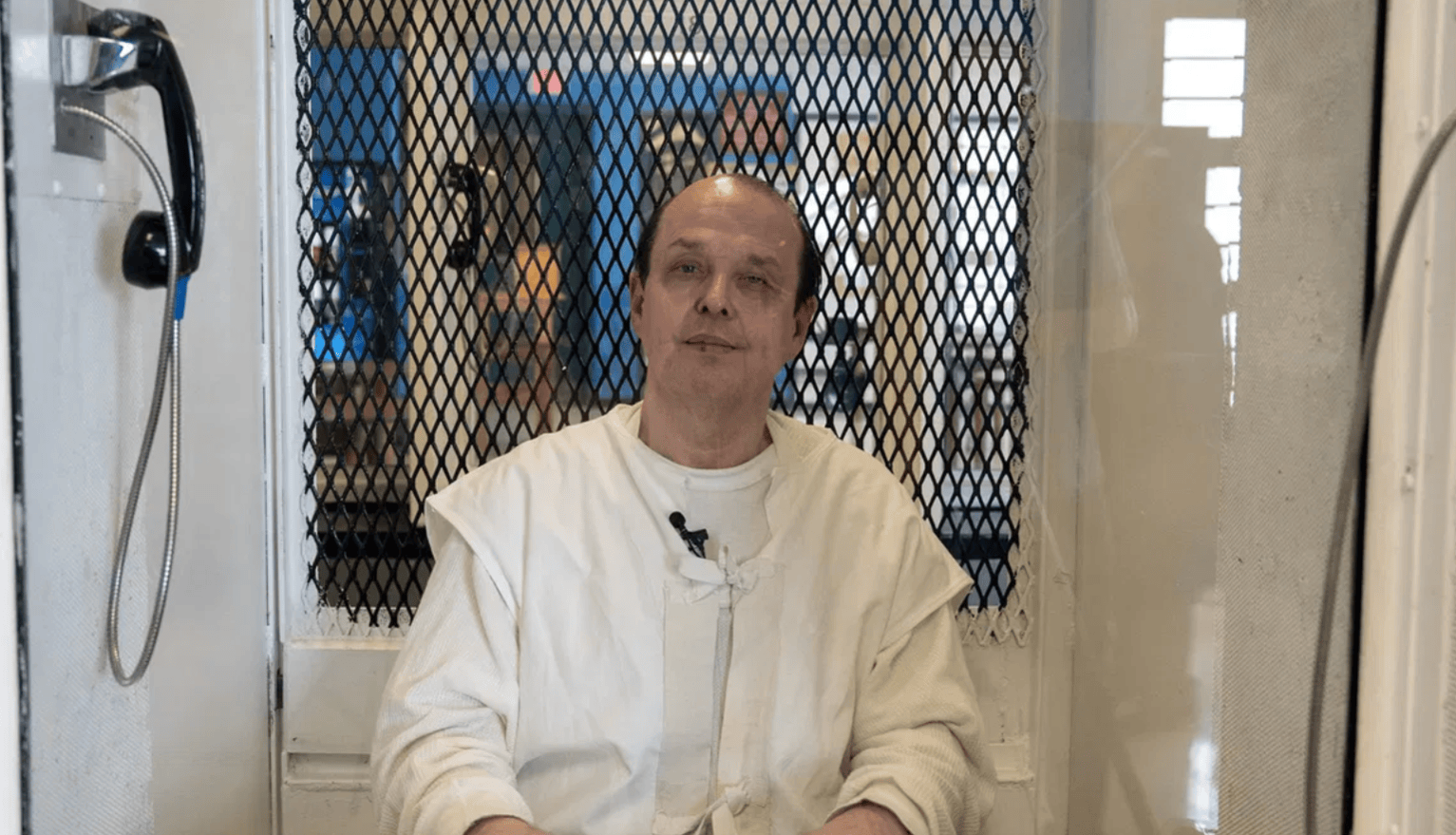
What nearly became the last hours of Robert Roberson’s life can barely be imagined. On Thursday evening, he sat for hours in a cell next to the death chamber at a Texas state prison awaiting execution for an act that may well not have been a crime at all: the death, over 20 years ago, of his infant daughter Nikki.

While three successive Texan courts decided whether to grant a reprieve, Roberson endured what must have felt like torture. Relief came just 90 minutes before his scheduled execution, when the Texas Supreme Court issued a temporary stay. Next week he will get a final chance to present evidence of his innocence.

In one respect, this case is exceptional: Roberson would have been the first prisoner in the US to be executed on the basis of “shaken baby syndrome”, a pseudo-medical concept that describes the shaking to death of infants that should have been consigned to forensic dustbin long ago.

Its other aspects are all too typical, and include serious flaws in the procedural safeguards for those accused of capital offences, a slow and ineffective appellate process, and the psychological trauma inflicted on those sentenced to death. It also illustrates a gap between justice in the US and international law.

The revelation that forensic science is neither immutable nor infallible has for the past few decades undermined confidence in criminal justice systems worldwide. Shaken baby syndrome is an especially fallible category.

Starting in the Seventies, British and American prosecutors secured murder convictions with testimony from “experts” who said that when a baby died without fractures or visible wounds, their death resulted from a “non-accidental head injury” caused by someone taking care of them. They claimed that intracranial injuries such as cerebral bleeds were proof of a violent death, and could only arise from shaking. Any other explanation offered by a parent — such as a fall — was deemed to be a lie.

However, since Roberson’s trial in 2003, there has been an enormous shift, and the consensus now is that intracranial injuries are not infallible evidence of homicide at all. In 2020, the American Association of Paediatrics determined that shaken baby syndrome had been misinterpreted by legal and health authorities.

On both sides of the Atlantic, this has led to successful appeals, and if Roberson gets a new trial, the jury will be told that the prosecution’s science has been discredited.

Fresh evidence also suggests that Nikki died from pneumonia leading to sepsis. She had suffered antibiotic-resistant infections, requiring treatment in hospital — where she was given toxic drugs now thought inappropriate for infants.

International law does not prohibit the death penalty, but allows it for only the “most serious” offences, defined as “intentional crimes with lethal or other extremely grave consequences”. Clearly, Roberson’s daughter died in his care, but there is no evidence that this was his intention, nor that a crime was committed.

For a conviction to be quashed by appeal courts, there does not have to be proof of innocence, only evidence that it is unsafe. In Roberson’s case, there is plenty. However, while exonerations of innocent people in America have induced some states to abolish the death penalty, US courts have repeatedly shown themselves reluctant to reverse convictions based on faulty science — as, until now, they have been with Roberson’s.

International law does prohibit the death penalty following unsafe and arbitrary processes, and insists that the evidence must be properly scrutinised throughout the trial and subsequent appeals. Yet despite the flaws in the prosecution case and the failure thus far to address them,  Roberson found himself waiting hours from death while his lawyers and a bipartisan committee of politicians pleaded with the authorities to stop the execution.

Welcome as it was, his stay was far from timely, and his ordeal could arguably be seen as torture — which unlike the death penalty, is prohibited under international law.

This has led some abolitionists to consider whether the death penalty per se could be also defined as torture, and indeed, some of the 55 countries that retain capital punishment have already determined that long spells on death row in themselves constitute unacceptable mental anguish, often described by psychiatrists as “death row syndrome”.

In Jamaica, for example, any prisoner who has been on death row for more than five years will have their sentence commuted to life. In America, the average gap between sentencing and execution has climbed to about 23 years. Like other US death row inmates, Roberson will have spent his time on the row largely in solitary confinement, all the while aware he is likely to be put to death.

Arguably, this alone amounts to “cruel and unusual punishment” in breach of the US constitution, and a case could be made that, like his wait to learn if he would live or die on Thursday, it equates to torture.

Yet prisoners’ rights to appeal when the state intends to kill them cannot be curtailed, especially when science is evolving: there is, therefore, a contradiction between avoiding death row syndrome and allowing enough time for appeals. Abolishing the death penalty altogether is the only feasible way to resolve it, and to remedy its myriad injustices.

Professor Carolyn Hoyle is Director of the Death Penalty Research Unit, part of the University of Oxford’s Centre for Criminology at the Faculty of Law, and co-author of Reasons to Doubt, a study of wrongful convictions.    


China is threatening America in the AI race

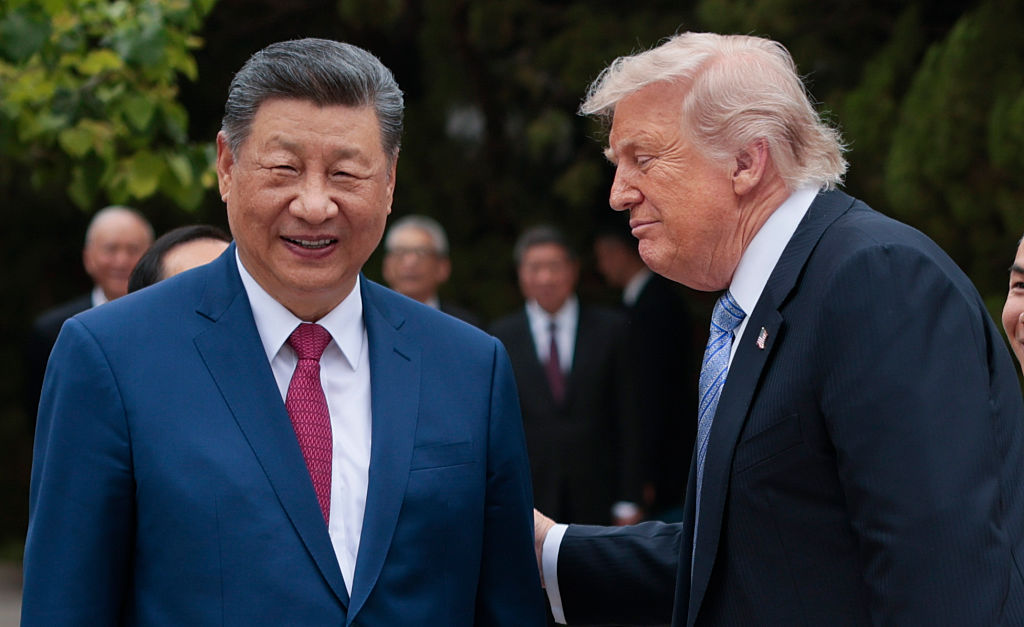
Reports sugget Zhipu AI  has released a new model that can rival leading US systems. Credit: Getty

Reports sugget Zhipu AI has released a new model that can rival leading US systems. Credit: Getty

1 July 2026 - 10:18am

China is trying to catch up with America on artificial intelligence. The Wall Street Journal has reported that Zhipu AI — one of China’s six “AI tiger” LLMs — has released a new model that can rival leading US systems, including Anthropic’s Mythos, in cybersecurity tasks such as pinpointing security bugs. While this marks a milestone in China’s drive to catch up with Western AI capabilities, strong performance on a single benchmark does not mean it has taken the lead. Chinese models still lag behind their Western counterparts in broader capabilities, such as autonomous operation. Skepticism is therefore warranted before resorting to hysterical conclusions, but complacency about the geopolitical implications of China’s AI advances would be an even greater mistake.

On the infrastructure side, Chinese AI is still constrained by access to advanced chips, with American labs way ahead in computing capacity as well as investment. Analysis from earlier this year suggests that Chinese models are likely to be at least a few months behind those in the US. But they are still continuing to make progress, or that the geopolitical importance of AI will be decided only by whose LLM has ventured deeper into the technological frontier. The practical applications of AI, countries’ to capture foreign markets, and the application of AI into the real economy will matter just as much.

Here, China may hold an advantage. As with its dominance across many critical supply chains, Beijing may not need to produce the most advanced AI systems — only those that are affordable and widely deployable. In doing so, it could consolidate global influence by supplying functional, low-cost AI at scale.

Beijing seems to be pursuing exactly that path, developing an AI “open-source” strategy that offers affordable, widely available AI models for companies and individuals to use and modify as they wish. The production of the DeepSeek AI model, which matched the performance of Silicon Valley tools such as ChatGPT at a fraction of the cost for users, created goodwill among Chinese models with developers.

The four most popular models on OpenRouter, an AI hardware platform for developers, are now all Chinese. The goal for China is not only to win the frontier-model race, but to make its systems the default layer of AI adoption across industries and global markets. For most economies, the choice is increasingly between an affordable tool they can deploy now and a more robust one that may be out of reach.

And while the countries adopting Chinese models may be exposed to political pressure and cyber threats from Beijing, safer and more capable alternatives matter little if they are unaffordable. American AI companies are already under pressure to monetize products whose operating costs are rising. If Chinese open-source models become the cheap default for startups, universities, governments and businesses across the developing world, then America’s AI lead will be eroded from below.

Perhaps more concerning for America in the long run is how AI can give Chinese manufacturing even more strength, through the ongoing integration of AI as a general-purpose technology. China’s new Five-Year Plan mentioned AI more than 50 times and includes an “AI+” action plan aimed at spreading AI across the economy.

Beijing has been pioneering automation of its critical infrastructure for years, with promising recent results in increasing warplane production capacity. In that regard, China’s open-model strategy and manufacturing dominance will reinforce each other. Cheap, adaptable models accelerate deployment across the real economy while those deployments generate real-world data and use cases that can feed back into further model improvement.

The United States should not dismiss the importance of its lead in the AI race. That lead worries Beijing, not least because a more automated Chinese economy would also become more vulnerable to AI-generated cyber threats. But nor should Washington assume that China cannot catch up with American capabilities over time.

This AI competition represents part of a broader struggle over tech supply chains and geopolitical influence. Decisions over whether to adopt US or Chinese models could produce a more fragmented global reality, with different regions relying on different cloud providers, chips and security structures. The result will likely be a global economy which is divided into competing spheres, rather than one which produces a single winner.


Miquel Vila is a political and geopolitical risk consultant focusing on industrial strategy, critical infrastructure and global supply chains.

miquelvilam