




X Close

Police facial recognition expansion won’t make London safer

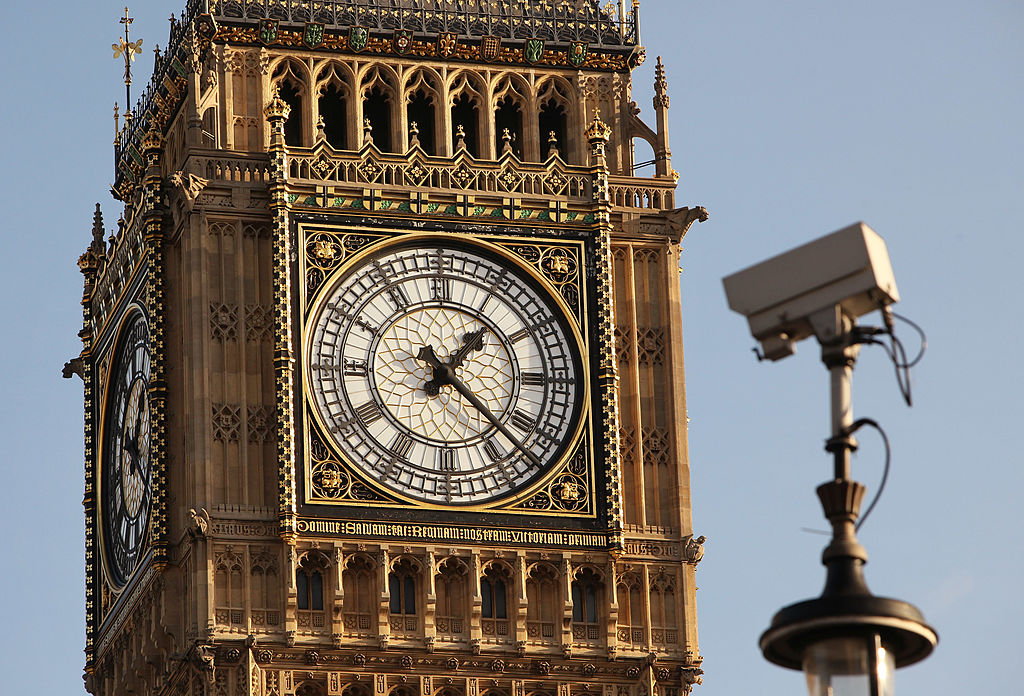
The Met has announced that Live Facial Recognition will be expanded in central London. Credit: Getty

The Met has announced that Live Facial Recognition will be expanded in central London. Credit: Getty

24 June 2026 - 5:15pm

This week it was announced that there would be an expansion of the London police force’s use of Live Facial Recognition (LFR) technology. Following a decade of use of the face-matching software with mobile camera vans, and then a pilot deployment with fixed cameras in Croydon, new fixed-camera operations will start in London’s West End and Soho.

The Met were early adopters of this technology in 2016, largely writing their own rules for deployment. In April 2026, the UK’s High Court ruled that the current Metropolitan Police use of LFR is lawful and proportionate. This latest development is then a further erosion of the liberties of the general public, but is unlikely to actually prevent any crime.

LFR scans passing faces but only captures a person’s image if their face is matched to one on the watchlist. Then a human police officer intervenes to offer the matchee a chance to prove they are NOT the wanted individual. Your own face could put you in the position of showing your passport to the police to identify yourself. Most people will be unaware that their faces have even been scanned.

Past surveys of UK public opinion have found divided views: few are completely opposed to LFR, and a large majority support its use at riots and football matches; even at peaceful protests, support outweighs opposition. The government’s own research found a majority in favour of its use even for fraud and antisocial behaviour. A slight majority say deployment in their local High Street would make them feel safer, and are willing to accept a loss of privacy to catch more criminals.

On the other hand, around a third said they’d be unlikely to attend a protest or a picket line if LFR were in use. Given that it has already been used at selected protests, this suggests that routine LFR use may have a chilling effect on freedom of assembly and peaceful public protest.

It’s less clear that LFR deters violent protesters, who often cover their faces anyway, or rioters carried away in the heat of the moment. It might, however, enable police to arrest people who have previously been involved in protests, peaceful or otherwise. One arrest in the Croydon pilot deployment was of a woman who failed to attend court for an assault in 2004. This reveals both the wide net cast by the police watchlist and the fact that anyone wanted by the police will need to keep a low profile for a very long time.

However, the choice of target areas suggests that the Met is keen to act against perceived lawlessness in busy streets and shopping areas, rather than unruly demonstrations. These “crime hotspots” will use “intelligence-led” watchlists created not more than 24 hours in advance. In theory, an individual could be spotted one day on CCTV grabbing a phone or shoplifting, and be spotted by LFR and stopped by a police officer the next.

Previous offenders who are suspected of being about to commit a “Relevant Hotspot Offence Type” for that location may also be placed on the watchlist, and pre-emptively stopped by police. Being repeatedly reminded that the police have a beady AI eye on them might deter repeat offenders, at least enough to make them shift their activities to a less-surveilled location.

In practice, though, it may be harder to reassure the public that London’s streets are newly safe and law-abiding. We already have technology that allows the owners of stolen phones to track their location, but few victims find the police willing to follow up, even when given exact locations for stolen goods.

If there is a sense of impunity for low-level crime, it would take a lot of arrests, followed up by court appearances and deterrent penalties, to shift the odds of getting caught in the mind of a potential offender. Given the lack of resources in both police forces and the justice system, that seems unlikely to happen. Meanwhile, the price we all pay is further erosion of our freedom to move about in public without showing biometric ID — our faces — at the silent checkpoint.


Timandra Harkness presents the BBC Radio 4 series, FutureProofing and How To Disagree. Her book, Technology is Not the Problem, is published by Harper Collins.

TimandraHarknes

China is threatening America in the AI race

Reports sugget Zhipu AI  has released a new model that can rival leading US systems. Credit: Getty

Reports sugget Zhipu AI has released a new model that can rival leading US systems. Credit: Getty

1 July 2026 - 10:18am

China is trying to catch up with America on artificial intelligence. The Wall Street Journal has reported that Zhipu AI — one of China’s six “AI tiger” LLMs — has released a new model that can rival leading US systems, including Anthropic’s Mythos, in cybersecurity tasks such as pinpointing security bugs. While this marks a milestone in China’s drive to catch up with Western AI capabilities, strong performance on a single benchmark does not mean it has taken the lead. Chinese models still lag behind their Western counterparts in broader capabilities, such as autonomous operation. Skepticism is therefore warranted before resorting to hysterical conclusions, but complacency about the geopolitical implications of China’s AI advances would be an even greater mistake.

On the infrastructure side, Chinese AI is still constrained by access to advanced chips, with American labs way ahead in computing capacity as well as investment. Analysis from earlier this year suggests that Chinese models are likely to be at least a few months behind those in the US. But they are still continuing to make progress, or that the geopolitical importance of AI will be decided only by whose LLM has ventured deeper into the technological frontier. The practical applications of AI, countries’ to capture foreign markets, and the application of AI into the real economy will matter just as much.

Here, China may hold an advantage. As with its dominance across many critical supply chains, Beijing may not need to produce the most advanced AI systems — only those that are affordable and widely deployable. In doing so, it could consolidate global influence by supplying functional, low-cost AI at scale.

Beijing seems to be pursuing exactly that path, developing an AI “open-source” strategy that offers affordable, widely available AI models for companies and individuals to use and modify as they wish. The production of the DeepSeek AI model, which matched the performance of Silicon Valley tools such as ChatGPT at a fraction of the cost for users, created goodwill among Chinese models with developers.

The four most popular models on OpenRouter, an AI hardware platform for developers, are now all Chinese. The goal for China is not only to win the frontier-model race, but to make its systems the default layer of AI adoption across industries and global markets. For most economies, the choice is increasingly between an affordable tool they can deploy now and a more robust one that may be out of reach.

And while the countries adopting Chinese models may be exposed to political pressure and cyber threats from Beijing, safer and more capable alternatives matter little if they are unaffordable. American AI companies are already under pressure to monetize products whose operating costs are rising. If Chinese open-source models become the cheap default for startups, universities, governments and businesses across the developing world, then America’s AI lead will be eroded from below.

Perhaps more concerning for America in the long run is how AI can give Chinese manufacturing even more strength, through the ongoing integration of AI as a general-purpose technology. China’s new Five-Year Plan mentioned AI more than 50 times and includes an “AI+” action plan aimed at spreading AI across the economy.

Beijing has been pioneering automation of its critical infrastructure for years, with promising recent results in increasing warplane production capacity. In that regard, China’s open-model strategy and manufacturing dominance will reinforce each other. Cheap, adaptable models accelerate deployment across the real economy while those deployments generate real-world data and use cases that can feed back into further model improvement.

The United States should not dismiss the importance of its lead in the AI race. That lead worries Beijing, not least because a more automated Chinese economy would also become more vulnerable to AI-generated cyber threats. But nor should Washington assume that China cannot catch up with American capabilities over time.

This AI competition represents part of a broader struggle over tech supply chains and geopolitical influence. Decisions over whether to adopt US or Chinese models could produce a more fragmented global reality, with different regions relying on different cloud providers, chips and security structures. The result will likely be a global economy which is divided into competing spheres, rather than one which produces a single winner.


Miquel Vila is a political and geopolitical risk consultant focusing on industrial strategy, critical infrastructure and global supply chains.

miquelvilam