





X Close

New report exposes campaign to silence gender-critical academics

‘The barriers to research on sex and gender do exist. But these originate from one side of the “debate”.’ Credit: Getty

‘The barriers to research on sex and gender do exist. But these originate from one side of the “debate”.’ Credit: Getty

July 2 2025 - 6:00pm

Gender-critical academics have for the past decade found life very difficult on campus. The Sullivan Review, published yesterday, is a painstaking account of the experiences of academics who were stifled, bullied and harassed for doing their jobs while believing that sex is an immutable characteristic. “Barriers to research on sex and gender” also documents the experiences of academics who believe in gender identity. While those experiences have been totally asymmetrical, like all good sociological work, Sullivan did not impose her analysis. She let her data speak.

There is page after page of personal testimony. It speaks of gender-critical academics being taken through shadowy, Kafkaesque complaints processes and of research ethics committees over-reaching their mandate to subvert the research of academics interested in sex and gender. It goes on to describe actual harassment and bullying.

I wrote asymmetrical because the Sullivan Review proves that “the toxic debate” in universities is far from a “both-sides problems” as Stonewall’s Chair suggested a couple of years ago. Compared with the details of real-life experiences and encounters from gender-critical academics, those writing in from a gender identity perspective offered only templated answers, vague assertions, statements of feelings and few facts. The barriers to research on sex and gender do exist. But as the Sullivan Review makes clear, these originate from one side of the “debate”.

I’m not easily shocked by the less-than-professional antics of some of the academic community, but I was surprised when I got to Appendix 2. It reveals evidence of an organization called FGEN (Feminist Gender Equality Network) attempting to subvert the process of a government-commissioned review. How? It made complaints to Professor Sullivan’s university ethics committee. It drafted templated responses for its members to use. For non-academics, a little explanation may be required. It is a problem for a group of academics to campaign to distort a Government review whose methodology relies on the collection of personal testimony. Put simply, it is an attempt to compromise the evidence.

As if detailing the bigotry faced by gender-critical academics was not enough, the report also tells us something about our universities as a whole. They have become lawless places where adherence to a political dogma mattered more than the quest for knowledge and truth using the scientific methods of debate, discussion and critique.

For anyone who has been paying attention, the findings of the Sullivan Review should be no surprise. After all, many of us have been sounding the alarm for nearly a decade. We’ve been saying that a small but highly vocal, very disruptive group of academic activists have been using whatever tactics they can to stop any questions or critique of the (frankly) ridiculous idea that humans can change sex.

Just two weeks ago the Office for Students released new guidance on universities’ duty to promote freedom of speech. Let’s hope the Sullivan Review, with its grim details of censorship and ideological bullying, is actually taken seriously by the higher education establishment.

Jo Phoenix is an author and professor of criminology at the University of Reading.

JoPhoenix1

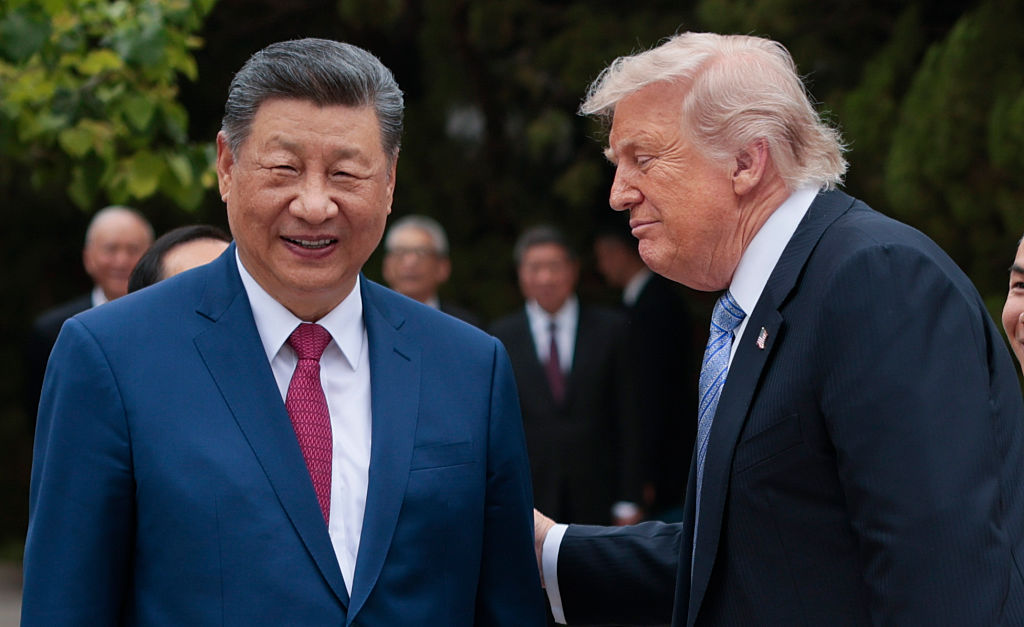
China is threatening America in the AI race

Reports sugget Zhipu AI  has released a new model that can rival leading US systems. Credit: Getty

Reports sugget Zhipu AI has released a new model that can rival leading US systems. Credit: Getty

July 1 2026 - 10:18am

China is trying to catch up with America on artificial intelligence. The Wall Street Journal has reported that Zhipu AI — one of China’s six “AI tiger” LLMs — has released a new model that can rival leading US systems, including Anthropic’s Mythos, in cybersecurity tasks such as pinpointing security bugs. While this marks a milestone in China’s drive to catch up with Western AI capabilities, strong performance on a single benchmark does not mean it has taken the lead. Chinese models still lag behind their Western counterparts in broader capabilities, such as autonomous operation. Skepticism is therefore warranted before resorting to hysterical conclusions, but complacency about the geopolitical implications of China’s AI advances would be an even greater mistake.

On the infrastructure side, Chinese AI is still constrained by access to advanced chips, with American labs way ahead in computing capacity as well as investment. Analysis from earlier this year suggests that Chinese models are likely to be at least a few months behind those in the US. But they are still continuing to make progress, or that the geopolitical importance of AI will be decided only by whose LLM has ventured deeper into the technological frontier. The practical applications of AI, countries’ to capture foreign markets, and the application of AI into the real economy will matter just as much.

Here, China may hold an advantage. As with its dominance across many critical supply chains, Beijing may not need to produce the most advanced AI systems — only those that are affordable and widely deployable. In doing so, it could consolidate global influence by supplying functional, low-cost AI at scale.

Beijing seems to be pursuing exactly that path, developing an AI “open-source” strategy that offers affordable, widely available AI models for companies and individuals to use and modify as they wish. The production of the DeepSeek AI model, which matched the performance of Silicon Valley tools such as ChatGPT at a fraction of the cost for users, created goodwill among Chinese models with developers.

The four most popular models on OpenRouter, an AI hardware platform for developers, are now all Chinese. The goal for China is not only to win the frontier-model race, but to make its systems the default layer of AI adoption across industries and global markets. For most economies, the choice is increasingly between an affordable tool they can deploy now and a more robust one that may be out of reach.

And while the countries adopting Chinese models may be exposed to political pressure and cyber threats from Beijing, safer and more capable alternatives matter little if they are unaffordable. American AI companies are already under pressure to monetize products whose operating costs are rising. If Chinese open-source models become the cheap default for startups, universities, governments and businesses across the developing world, then America’s AI lead will be eroded from below.

Perhaps more concerning for America in the long run is how AI can give Chinese manufacturing even more strength, through the ongoing integration of AI as a general-purpose technology. China’s new Five-Year Plan mentioned AI more than 50 times and includes an “AI+” action plan aimed at spreading AI across the economy.

Beijing has been pioneering automation of its critical infrastructure for years, with promising recent results in increasing warplane production capacity. In that regard, China’s open-model strategy and manufacturing dominance will reinforce each other. Cheap, adaptable models accelerate deployment across the real economy while those deployments generate real-world data and use cases that can feed back into further model improvement.

The United States should not dismiss the importance of its lead in the AI race. That lead worries Beijing, not least because a more automated Chinese economy would also become more vulnerable to AI-generated cyber threats. But nor should Washington assume that China cannot catch up with American capabilities over time.

This AI competition represents part of a broader struggle over tech supply chains and geopolitical influence. Decisions over whether to adopt US or Chinese models could produce a more fragmented global reality, with different regions relying on different cloud providers, chips and security structures. The result will likely be a global economy which is divided into competing spheres, rather than one which produces a single winner.


Miquel Vila is a political and geopolitical risk consultant focusing on industrial strategy, critical infrastructure and global supply chains.

miquelvilam