

X Close

MAHA Commission report is a challenge to Big Pharma

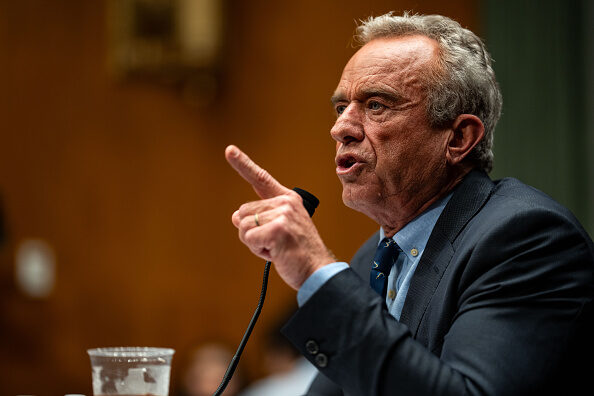
RFK Jr is on the warpath. Credit: Getty

RFK Jr is on the warpath. Credit: Getty

23 May 2025 - 4:00pm

When Robert F. Kennedy, Jr highlighted the crisis of chronic childhood diseases in his speech endorsing Donald Trump last August, his critics and much of the legacy media dismissed him. Nine months later, the Trump administration has embraced the cause.

Anyone in doubt about that should read the first White House report of the Make America Healthy Again (MAHA) Commission, which was published yesterday. The Commission is chaired by Kennedy, now Secretary of the Department of Health and Human Services, and features other prominent administration officials including USDA Secretary Brooke Rollins, NIH Director Jay Bhattacharya, and FDA Commissioner Marty Makary.

The report outlines the massive increase in youth health problems in the country that spends more per capita on healthcare than any nation in history. Many of these diseases are metabolic: obesity, diabetes, and Non-Alcoholic Fatty Liver Disease. Others involve the immune system, such as asthma, allergies, and autoimmune disorders. Still others are psychiatric, such as depression and anxiety.

Perhaps the most baffling development is the massive spike in autism spectrum disorder. Largely thanks to Kennedy’s messaging, millions of people now know that this once-rare condition reportedly affects one in 31 American children. Even if better diagnostics explain part of this rise, the trend is obvious. Moreover, most of the uptick in chronic illness has happened over the last few decades, so we can be sure the culprit for this non-infectious epidemic is something we have changed in our environment.

The MAHA Commission focuses on four key drivers of such change: food, exposure to environmental chemicals, the pervasive use of technology and a corresponding decline in physical exercise, and the overuse of medication that sometimes creates more problems than it solves. The Commission recognises that some of these drivers have profound upsides. The massive industrialisation of food after the Second World War, for instance, saved millions of lives. At the same time, the shift from whole foods to insulin-spiking “ultra-processed” food has evidently taken a toll on children’s health.

Similarly, many drugs have benefits. But they can also have serious costs. According to the MAHA Commission, efforts to identify the causes for chronic “diseases of civilization” are stymied by a corrupt nexus of government agencies, massive corporations in food and pharma, “special interest Non-Governmental Organizations (NGOs) and professional associations”. This cartel largely controls the research in food and drugs, as well as the media messaging around that research.

For some MAHA activists eager to reform America’s food, farming, and drug markets, the Commission’s first report may seem overly cautious. It does not call for a ban on specific pesticides or vaccines. What it does manage, however, is to reframe the debate over public health and set a bold agenda to reform the system that is exacerbating the outbreak of childhood illnesses. That’s a giant step in the right direction.


Dr Jay W. Richards is the director of the DeVos Center and chair of the Restoring American Wellness Initiative at The Heritage Foundation in Washington, DC.

DrJayRichards

China is threatening America in the AI race

Reports sugget Zhipu AI  has released a new model that can rival leading US systems. Credit: Getty

Reports sugget Zhipu AI has released a new model that can rival leading US systems. Credit: Getty

1 July 2026 - 10:18am

China is trying to catch up with America on artificial intelligence. The Wall Street Journal has reported that Zhipu AI — one of China’s six “AI tiger” LLMs — has released a new model that can rival leading US systems, including Anthropic’s Mythos, in cybersecurity tasks such as pinpointing security bugs. While this marks a milestone in China’s drive to catch up with Western AI capabilities, strong performance on a single benchmark does not mean it has taken the lead. Chinese models still lag behind their Western counterparts in broader capabilities, such as autonomous operation. Skepticism is therefore warranted before resorting to hysterical conclusions, but complacency about the geopolitical implications of China’s AI advances would be an even greater mistake.

On the infrastructure side, Chinese AI is still constrained by access to advanced chips, with American labs way ahead in computing capacity as well as investment. Analysis from earlier this year suggests that Chinese models are likely to be at least a few months behind those in the US. But they are still continuing to make progress, or that the geopolitical importance of AI will be decided only by whose LLM has ventured deeper into the technological frontier. The practical applications of AI, countries’ to capture foreign markets, and the application of AI into the real economy will matter just as much.

Here, China may hold an advantage. As with its dominance across many critical supply chains, Beijing may not need to produce the most advanced AI systems — only those that are affordable and widely deployable. In doing so, it could consolidate global influence by supplying functional, low-cost AI at scale.

Beijing seems to be pursuing exactly that path, developing an AI “open-source” strategy that offers affordable, widely available AI models for companies and individuals to use and modify as they wish. The production of the DeepSeek AI model, which matched the performance of Silicon Valley tools such as ChatGPT at a fraction of the cost for users, created goodwill among Chinese models with developers.

The four most popular models on OpenRouter, an AI hardware platform for developers, are now all Chinese. The goal for China is not only to win the frontier-model race, but to make its systems the default layer of AI adoption across industries and global markets. For most economies, the choice is increasingly between an affordable tool they can deploy now and a more robust one that may be out of reach.

And while the countries adopting Chinese models may be exposed to political pressure and cyber threats from Beijing, safer and more capable alternatives matter little if they are unaffordable. American AI companies are already under pressure to monetize products whose operating costs are rising. If Chinese open-source models become the cheap default for startups, universities, governments and businesses across the developing world, then America’s AI lead will be eroded from below.

Perhaps more concerning for America in the long run is how AI can give Chinese manufacturing even more strength, through the ongoing integration of AI as a general-purpose technology. China’s new Five-Year Plan mentioned AI more than 50 times and includes an “AI+” action plan aimed at spreading AI across the economy.

Beijing has been pioneering automation of its critical infrastructure for years, with promising recent results in increasing warplane production capacity. In that regard, China’s open-model strategy and manufacturing dominance will reinforce each other. Cheap, adaptable models accelerate deployment across the real economy while those deployments generate real-world data and use cases that can feed back into further model improvement.

The United States should not dismiss the importance of its lead in the AI race. That lead worries Beijing, not least because a more automated Chinese economy would also become more vulnerable to AI-generated cyber threats. But nor should Washington assume that China cannot catch up with American capabilities over time.

This AI competition represents part of a broader struggle over tech supply chains and geopolitical influence. Decisions over whether to adopt US or Chinese models could produce a more fragmented global reality, with different regions relying on different cloud providers, chips and security structures. The result will likely be a global economy which is divided into competing spheres, rather than one which produces a single winner.


Miquel Vila is a political and geopolitical risk consultant focusing on industrial strategy, critical infrastructure and global supply chains.

miquelvilam