




X Close

Labour’s conversion therapy bill is not fit for purpose

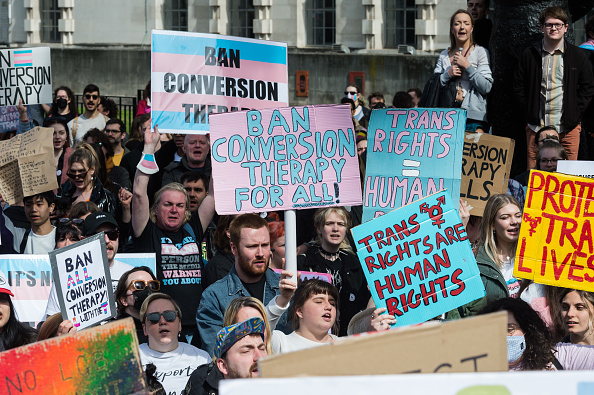
'The greatest danger posed by this bill is not that it will fill the prisons with therapists, parents and GPs. It is that it will make them afraid.' Credit: Getty

'The greatest danger posed by this bill is not that it will fill the prisons with therapists, parents and GPs. It is that it will make them afraid.' Credit: Getty

June 25 2026 - 3:38pm

The draft Conversion Practices Bill, published today, seems to have been written with the express purpose of pleasing no one. The bill is an attempt to criminalize abusive practices and therapies that target someone’s sexual orientation or gender identity. While the bill may be well intentioned, trans activists will predictably rage that it does not go far enough. Meanwhile, those who suspect that claims about the prevalence of conversion therapy have been wildly exaggerated for political ends will see the legislation for what it is: a bone tossed to the LGBTQAI+ lobby. Yet there is one thing legislators should be able to agree on: laws built on vague definitions are dangerous.

This bill would criminalize practices intended to persuade someone to have, not have, believe they have, or believe they do not have, a particular sexual orientation or transgender identity. Any action deemed to have caused harm or “serious alarm or distress to the individual which has a substantial adverse effect on their usual day-to-day activities” would be covered. But violence against the person is already a criminal offense, and there is no evidence that so-called conversion therapy is widespread.

However, this bill does not merely create criminal offenses. It also establishes conversion practice protection orders that may be sought by police, local authorities and others, including in family proceedings that may seek to protect someone from being subject to an alleged conversion practice. Such powers may be justified where conduct is clearly defined and serious, but are far more troubling when built upon concepts as subjective as emotional pressure and gender identity.

As ever, the devil is in the detail. This would be one of the first times “transgender identity” has been explicitly written into law. The bill defines it as being transsexual, undergoing or proposing to undergo a process of gender reassignment, or identifying as “neither male nor female” or “not solely male or female”. This leaves the very term up for varied interpretation.

Furthermore, conduct carried out in the course of providing healthcare is exempt from prosecution unless a practitioner acts in a manner that falls “far below” professional standards. Yet that merely relocates the uncertainty. The bill’s definition of abuse includes concepts such as “psychological or emotional pressure”. What confidence can a clinician have that exploratory questioning will not later be characterized as an attempt to alter or suppress a patient’s identity?

And what of the adolescents who mistake being same-sex attracted for being trans? This is something that politicians have a duty to be particularly aware of in the wake of the scandal at the Tavistock Clinic. Data from the clinic found that among patients over 12 whose sexual orientation was recorded, around nine in 10 girls and four in five boys were same-sex attracted or bisexual.

The greatest danger posed by this bill is not that it will fill the prisons with therapists, parents and GPs. It is that it will make them afraid. Faced with nebulous concepts such as “psychological pressure”, “serious alarm” and “transgender identity”, sensible professionals may conclude that affirmation is safer than inquiry. The result will not be better care but less of it.

Bad laws are often passed with good intentions. The problem is that once vague concepts are written into statute, they cease to belong to the politicians who drafted them. They belong to all of us, including grievance dwelling and perpetually offended activists.


Josephine Bartosch is assistant editor at The Critic and co-author of Pornocracy.

jo_bartosch

China is threatening America in the AI race

Reports sugget Zhipu AI  has released a new model that can rival leading US systems. Credit: Getty

Reports sugget Zhipu AI has released a new model that can rival leading US systems. Credit: Getty

July 1 2026 - 10:18am

China is trying to catch up with America on artificial intelligence. The Wall Street Journal has reported that Zhipu AI — one of China’s six “AI tiger” LLMs — has released a new model that can rival leading US systems, including Anthropic’s Mythos, in cybersecurity tasks such as pinpointing security bugs. While this marks a milestone in China’s drive to catch up with Western AI capabilities, strong performance on a single benchmark does not mean it has taken the lead. Chinese models still lag behind their Western counterparts in broader capabilities, such as autonomous operation. Skepticism is therefore warranted before resorting to hysterical conclusions, but complacency about the geopolitical implications of China’s AI advances would be an even greater mistake.

On the infrastructure side, Chinese AI is still constrained by access to advanced chips, with American labs way ahead in computing capacity as well as investment. Analysis from earlier this year suggests that Chinese models are likely to be at least a few months behind those in the US. But they are still continuing to make progress, or that the geopolitical importance of AI will be decided only by whose LLM has ventured deeper into the technological frontier. The practical applications of AI, countries’ to capture foreign markets, and the application of AI into the real economy will matter just as much.

Here, China may hold an advantage. As with its dominance across many critical supply chains, Beijing may not need to produce the most advanced AI systems — only those that are affordable and widely deployable. In doing so, it could consolidate global influence by supplying functional, low-cost AI at scale.

Beijing seems to be pursuing exactly that path, developing an AI “open-source” strategy that offers affordable, widely available AI models for companies and individuals to use and modify as they wish. The production of the DeepSeek AI model, which matched the performance of Silicon Valley tools such as ChatGPT at a fraction of the cost for users, created goodwill among Chinese models with developers.

The four most popular models on OpenRouter, an AI hardware platform for developers, are now all Chinese. The goal for China is not only to win the frontier-model race, but to make its systems the default layer of AI adoption across industries and global markets. For most economies, the choice is increasingly between an affordable tool they can deploy now and a more robust one that may be out of reach.

And while the countries adopting Chinese models may be exposed to political pressure and cyber threats from Beijing, safer and more capable alternatives matter little if they are unaffordable. American AI companies are already under pressure to monetize products whose operating costs are rising. If Chinese open-source models become the cheap default for startups, universities, governments and businesses across the developing world, then America’s AI lead will be eroded from below.

Perhaps more concerning for America in the long run is how AI can give Chinese manufacturing even more strength, through the ongoing integration of AI as a general-purpose technology. China’s new Five-Year Plan mentioned AI more than 50 times and includes an “AI+” action plan aimed at spreading AI across the economy.

Beijing has been pioneering automation of its critical infrastructure for years, with promising recent results in increasing warplane production capacity. In that regard, China’s open-model strategy and manufacturing dominance will reinforce each other. Cheap, adaptable models accelerate deployment across the real economy while those deployments generate real-world data and use cases that can feed back into further model improvement.

The United States should not dismiss the importance of its lead in the AI race. That lead worries Beijing, not least because a more automated Chinese economy would also become more vulnerable to AI-generated cyber threats. But nor should Washington assume that China cannot catch up with American capabilities over time.

This AI competition represents part of a broader struggle over tech supply chains and geopolitical influence. Decisions over whether to adopt US or Chinese models could produce a more fragmented global reality, with different regions relying on different cloud providers, chips and security structures. The result will likely be a global economy which is divided into competing spheres, rather than one which produces a single winner.


Miquel Vila is a political and geopolitical risk consultant focusing on industrial strategy, critical infrastructure and global supply chains.

miquelvilam