




X Close

King Charles is making a mistake by leaning into multiculturalism

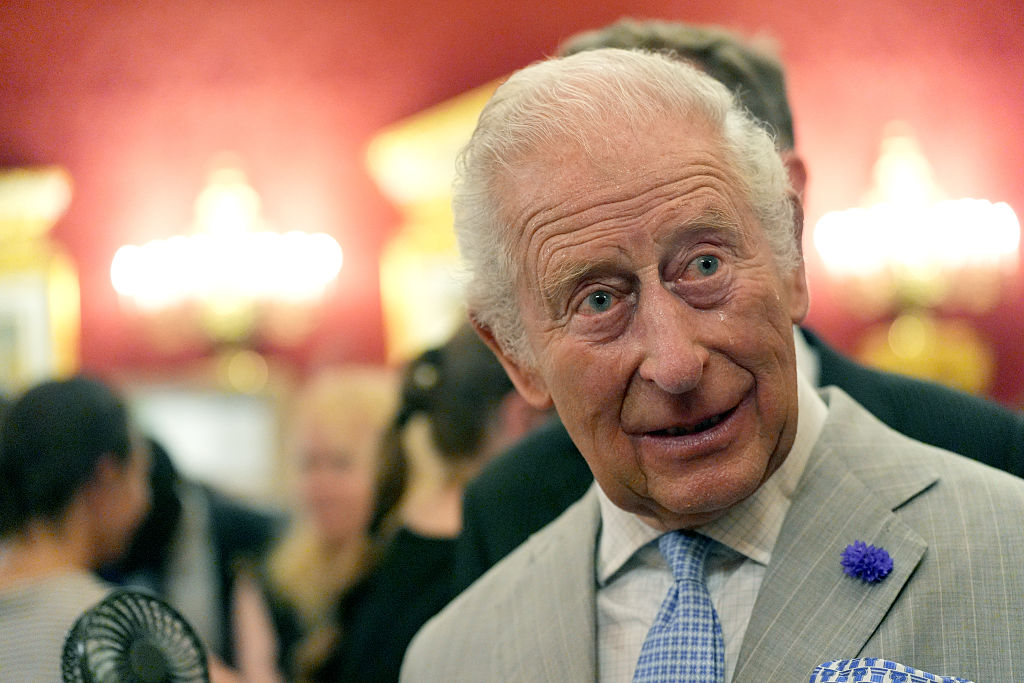
Heavy is the head. Credit: Getty

Heavy is the head. Credit: Getty

29 June 2026 - 7:00am

For hundreds of years, one of the central battlegrounds of British politics has been the role, powers and prerogatives of the Crown. From the Barons’ Wars to the Reformation and the Civil War, we have had a centuries-long argument over what the monarch is for, what they can and can’t do, and where they fit with the rest of the constitution. Various compromises and fudges have emerged in line with the changing social and political environment.

At present, the greatest challenge faced by the monarchy is its place in a country that is rapidly becoming more ethnically and religiously diverse. Before his coronation, there was much talk that King Charles would like to be officially regarded as Defender of Faith, rather than Defender of the Faith — the definite article being rather significant, as it was when Henry VIII was first granted the Fidei Defensor title by Pope Leo X in 1521. This did not happen in the end, of course, but a recent document from Buckingham Palace has resurrected the idea. The Sovereign Grant report includes the assertion that part of the King’s role is to protect faith “within the multi-faith nation”.

Some have seized on this as evidence of Charles’ surrender to contemporary multiculturalism and a repudiation of his role as Supreme Governor of the Church of England. This might be over-dramatic, but the complacent voices insisting that this is all a storm in a teacup are also missing the point. The Sovereign Grant report might be a dry document largely written by accountants, but it will surely have been carefully checked by senior members of the King’s staff. The explicit declaration that Charles is a champion for a general religious perspective therefore bears a certain amount of weight, and we are entitled to conclude that the King has taken a side on highly contentious matters of identity and nationality.

We might also reasonably raise the question of when it was decided that this was part of the role of the British monarchy, and by whom. The country has a constitutional monarchy, grounded for over 800 years in the principle that the Crown does not just act as it wishes, but must instead be constrained by law and custom. The Firm cannot simply decide for itself what the role of the monarchy ought to be, especially at a time of rapid and controversial change.

The royals also need to tread carefully with measures that might irritate their supporters. Since the Diamond Jubilee only 14 years ago, support for the monarchy — as measured by YouGov — has fallen by 11 percentage points to 64%. In 2022, when the nation was supposedly united behind Queen Elizabeth II for the Platinum Jubilee, this figure briefly hit just 59% before recovering and then stabilising under Charles. This decline appears to be permanent, and younger generations are significantly less enthusiastic than the general population.

Demographic change may well be a strong contributor to the monarchy’s uncertain position in the public affections. It stands to reason that many newcomers will simply not feel the instinctive affinity for the institution that many Britons retain, however much Charles and his advisers attempt to water down the distinctive aspects of his role as a Christian king of a particular people. There is a serious risk, therefore, in staking too much on an appeal to New Britain, while ignoring the reservations of the people who have traditionally been the Crown’s keenest advocates.


Niall Gooch is a public sector worker and occasional writer who lives in Kent.

niall_gooch

China is threatening America in the AI race

Reports sugget Zhipu AI  has released a new model that can rival leading US systems. Credit: Getty

Reports sugget Zhipu AI has released a new model that can rival leading US systems. Credit: Getty

1 July 2026 - 10:18am

China is trying to catch up with America on artificial intelligence. The Wall Street Journal has reported that Zhipu AI — one of China’s six “AI tiger” LLMs — has released a new model that can rival leading US systems, including Anthropic’s Mythos, in cybersecurity tasks such as pinpointing security bugs. While this marks a milestone in China’s drive to catch up with Western AI capabilities, strong performance on a single benchmark does not mean it has taken the lead. Chinese models still lag behind their Western counterparts in broader capabilities, such as autonomous operation. Skepticism is therefore warranted before resorting to hysterical conclusions, but complacency about the geopolitical implications of China’s AI advances would be an even greater mistake.

On the infrastructure side, Chinese AI is still constrained by access to advanced chips, with American labs way ahead in computing capacity as well as investment. Analysis from earlier this year suggests that Chinese models are likely to be at least a few months behind those in the US. But they are still continuing to make progress, or that the geopolitical importance of AI will be decided only by whose LLM has ventured deeper into the technological frontier. The practical applications of AI, countries’ to capture foreign markets, and the application of AI into the real economy will matter just as much.

Here, China may hold an advantage. As with its dominance across many critical supply chains, Beijing may not need to produce the most advanced AI systems — only those that are affordable and widely deployable. In doing so, it could consolidate global influence by supplying functional, low-cost AI at scale.

Beijing seems to be pursuing exactly that path, developing an AI “open-source” strategy that offers affordable, widely available AI models for companies and individuals to use and modify as they wish. The production of the DeepSeek AI model, which matched the performance of Silicon Valley tools such as ChatGPT at a fraction of the cost for users, created goodwill among Chinese models with developers.

The four most popular models on OpenRouter, an AI hardware platform for developers, are now all Chinese. The goal for China is not only to win the frontier-model race, but to make its systems the default layer of AI adoption across industries and global markets. For most economies, the choice is increasingly between an affordable tool they can deploy now and a more robust one that may be out of reach.

And while the countries adopting Chinese models may be exposed to political pressure and cyber threats from Beijing, safer and more capable alternatives matter little if they are unaffordable. American AI companies are already under pressure to monetize products whose operating costs are rising. If Chinese open-source models become the cheap default for startups, universities, governments and businesses across the developing world, then America’s AI lead will be eroded from below.

Perhaps more concerning for America in the long run is how AI can give Chinese manufacturing even more strength, through the ongoing integration of AI as a general-purpose technology. China’s new Five-Year Plan mentioned AI more than 50 times and includes an “AI+” action plan aimed at spreading AI across the economy.

Beijing has been pioneering automation of its critical infrastructure for years, with promising recent results in increasing warplane production capacity. In that regard, China’s open-model strategy and manufacturing dominance will reinforce each other. Cheap, adaptable models accelerate deployment across the real economy while those deployments generate real-world data and use cases that can feed back into further model improvement.

The United States should not dismiss the importance of its lead in the AI race. That lead worries Beijing, not least because a more automated Chinese economy would also become more vulnerable to AI-generated cyber threats. But nor should Washington assume that China cannot catch up with American capabilities over time.

This AI competition represents part of a broader struggle over tech supply chains and geopolitical influence. Decisions over whether to adopt US or Chinese models could produce a more fragmented global reality, with different regions relying on different cloud providers, chips and security structures. The result will likely be a global economy which is divided into competing spheres, rather than one which produces a single winner.


Miquel Vila is a political and geopolitical risk consultant focusing on industrial strategy, critical infrastructure and global supply chains.

miquelvilam