




X Close

Keir Starmer’s project was only ever about himself

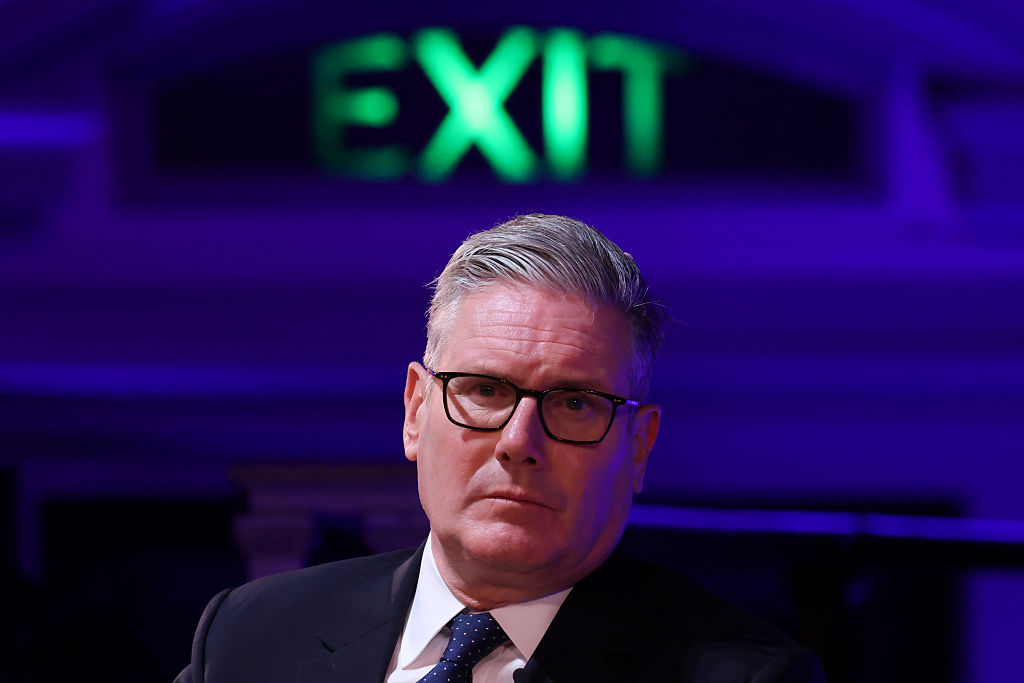
‘Starmer’s premiership has been an extraordinary political failure.’ Credit: Getty

‘Starmer’s premiership has been an extraordinary political failure.’ Credit: Getty

22 June 2026 - 7:00am

With his departure imminent, Keir Starmer will have spent less time in Number 10 than any prime minister in the history of the Labour Party. Even Jim Callaghan and Gordon Brown, who never won an election, served for longer in the role.

Starmer’s premiership has been an extraordinary political failure. He has squandered a historic majority. He has trashed the reputation of his party. He leaves little by way of policy legacy. Trust in politics under his premiership has sunk further still. And what was it all for?

When Starmer once said “there is no such thing as Starmerism and there never will be,” he was right, except in the narrowest sense: Starmerism was always about Keir Starmer. There was no doctrine, policy programme, or tradition. The Starmer project was simply an effort to make him prime minister.

After he entered Number 10, there was nothing else to do or to say. His self-repudiated “island of strangers” speech, which he claims not to have properly read before delivering, and a stuttering “meep meep” in response to Diane Abbott from the despatch box will be among the most memorable phrases of his short premiership.

Starmer brought to his leadership no vision, no sense of purpose, no real analysis of the problems facing the country, let alone the solutions. He had the misplaced self-confidence to believe that once he was in office, being a sensible grown-up who followed “the rules”, things would get better. When they didn’t, it was always someone else who paid the price. No other prime minister has been so ready to sacrifice his advisers for the sake of his own premiership.

The result was a dizzying array of U-turns: winter fuel allowance cuts, the two-child benefit cap, disabled welfare cuts, a national grooming gangs inquiry, ID cards, extending inheritance tax to farms, the Chagos Islands, allowing the US to use British bases to bomb Iran, day one employment rights, and cancelling local elections. These are indicative of a man who really doesn’t know what he’s doing or who he is for, with one exception: Keir Starmer is for himself.

From the outset of his leadership in 2020, Starmer made it clear that he was prepared to do or say anything to rise to the top job. His leadership was the most authoritarian in Labour’s history. He ejected his predecessor from the party. He shut down debate. He blocked parliamentary candidates who were aligned with the wrong faction. He treated the spirit of internal debate — which is absolutely necessary for the maintenance of the broad-church coalition that historically comprised the Labour Party — with contempt.

Starmer took the Labour whip off dozens of MPs, not just for misconduct but for political dissent. This is a use of the whips’ power not seen in the Labour Party in over half a century. Yet, under Starmer, it became almost de rigueur.

He used the Labour Party as a vehicle for his own personal advancement, without any deep attachment to its traditions, principles or culture. He allowed himself to lead a vicious, internal factional fight against “the Left” of the party. In so doing, he and his acolytes ripped out Labour’s heart and transplanted it with a cold, calculating machinery that has now prematurely short-circuited.

Nye Bevan described his Fifties leadership rival Hugh Gaitskell, who led the party from 1955-63, as a “man who hates ideas”. Rather than face up to internal party debates, Gaitskell preferred to “consort with dreary people…who are always advising him to hedge and to avoid dangerous debates”. Bevan complained: “He isn’t a man you can advise. He’s too brittle for that. If he disagrees with you, that’s that, and you can’t influence him. He isn’t a man who impressed or influenced. He is just scared and runs away.” A dreary man, rooted in nothing — it’s an apt way to describe Starmer.

There are some who worry that Andy Burnham, Starmer’s assumed successor, might be another politician in this mould. There is no doubt that Burnham is an ambitious man, but ambition itself is not a problem. He has a record of flitting between policy positions as winds change. Tony Benn divided politicians into two categories: signposts and weathercocks. Burnham may well be the latter.

But, at least in comparison to Starmer, Burnham is likely to be much more pluralistic in his approach to leadership. He appears to possess a genuine love of the Labour Party — its history, traditions, and people. He can at least bring about a revival of open debate in the party, before it is too late.

The failure of the Starmer leadership offers salutary lessons for Burnham. A Labour leader cannot survive on control of machinery alone. The Labour Party has a life of its own. It is an organic being, not a robot. Andy Burnham seems to understand this, but time will tell.


Richard Johnson is a Senior Lecturer in Politics at Queen Mary University of London.

richardmarcj

China is threatening America in the AI race

Reports sugget Zhipu AI  has released a new model that can rival leading US systems. Credit: Getty

Reports sugget Zhipu AI has released a new model that can rival leading US systems. Credit: Getty

1 July 2026 - 10:18am

China is trying to catch up with America on artificial intelligence. The Wall Street Journal has reported that Zhipu AI — one of China’s six “AI tiger” LLMs — has released a new model that can rival leading US systems, including Anthropic’s Mythos, in cybersecurity tasks such as pinpointing security bugs. While this marks a milestone in China’s drive to catch up with Western AI capabilities, strong performance on a single benchmark does not mean it has taken the lead. Chinese models still lag behind their Western counterparts in broader capabilities, such as autonomous operation. Skepticism is therefore warranted before resorting to hysterical conclusions, but complacency about the geopolitical implications of China’s AI advances would be an even greater mistake.

On the infrastructure side, Chinese AI is still constrained by access to advanced chips, with American labs way ahead in computing capacity as well as investment. Analysis from earlier this year suggests that Chinese models are likely to be at least a few months behind those in the US. But they are still continuing to make progress, or that the geopolitical importance of AI will be decided only by whose LLM has ventured deeper into the technological frontier. The practical applications of AI, countries’ to capture foreign markets, and the application of AI into the real economy will matter just as much.

Here, China may hold an advantage. As with its dominance across many critical supply chains, Beijing may not need to produce the most advanced AI systems — only those that are affordable and widely deployable. In doing so, it could consolidate global influence by supplying functional, low-cost AI at scale.

Beijing seems to be pursuing exactly that path, developing an AI “open-source” strategy that offers affordable, widely available AI models for companies and individuals to use and modify as they wish. The production of the DeepSeek AI model, which matched the performance of Silicon Valley tools such as ChatGPT at a fraction of the cost for users, created goodwill among Chinese models with developers.

The four most popular models on OpenRouter, an AI hardware platform for developers, are now all Chinese. The goal for China is not only to win the frontier-model race, but to make its systems the default layer of AI adoption across industries and global markets. For most economies, the choice is increasingly between an affordable tool they can deploy now and a more robust one that may be out of reach.

And while the countries adopting Chinese models may be exposed to political pressure and cyber threats from Beijing, safer and more capable alternatives matter little if they are unaffordable. American AI companies are already under pressure to monetize products whose operating costs are rising. If Chinese open-source models become the cheap default for startups, universities, governments and businesses across the developing world, then America’s AI lead will be eroded from below.

Perhaps more concerning for America in the long run is how AI can give Chinese manufacturing even more strength, through the ongoing integration of AI as a general-purpose technology. China’s new Five-Year Plan mentioned AI more than 50 times and includes an “AI+” action plan aimed at spreading AI across the economy.

Beijing has been pioneering automation of its critical infrastructure for years, with promising recent results in increasing warplane production capacity. In that regard, China’s open-model strategy and manufacturing dominance will reinforce each other. Cheap, adaptable models accelerate deployment across the real economy while those deployments generate real-world data and use cases that can feed back into further model improvement.

The United States should not dismiss the importance of its lead in the AI race. That lead worries Beijing, not least because a more automated Chinese economy would also become more vulnerable to AI-generated cyber threats. But nor should Washington assume that China cannot catch up with American capabilities over time.

This AI competition represents part of a broader struggle over tech supply chains and geopolitical influence. Decisions over whether to adopt US or Chinese models could produce a more fragmented global reality, with different regions relying on different cloud providers, chips and security structures. The result will likely be a global economy which is divided into competing spheres, rather than one which produces a single winner.


Miquel Vila is a political and geopolitical risk consultant focusing on industrial strategy, critical infrastructure and global supply chains.

miquelvilam