




X Close

Joy Reid’s MSNBC exit is no victory for common sense

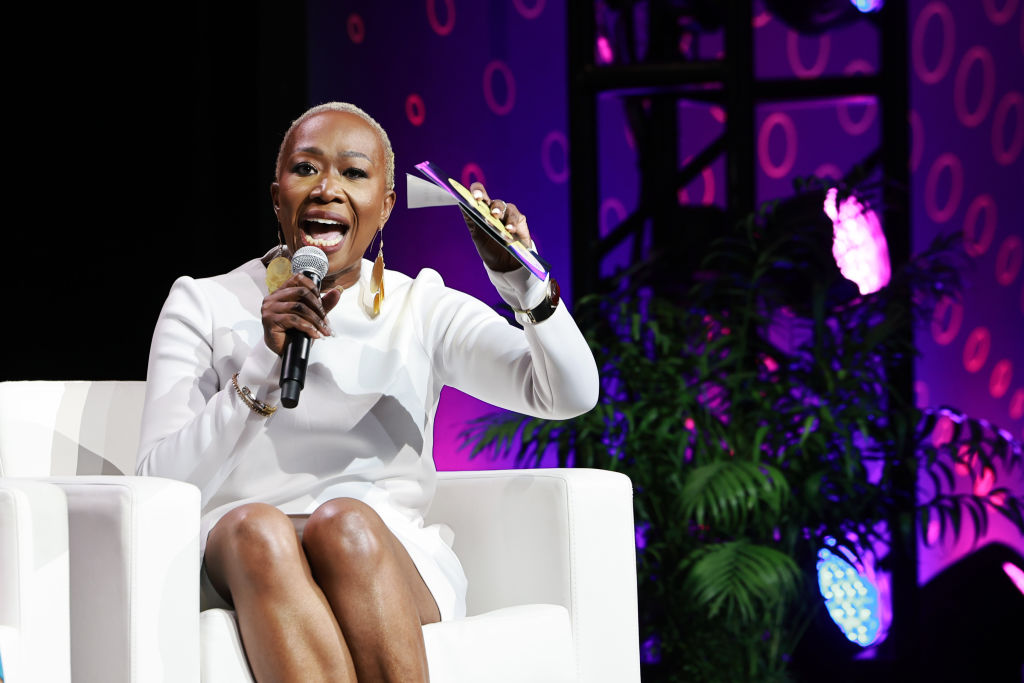
Joy Reid was one of MSNBC's most reliable anti-Trump voices. Credit: Getty

Joy Reid was one of MSNBC’s most reliable anti-Trump voices. Credit: Getty

24 February 2025 - 8:00pm

MSNBC has reportedly cancelled Joy Reid’s show The ReidOut in a major reshuffle — and conservatives are celebrating.

“Remember when Joy Reid laughingly mocked ‘white women tears’ as pathetic and offensive to her?” commentator Megyn Kelly asked on X. “Good riddance,” she went on. “Deeply saddened by the passing of Joy Reid’s MSNBC show,” echoed the Daily Wire’s Matt Walsh. “It was a great resource for right wing podcasters looking for a clip to play and make fun of.”

Though the jubilation was swift and savage, it wasn’t necessarily unwarranted. Reid, who has hosted a primetime show at the network since 2020, may not have persuaded many neutral viewers to her side, but she has offered Republicans plenty of clickbait with her incendiary and divisive commentary, including suggesting that “white women in this country have to change the way that they interact with the patriarchy” after they failed to turn out in sufficient numbers for Kamala Harris in November.

A favourite trope of Reid’s involves comparing Republicans to Nazis. Before the 2024 election, she warned that the GOP ticket met “the textbook definition of fascism”, comparing the now-President and Vice President to Adolf Hitler and Benito Mussolini. Back when Ron DeSantis was aiming for a GOP presidential primary win, Reid called him a “dictator in the making”.

Occasionally, she branched out from Nazi parallels to terrorist comparisons. “I bring up the Taliban a lot […] but the thing about Republicans now is that they are acting in a very Talibanesque way,” she said in reference to the passage of anti-abortion legislation through the democratic process. It wasn’t the first time she had made the comparison.

Reid, who boasts a Harvard degree, also claimed that she only received it because of affirmative action. Perhaps she feels the same way about her position at MSNBC, since her status as a black woman was loudly trumpeted when she moved from a weekend show to primetime.

Despite her apparent progressive credentials, Reid has not always been so right-on. In 2018, before she had been elevated to the coveted 7pm slot, she was outed for alleged blog posts making jokes at the expense of gay people. “Most straight people cringe at the sight of two men kissing,” she wrote. Reid’s apology tour included denying the posts were hers before admitting that her “hacker” defence was bogus. She apologised for “being dumb or cruel or hurtful”, without explicitly owning up to the comments. If that scandal wasn’t enough to keep MSNBC from promoting her, the endless Hitler and Taliban comparisons are probably not the reason she’s now been shown the door.

Sure, there is certainly a shift happening in mainstream media after Donald Trump’s reelection. MSNBC’s Joe Scarborough and Mika Brzezinski visited Mar-a-Lago to meet with him before the election “to restart communications”, much to the chagrin of their viewers. Even the ladies of ABC’s The View were told to lay off the President a bit last month.

But Reid’s replacements are not exactly going to appeal to Right-of-centre, or even moderate, voters. Under the direction of new president Rebecca Kutler, looking for a network shake-up as ratings plummet, the show will be taken over by the three co-hosts of morning show The Weekend.

Symone Sanders Townsend’s résumé includes press secretary for the presidential campaign of Sen. Bernie Sanders and senior adviser to both former president Joe Biden and former vice president Kamala Harris. Alicia Menendez, daughter of a former Democratic senator just sentenced to 11 years in prison, has previously supported Democratic campaigns including her father’s. Michael Steele, who was the chairman of the Republican National Committee from 2009 until 2011, will not add much ideological diversity. “The hell with Republicans!” he concluded on air earlier this month.

In short, MSNBC’s reshuffle will preserve its Left-wing credentials. Axios reported that “Kutler plans to […] elevate some of its most progressive voices.” Before the announcement of Reid’s departure, Variety noted that “[g]iving both [Inside With Jen Psaki and The Weekend] new space suggests MSNBC is eager to maintain its progressive stance, rather than trying to tack towards middle ground.”

What all this really means, however, is that the network is neither kicking out Reid for making anti-Trumpism her whole personality nor going in an even more radical route. Instead, it may just be looking for fresh faces willing to toe the Democratic Party line.

Reid may not have been able to own up to her past comments, but she was a true believer when it came to progressive postures such as promoting critical race theory, smashing the patriarchy, and blaming various races and sexes for voting the wrong way. If the Democrats are to have any hope of winning in 2028, they’ll have to try a different strategy — a more appealing one than could ever be endorsed by the woman who suggested that Harris ran a flawless campaign.

Madeline Fry Schultz is Contributors Editor at the Washington Examiner.

madelineefry

China is threatening America in the AI race

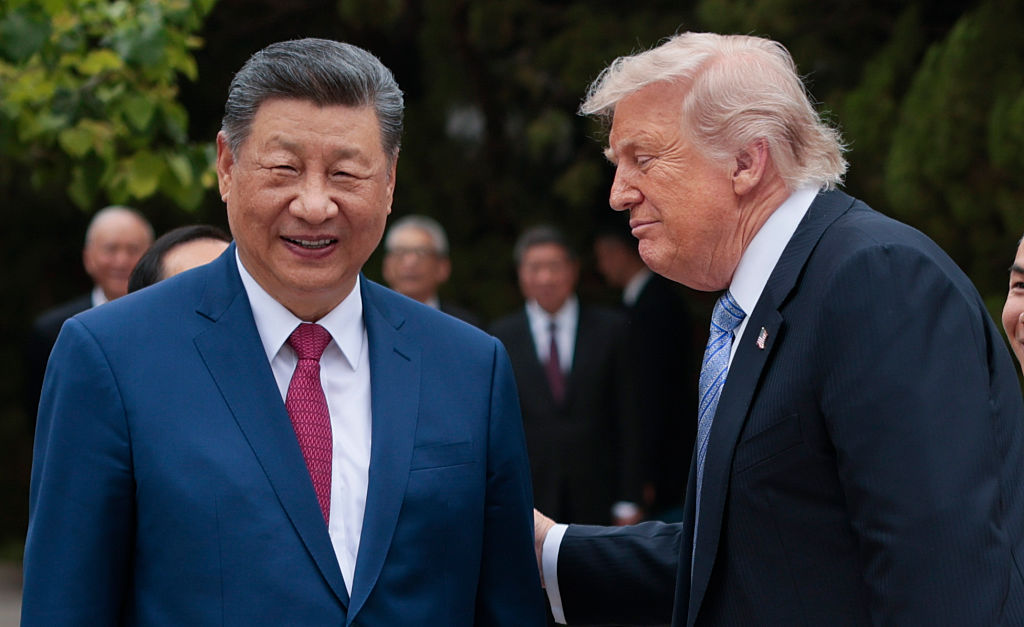
Reports sugget Zhipu AI  has released a new model that can rival leading US systems. Credit: Getty

Reports sugget Zhipu AI has released a new model that can rival leading US systems. Credit: Getty

1 July 2026 - 10:18am

China is trying to catch up with America on artificial intelligence. The Wall Street Journal has reported that Zhipu AI — one of China’s six “AI tiger” LLMs — has released a new model that can rival leading US systems, including Anthropic’s Mythos, in cybersecurity tasks such as pinpointing security bugs. While this marks a milestone in China’s drive to catch up with Western AI capabilities, strong performance on a single benchmark does not mean it has taken the lead. Chinese models still lag behind their Western counterparts in broader capabilities, such as autonomous operation. Skepticism is therefore warranted before resorting to hysterical conclusions, but complacency about the geopolitical implications of China’s AI advances would be an even greater mistake.

On the infrastructure side, Chinese AI is still constrained by access to advanced chips, with American labs way ahead in computing capacity as well as investment. Analysis from earlier this year suggests that Chinese models are likely to be at least a few months behind those in the US. But they are still continuing to make progress, or that the geopolitical importance of AI will be decided only by whose LLM has ventured deeper into the technological frontier. The practical applications of AI, countries’ to capture foreign markets, and the application of AI into the real economy will matter just as much.

Here, China may hold an advantage. As with its dominance across many critical supply chains, Beijing may not need to produce the most advanced AI systems — only those that are affordable and widely deployable. In doing so, it could consolidate global influence by supplying functional, low-cost AI at scale.

Beijing seems to be pursuing exactly that path, developing an AI “open-source” strategy that offers affordable, widely available AI models for companies and individuals to use and modify as they wish. The production of the DeepSeek AI model, which matched the performance of Silicon Valley tools such as ChatGPT at a fraction of the cost for users, created goodwill among Chinese models with developers.

The four most popular models on OpenRouter, an AI hardware platform for developers, are now all Chinese. The goal for China is not only to win the frontier-model race, but to make its systems the default layer of AI adoption across industries and global markets. For most economies, the choice is increasingly between an affordable tool they can deploy now and a more robust one that may be out of reach.

And while the countries adopting Chinese models may be exposed to political pressure and cyber threats from Beijing, safer and more capable alternatives matter little if they are unaffordable. American AI companies are already under pressure to monetize products whose operating costs are rising. If Chinese open-source models become the cheap default for startups, universities, governments and businesses across the developing world, then America’s AI lead will be eroded from below.

Perhaps more concerning for America in the long run is how AI can give Chinese manufacturing even more strength, through the ongoing integration of AI as a general-purpose technology. China’s new Five-Year Plan mentioned AI more than 50 times and includes an “AI+” action plan aimed at spreading AI across the economy.

Beijing has been pioneering automation of its critical infrastructure for years, with promising recent results in increasing warplane production capacity. In that regard, China’s open-model strategy and manufacturing dominance will reinforce each other. Cheap, adaptable models accelerate deployment across the real economy while those deployments generate real-world data and use cases that can feed back into further model improvement.

The United States should not dismiss the importance of its lead in the AI race. That lead worries Beijing, not least because a more automated Chinese economy would also become more vulnerable to AI-generated cyber threats. But nor should Washington assume that China cannot catch up with American capabilities over time.

This AI competition represents part of a broader struggle over tech supply chains and geopolitical influence. Decisions over whether to adopt US or Chinese models could produce a more fragmented global reality, with different regions relying on different cloud providers, chips and security structures. The result will likely be a global economy which is divided into competing spheres, rather than one which produces a single winner.


Miquel Vila is a political and geopolitical risk consultant focusing on industrial strategy, critical infrastructure and global supply chains.

miquelvilam