



X Close

Jenrick spat isn’t Thought for the Day’s main problem

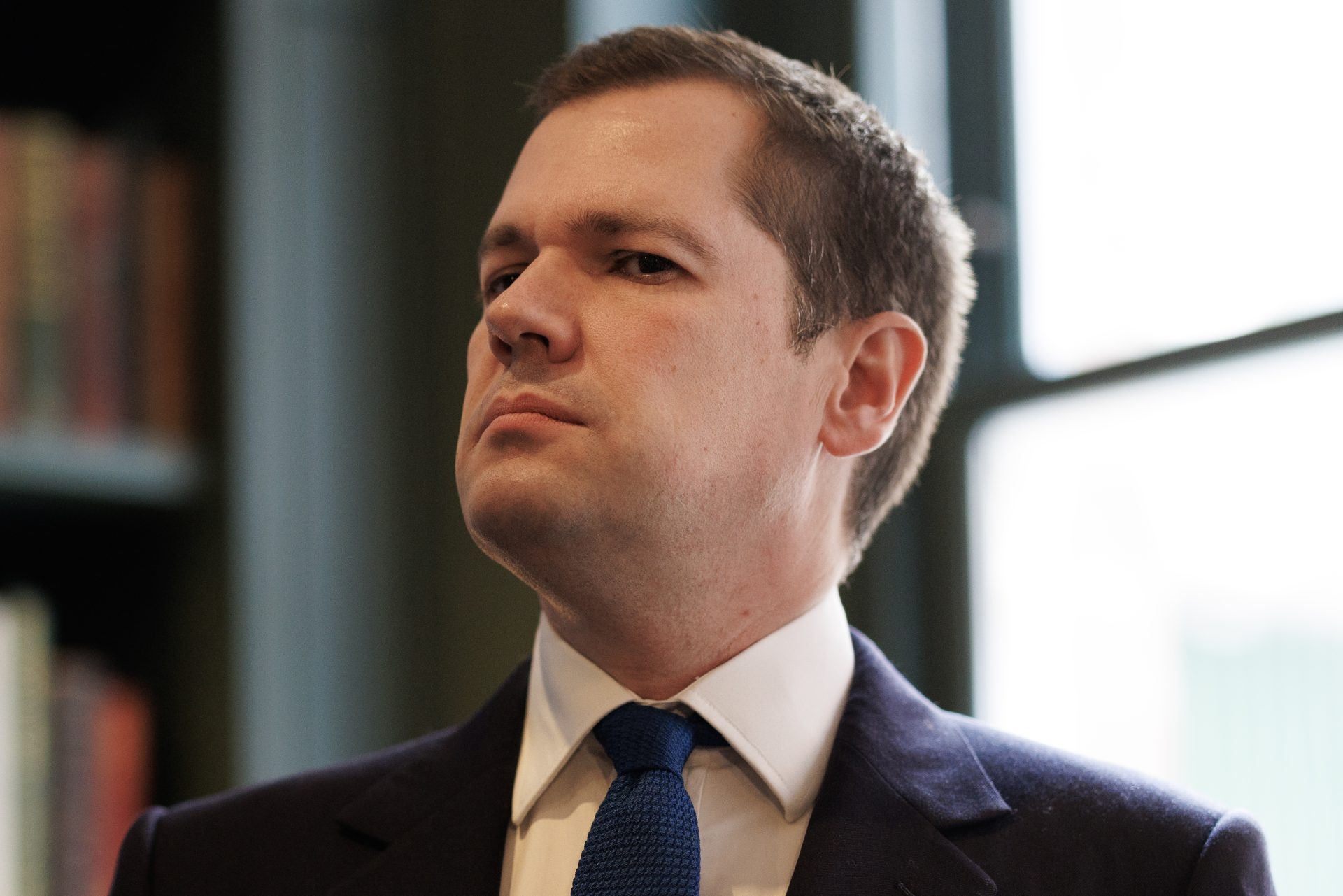
Theologian Krish Kandiah accused Robert Jenrick of xenophobia on 'Thought for the Day'. Credit: Getty.

Theologian Krish Kandiah accused Robert Jenrick of xenophobia on ‘Thought for the Day’. Credit: Getty.

15 August 2025 - 10:30am

Thought for the Day, the “God slot” on BBC Radio 4s flagship breakfast-time news show Today, has added to its fine old tradition of political spats. Krish Kandiah, a Baptist theologian and refugee charity director, used Wednesday’s five-minute slot to have a go at Robert Jenrick for xenophobia after the Shadow Justice Secretary wrote in the Daily Mail that a series of incidents involving residents in refugee hotels “made him fearful for his daughters’ safety”.

Kandiah’s speech was barbed and personal enough that it was edited retrospectively for use on BBC Sounds, while the BBC’s Director of Standards wrote to apologise to Jenrick without a complaint even having been made.

Thought for the Day tends to share the BBC’s broadly liberal-Left tendencies, and during the Eighties it was regularly criticised by the Tories as a politicised bully pulpit for Left-wing bishops such as Tom Butler and Jim Thompson to attack the Conservative Party. Yet the programme has also showcased more than a smattering of trenchantly Right-wing contributors over the years, from Bishop Bill Westwood, the overtly Thatcherite father of former BBC DJ Tim, to agony aunt Anne Atkins, who caused a furore in 1996 when she used her slot to savage Southwark Cathedral for hosting the Lesbian and Gay Christian Movement.

Of course, a politicised programme is not in itself a bad thing. The alternative isn’t necessarily spiritual depth, but instead trivial blandness.

The producers’ job of balancing contributors’ opinions is also made more complex by needing to include not only Christians of various denominations, but also Jews, Muslims, Buddhists, and Sikhs. Beyond that — and this is sometimes more difficult to understand in a largely non-practising society — even within Christianity, religious tendencies don’t always translate neatly across onto the secular Left-Right spectrum.

Kandiah, for example, holds what might be considered Left-of-centre views not only on migration, but also on criminal justice and the welfare state. Yet he also has a track record of opposing gay relationships among Christians and is a former director of the socially conservative Evangelical Alliance. Meanwhile, former archbishop of Canterbury Justin Welby, who was widely criticised for bringing progressive politics into the Church, has nonetheless expressed his opposition to sex outside marriage.

In fact, this combination of social conservatism and cultural and fiscal radicalism reflects the views of a substantial share of Britain’s clerical top leadership, across the theological spectrum. At the same time, while just about every possible mix of political and theological viewpoints is present on the pews, research shows the laity, at least in the Church of England, tends to take the opposite pairing of views to their bishops: liberal on gays and abortion, to the Right on economics, migration, and law and order.

It is that great mass of opinion in the pews — tolerant, even liberal on issues such as abortion and gay relationships, but far from thoroughly progressive — that never seems to have a champion on Thought for the Day, nor among the Christian intelligentsia and commentariat more widely. Oddly, this mix of views is broadly where the average Briton sits. Church decline is a multi-causal process, but this inability of top leaders to speak to the broad mass of public opinion must partially contribute.

In a world where churchgoing and consumption of BBC media are both in decline, some will ask how relevant Thought for the Day still is. For one thing, its prime-time slot during Today means it receives particularly high listenership among the political and cultural élite. Additionally, demographic shifts mean that Britain is set to become more religious again, with rapidly growing populations of Muslims and African-heritage Christians in particular. This slot matters, and may soon matter more.

Kandiah offered an olive branch to Jenrick on X last night, saying he would “love to find a way we could work together […] on the real challenges that are making people worried”. He referred to “housing, jobs, and the cost of living”, though absent — notably — was the challenge of immigration.


Gerry Lynch was Executive Director of the Alliance Party of Northern Ireland from 2007-10 and is now a country parson in Wiltshire.


China is threatening America in the AI race

Reports sugget Zhipu AI  has released a new model that can rival leading US systems. Credit: Getty

Reports sugget Zhipu AI has released a new model that can rival leading US systems. Credit: Getty

1 July 2026 - 10:18am

China is trying to catch up with America on artificial intelligence. The Wall Street Journal has reported that Zhipu AI — one of China’s six “AI tiger” LLMs — has released a new model that can rival leading US systems, including Anthropic’s Mythos, in cybersecurity tasks such as pinpointing security bugs. While this marks a milestone in China’s drive to catch up with Western AI capabilities, strong performance on a single benchmark does not mean it has taken the lead. Chinese models still lag behind their Western counterparts in broader capabilities, such as autonomous operation. Skepticism is therefore warranted before resorting to hysterical conclusions, but complacency about the geopolitical implications of China’s AI advances would be an even greater mistake.

On the infrastructure side, Chinese AI is still constrained by access to advanced chips, with American labs way ahead in computing capacity as well as investment. Analysis from earlier this year suggests that Chinese models are likely to be at least a few months behind those in the US. But they are still continuing to make progress, or that the geopolitical importance of AI will be decided only by whose LLM has ventured deeper into the technological frontier. The practical applications of AI, countries’ to capture foreign markets, and the application of AI into the real economy will matter just as much.

Here, China may hold an advantage. As with its dominance across many critical supply chains, Beijing may not need to produce the most advanced AI systems — only those that are affordable and widely deployable. In doing so, it could consolidate global influence by supplying functional, low-cost AI at scale.

Beijing seems to be pursuing exactly that path, developing an AI “open-source” strategy that offers affordable, widely available AI models for companies and individuals to use and modify as they wish. The production of the DeepSeek AI model, which matched the performance of Silicon Valley tools such as ChatGPT at a fraction of the cost for users, created goodwill among Chinese models with developers.

The four most popular models on OpenRouter, an AI hardware platform for developers, are now all Chinese. The goal for China is not only to win the frontier-model race, but to make its systems the default layer of AI adoption across industries and global markets. For most economies, the choice is increasingly between an affordable tool they can deploy now and a more robust one that may be out of reach.

And while the countries adopting Chinese models may be exposed to political pressure and cyber threats from Beijing, safer and more capable alternatives matter little if they are unaffordable. American AI companies are already under pressure to monetize products whose operating costs are rising. If Chinese open-source models become the cheap default for startups, universities, governments and businesses across the developing world, then America’s AI lead will be eroded from below.

Perhaps more concerning for America in the long run is how AI can give Chinese manufacturing even more strength, through the ongoing integration of AI as a general-purpose technology. China’s new Five-Year Plan mentioned AI more than 50 times and includes an “AI+” action plan aimed at spreading AI across the economy.

Beijing has been pioneering automation of its critical infrastructure for years, with promising recent results in increasing warplane production capacity. In that regard, China’s open-model strategy and manufacturing dominance will reinforce each other. Cheap, adaptable models accelerate deployment across the real economy while those deployments generate real-world data and use cases that can feed back into further model improvement.

The United States should not dismiss the importance of its lead in the AI race. That lead worries Beijing, not least because a more automated Chinese economy would also become more vulnerable to AI-generated cyber threats. But nor should Washington assume that China cannot catch up with American capabilities over time.

This AI competition represents part of a broader struggle over tech supply chains and geopolitical influence. Decisions over whether to adopt US or Chinese models could produce a more fragmented global reality, with different regions relying on different cloud providers, chips and security structures. The result will likely be a global economy which is divided into competing spheres, rather than one which produces a single winner.


Miquel Vila is a political and geopolitical risk consultant focusing on industrial strategy, critical infrastructure and global supply chains.

miquelvilam
