




X Close

Japan’s flag desecration law reflects growing Right-wing pressure

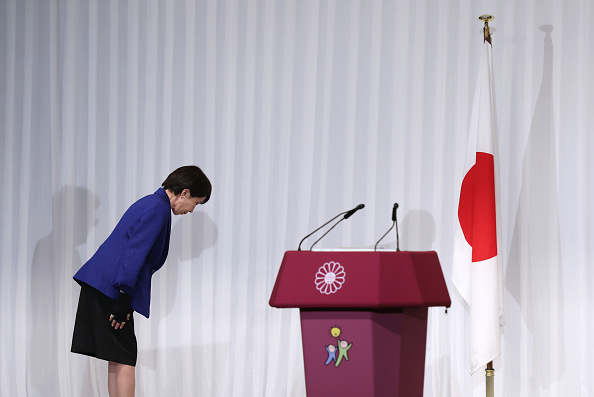
Those charged under the new flag desecration law could face two years in prison. Credit: Getty

Those charged under the new flag desecration law could face two years in prison. Credit: Getty

13 June 2026 - 12:00pm

Japan’s ruling party, the Liberal Democratic Party (LDP), has approved a bill that will make it illegal to desecrate the national flag — known as the “Hinomaru”. When the bill is passed, anyone caught in the act, or documenting someone else doing so, could face a two-year prison sentence or a 200,000 yen fine. The LDP hopes to enact the bill in the current parliamentary session ending 17 July.

The most common reaction to this proposal from critics has been confusion. The official opposition Democratic Party for the People (DDP) has said it will vote against. This is not because the party is in favour of desecrating the national flag, but because it sees the legislation as a waste of time, and is worried about the impact on freedom of expression.

It’s certainly hard to make a case for the bill’s urgency. It is not as if there have been many — or indeed any — high-profile cases of flag desecration in Japan that might have prompted the legislation. Furthermore, it has taken up a great deal of time because the wording of the bill has been agonised over to a farcical extent. Exemptions had to be included to ensure that football supporters customising their flags or teachers serving school children rice balls decorated with the Hinomaru don’t fall foul of the law.

The Government argues it is merely correcting a mildly embarrassing anomaly. Some countries restrict flag desecration only in relation to their own national flag, such as the United States and France, while others extend protection to all flags, including foreign ones, as in South Korea and Germany. Japan, however, has ended up in a position where it is legal to desecrate the Japanese flag but illegal to desecrate those of other countries.

Yet the time and political effort devoted to the issue suggest it may amount to more than a simple tidying-up exercise. One interpretation is that it serves as a distraction for a government that lacks either the means or the ideas to address more serious problems, from rising inflation to public concerns over immigration.

The law might also be an olive branch to the hardline conservatives whose true goal is rewriting the pacifist constitution — a far bigger task. Prime Minister Sanae Takaichi has described the bill as “necessary to protect Japan’s honour”, but cynics might argue it is really to ward off criticism from her Right flank. Tellingly perhaps, the idea of a desecration bill seems to have come from the ascendant Sanseitō party, whose relationship to the LDP is similar to that of Reform to the Tories in the UK.

There is an international dimension, too, that makes the bill attractive to Takaichi. The bill might have little practical use, but it could serve as a coded rebuke aimed at a foreign audience, namely China. The Justice Ministry gave a hint of this when it described the project of formulating the law as “in consideration of the smooth functioning and security of Japan’s diplomatic relations”. This may be a reference to the documented cases of Japanese flag burning in China that followed Japan’s release of treated wastewater from the Fukushima nuclear plant in 2023. The protests led to an ongoing ban on Japanese seafood.

This touches on a broader issue: Takaichi has a China problem. Her biggest controversy to date was her comments in November of last year that implied Japan would militarily intervene if China invaded Taiwan, which provoked a volcanic response from Beijing. President Trump urged Takaichi to walk it back, which she refused to do. The flag law might then be, at least to some extent, a show of seriousness, and a signal, or even a warning, that Japanese flags are not for burning and the country is a serious international player, not to be messed with.


Philip Patrick is a lecturer at a Tokyo university and a freelance journalist.
@Pbp19Philip

China is threatening America in the AI race

Reports sugget Zhipu AI  has released a new model that can rival leading US systems. Credit: Getty

Reports sugget Zhipu AI has released a new model that can rival leading US systems. Credit: Getty

1 July 2026 - 10:18am

China is trying to catch up with America on artificial intelligence. The Wall Street Journal has reported that Zhipu AI — one of China’s six “AI tiger” LLMs — has released a new model that can rival leading US systems, including Anthropic’s Mythos, in cybersecurity tasks such as pinpointing security bugs. While this marks a milestone in China’s drive to catch up with Western AI capabilities, strong performance on a single benchmark does not mean it has taken the lead. Chinese models still lag behind their Western counterparts in broader capabilities, such as autonomous operation. Skepticism is therefore warranted before resorting to hysterical conclusions, but complacency about the geopolitical implications of China’s AI advances would be an even greater mistake.

On the infrastructure side, Chinese AI is still constrained by access to advanced chips, with American labs way ahead in computing capacity as well as investment. Analysis from earlier this year suggests that Chinese models are likely to be at least a few months behind those in the US. But they are still continuing to make progress, or that the geopolitical importance of AI will be decided only by whose LLM has ventured deeper into the technological frontier. The practical applications of AI, countries’ to capture foreign markets, and the application of AI into the real economy will matter just as much.

Here, China may hold an advantage. As with its dominance across many critical supply chains, Beijing may not need to produce the most advanced AI systems — only those that are affordable and widely deployable. In doing so, it could consolidate global influence by supplying functional, low-cost AI at scale.

Beijing seems to be pursuing exactly that path, developing an AI “open-source” strategy that offers affordable, widely available AI models for companies and individuals to use and modify as they wish. The production of the DeepSeek AI model, which matched the performance of Silicon Valley tools such as ChatGPT at a fraction of the cost for users, created goodwill among Chinese models with developers.

The four most popular models on OpenRouter, an AI hardware platform for developers, are now all Chinese. The goal for China is not only to win the frontier-model race, but to make its systems the default layer of AI adoption across industries and global markets. For most economies, the choice is increasingly between an affordable tool they can deploy now and a more robust one that may be out of reach.

And while the countries adopting Chinese models may be exposed to political pressure and cyber threats from Beijing, safer and more capable alternatives matter little if they are unaffordable. American AI companies are already under pressure to monetize products whose operating costs are rising. If Chinese open-source models become the cheap default for startups, universities, governments and businesses across the developing world, then America’s AI lead will be eroded from below.

Perhaps more concerning for America in the long run is how AI can give Chinese manufacturing even more strength, through the ongoing integration of AI as a general-purpose technology. China’s new Five-Year Plan mentioned AI more than 50 times and includes an “AI+” action plan aimed at spreading AI across the economy.

Beijing has been pioneering automation of its critical infrastructure for years, with promising recent results in increasing warplane production capacity. In that regard, China’s open-model strategy and manufacturing dominance will reinforce each other. Cheap, adaptable models accelerate deployment across the real economy while those deployments generate real-world data and use cases that can feed back into further model improvement.

The United States should not dismiss the importance of its lead in the AI race. That lead worries Beijing, not least because a more automated Chinese economy would also become more vulnerable to AI-generated cyber threats. But nor should Washington assume that China cannot catch up with American capabilities over time.

This AI competition represents part of a broader struggle over tech supply chains and geopolitical influence. Decisions over whether to adopt US or Chinese models could produce a more fragmented global reality, with different regions relying on different cloud providers, chips and security structures. The result will likely be a global economy which is divided into competing spheres, rather than one which produces a single winner.


Miquel Vila is a political and geopolitical risk consultant focusing on industrial strategy, critical infrastructure and global supply chains.

miquelvilam