




X Close

Is Lara Trump’s new Fox show a campaign in disguise?

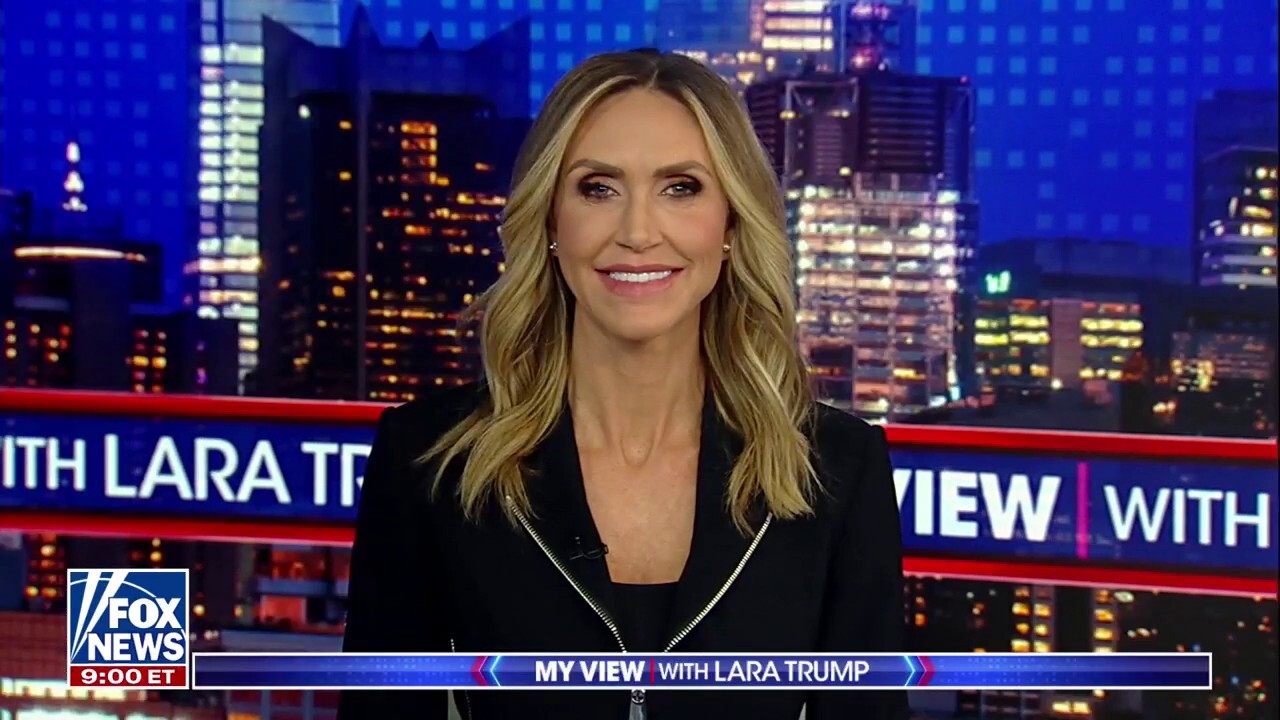
Lara Trump debuted her new show on Fox last night. Credit: Fox

Lara Trump debuted her new show on Fox last night. Credit: Fox

23 February 2025 - 7:00pm

When Fox News announced that Lara Trump would host a new weekend show starting this month, liberals criticised it as one of the most brazen conflicts of interest in modern television history: a sitting president’s daughter-in-law getting her own prime-time news slot. Others focused on the nepotism angle — after all, her modest CV consists mainly of hosting duties on Trump’s Facebook-based “Real News Update”, but both claims miss the key point.

With Fox News now fully on board, “My View with Lara Trump” provides an important window into the future of the Trump legacy. The debut episode revealed a carefully crafted blend of gentle family propaganda and savvy political positioning, and arrives at an opportune moment as other networks and media platforms settle their lawsuits with Trump. As speculation builds about life after Trump and Lara’s brother-in-law Don Jr.’s 2028 prospects, this show provides an important window into the future of the Trump legacy.

The format is deceptively simple: soft-focus interviews with Trump’s most telegenic female appointees, each question prefaced with reverent historical context about Trump’s unwavering patriotism. “Long before Trump was running for President, he was fighting for the flag at Mar-a-Lago,” Lara reminds us while interviewing newly-minted Attorney General Pam Bondi, who once defended Trump’s right to fly the flag at a certain height.

Conversations with other Trump administration figures like White House Press Secretary Karoline Leavitt follow a similar pattern. “He’s so generous with his time…he cares what everyone thinks,” Leavitt gushes, to which Lara readily agrees: “That’s something he’s done amazingly well at.” Even harder-hitting segments, like an interview with recently-confirmed Director of National Intelligence Tulsi Gabbard, stay carefully on-message. Gabbard, discussing DEI programme savings in her office — “$20 million with one stroke of the pen” — maintains a notably sombre demeanour despite Lara’s efforts to lighten the mood. The show then closes with its softest segment, which includes viewer questions about Lara’s personal life such as her high school varsity cheerleading experience.

It is certainly notable that Trump has family members in key media outposts during, not after, his time in office. Other political progeny like Jenna Bush Hager and Meghan McCain didn’t land their network gigs (on “Today” and “The View,” respectively) until their famous fathers’ political ascents were long over. But whether “My View” survives past the administration on its merits hardly matters. It’s already serving its dual purpose as both a propaganda vehicle and launching pad for future Trump political careers.

Recent polling on the complex succession battle brewing within the MAGA movement illustrates this point. While a January 2025 poll from The Hill showed Donald Trump Jr. tied with Vice President JD Vance at 30% among Republican voters — with Jr. commanding an impressive 44% support among younger GOP voters (ages 18-34) — February’s CPAC straw poll revealed a dramatic shift, with Vance emerging as the clear favourite at 61% to Jr.’s 2%. This volatile polling landscape suggests why having a Trump family member commanding a prime-time slot on Fox News could be a key differentiator.

Indeed, Lara’s careful, positive narrative-crafting could help boost both her own political prospects and those of her better-known brother-in-law. Don Jr.’s cautious response to questions about his 2028 aspirations — “Oh, God. No, no, no, don’t get me into trouble” — suggests the family understands the delicate timing required for such manoeuvres. With Vance’s star rising rapidly within the MAGA movement thanks to moments like his powerful America First speech in Germany, “My View” offers the Trumps a weekly opportunity to keep reminding viewers where their loyalties should ultimately lie.

For good or ill, nobody has done branding quite like the Trumps. And with this latest venture, they’ve proven once again that in American politics and media, the original form of affirmative action — putting family, not America, first — remains undefeated. Whether the Trumps can avoid any future defeats will depend, at least in part, on how well this strategic relationship with Fox News enables Lara to do the work of ensuring a smooth succession.


Oliver Bateman is a historian and journalist based in Pittsburgh. He blogs, vlogs, and podcasts at his Substack, Oliver Bateman Does the Work

MoustacheClubUS

China is threatening America in the AI race

Reports sugget Zhipu AI  has released a new model that can rival leading US systems. Credit: Getty

Reports sugget Zhipu AI has released a new model that can rival leading US systems. Credit: Getty

1 July 2026 - 10:18am

China is trying to catch up with America on artificial intelligence. The Wall Street Journal has reported that Zhipu AI — one of China’s six “AI tiger” LLMs — has released a new model that can rival leading US systems, including Anthropic’s Mythos, in cybersecurity tasks such as pinpointing security bugs. While this marks a milestone in China’s drive to catch up with Western AI capabilities, strong performance on a single benchmark does not mean it has taken the lead. Chinese models still lag behind their Western counterparts in broader capabilities, such as autonomous operation. Skepticism is therefore warranted before resorting to hysterical conclusions, but complacency about the geopolitical implications of China’s AI advances would be an even greater mistake.

On the infrastructure side, Chinese AI is still constrained by access to advanced chips, with American labs way ahead in computing capacity as well as investment. Analysis from earlier this year suggests that Chinese models are likely to be at least a few months behind those in the US. But they are still continuing to make progress, or that the geopolitical importance of AI will be decided only by whose LLM has ventured deeper into the technological frontier. The practical applications of AI, countries’ to capture foreign markets, and the application of AI into the real economy will matter just as much.

Here, China may hold an advantage. As with its dominance across many critical supply chains, Beijing may not need to produce the most advanced AI systems — only those that are affordable and widely deployable. In doing so, it could consolidate global influence by supplying functional, low-cost AI at scale.

Beijing seems to be pursuing exactly that path, developing an AI “open-source” strategy that offers affordable, widely available AI models for companies and individuals to use and modify as they wish. The production of the DeepSeek AI model, which matched the performance of Silicon Valley tools such as ChatGPT at a fraction of the cost for users, created goodwill among Chinese models with developers.

The four most popular models on OpenRouter, an AI hardware platform for developers, are now all Chinese. The goal for China is not only to win the frontier-model race, but to make its systems the default layer of AI adoption across industries and global markets. For most economies, the choice is increasingly between an affordable tool they can deploy now and a more robust one that may be out of reach.

And while the countries adopting Chinese models may be exposed to political pressure and cyber threats from Beijing, safer and more capable alternatives matter little if they are unaffordable. American AI companies are already under pressure to monetize products whose operating costs are rising. If Chinese open-source models become the cheap default for startups, universities, governments and businesses across the developing world, then America’s AI lead will be eroded from below.

Perhaps more concerning for America in the long run is how AI can give Chinese manufacturing even more strength, through the ongoing integration of AI as a general-purpose technology. China’s new Five-Year Plan mentioned AI more than 50 times and includes an “AI+” action plan aimed at spreading AI across the economy.

Beijing has been pioneering automation of its critical infrastructure for years, with promising recent results in increasing warplane production capacity. In that regard, China’s open-model strategy and manufacturing dominance will reinforce each other. Cheap, adaptable models accelerate deployment across the real economy while those deployments generate real-world data and use cases that can feed back into further model improvement.

The United States should not dismiss the importance of its lead in the AI race. That lead worries Beijing, not least because a more automated Chinese economy would also become more vulnerable to AI-generated cyber threats. But nor should Washington assume that China cannot catch up with American capabilities over time.

This AI competition represents part of a broader struggle over tech supply chains and geopolitical influence. Decisions over whether to adopt US or Chinese models could produce a more fragmented global reality, with different regions relying on different cloud providers, chips and security structures. The result will likely be a global economy which is divided into competing spheres, rather than one which produces a single winner.


Miquel Vila is a political and geopolitical risk consultant focusing on industrial strategy, critical infrastructure and global supply chains.

miquelvilam