



X Close

Is Andy Burnham walking into Starmer’s trap?

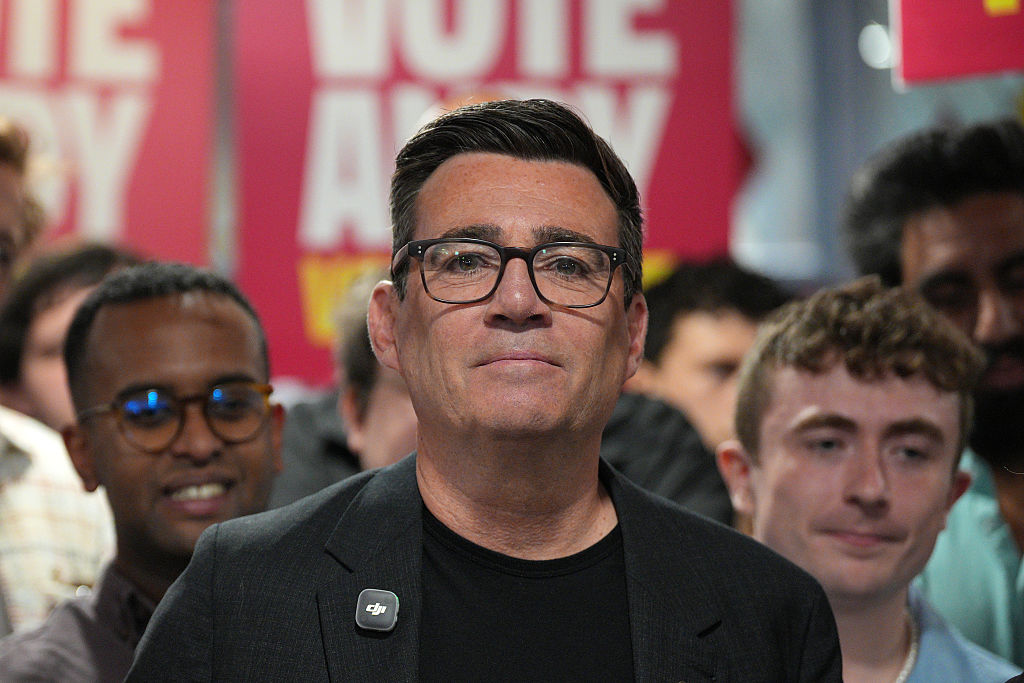
You come at the king, you best not miss. Credit: Getty

You come at the king, you best not miss. Credit: Getty

18 June 2026 - 10:00am

If Andy Burnham prevails in Makerfield today, Keir Starmer wants to give him a job. “I hope he wins the by-election and he plays a big part in the Labour government,” the PM told reporters at the G7 summit in France yesterday. Needless to say, it’s a trap. A close look reveals that there are multiple tripwires strung across the road from Makerfield to Downing Street.

The immediate objective is to play for time by delaying a leadership challenge. Starmer was unlucky that his rival managed to engineer a by-election so soon after Labour’s local elections disaster. However, the prospect of another by-election — this one to replace Burnham as mayor of Greater Manchester — provides the Starmerites with a second chance.

Makerfield has been hyped as the most important by-election since the Second World War. But that’s only true as a means to an end — that is, getting Burnham back to Westminster. The contest itself is unusual to the point of wider irrelevance: a referendum on whether voters want a likely next prime minister as their local MP. As such, it tells us less than a normal by-election about the balance of forces between Labour and Reform UK.

Not so the looming mayoral contest. This would take place over an area covering 27 Westminster constituencies — including the seats of Angela Rayner, Lucy Powell, and Lisa Nandy. It will tell us whether Reform really does have the support to supplant Labour across the North.

Burnham will therefore be expected to do everything he can to win the contest for Labour. Helpful actions he might undertake include photo ops with his would-be successor, door-to-door campaigning, and not plunging the national party into a concurrent civil war. Starmer is already making this point.

Of course, Burnham must realise that a Labour loss in a high-profile election — that he himself has triggered — would undo his credentials as the leadership candidate who can beat Reform. Ideally, then, he’d become Labour leader and PM before Greater Manchester even goes to the polls. That, however, would require the incumbent to depart quickly and quietly — and, so far, Starmer is taking every opportunity to insist that he’ll fight to the bitter end.

Burnham could choose to wait until later this year to make his move. But that’s where Starmer’s generous job offer comes in. If Burnham accepts, he’d be bound by collective ministerial responsibility. But if he chooses to bide his time on the backbenches, he’d have no excuse not to clarify his woolly positions on divisive internal party issues such as whether to protect welfare or properly fund defence. Andy-sceptics on the Left and the Right of the party will be waiting to pounce, with the current Labour leader somewhere in the middle hoping to benefit.

It’s often said that Starmer is no good at politics. But that’s not the case when it comes to internal party machinations. He’s an outsider who became an MP in 2015 at the age of 52. In the space of a year, he joined Jeremy Corbyn’s shadow cabinet, resigned from it, and then rejoined. Next, he beat three women to become Labour leader after escaping all blame for the 2019 general election disaster. Having called himself Corbyn’s “friend”, he subsequently drove the former leader out of the party and got away with it. To cap it all off, he secured a triple-figure majority in 2024 on just 34% of the vote.

Like it or not, the man has moves. Burnham had better be ready.


Peter Franklin is Associate Editor of UnHerd. He was previously a policy advisor and speechwriter on environmental and social issues.

peterfranklin_

China is threatening America in the AI race

Reports sugget Zhipu AI  has released a new model that can rival leading US systems. Credit: Getty

Reports sugget Zhipu AI has released a new model that can rival leading US systems. Credit: Getty

1 July 2026 - 10:18am

China is trying to catch up with America on artificial intelligence. The Wall Street Journal has reported that Zhipu AI — one of China’s six “AI tiger” LLMs — has released a new model that can rival leading US systems, including Anthropic’s Mythos, in cybersecurity tasks such as pinpointing security bugs. While this marks a milestone in China’s drive to catch up with Western AI capabilities, strong performance on a single benchmark does not mean it has taken the lead. Chinese models still lag behind their Western counterparts in broader capabilities, such as autonomous operation. Skepticism is therefore warranted before resorting to hysterical conclusions, but complacency about the geopolitical implications of China’s AI advances would be an even greater mistake.

On the infrastructure side, Chinese AI is still constrained by access to advanced chips, with American labs way ahead in computing capacity as well as investment. Analysis from earlier this year suggests that Chinese models are likely to be at least a few months behind those in the US. But they are still continuing to make progress, or that the geopolitical importance of AI will be decided only by whose LLM has ventured deeper into the technological frontier. The practical applications of AI, countries’ to capture foreign markets, and the application of AI into the real economy will matter just as much.

Here, China may hold an advantage. As with its dominance across many critical supply chains, Beijing may not need to produce the most advanced AI systems — only those that are affordable and widely deployable. In doing so, it could consolidate global influence by supplying functional, low-cost AI at scale.

Beijing seems to be pursuing exactly that path, developing an AI “open-source” strategy that offers affordable, widely available AI models for companies and individuals to use and modify as they wish. The production of the DeepSeek AI model, which matched the performance of Silicon Valley tools such as ChatGPT at a fraction of the cost for users, created goodwill among Chinese models with developers.

The four most popular models on OpenRouter, an AI hardware platform for developers, are now all Chinese. The goal for China is not only to win the frontier-model race, but to make its systems the default layer of AI adoption across industries and global markets. For most economies, the choice is increasingly between an affordable tool they can deploy now and a more robust one that may be out of reach.

And while the countries adopting Chinese models may be exposed to political pressure and cyber threats from Beijing, safer and more capable alternatives matter little if they are unaffordable. American AI companies are already under pressure to monetize products whose operating costs are rising. If Chinese open-source models become the cheap default for startups, universities, governments and businesses across the developing world, then America’s AI lead will be eroded from below.

Perhaps more concerning for America in the long run is how AI can give Chinese manufacturing even more strength, through the ongoing integration of AI as a general-purpose technology. China’s new Five-Year Plan mentioned AI more than 50 times and includes an “AI+” action plan aimed at spreading AI across the economy.

Beijing has been pioneering automation of its critical infrastructure for years, with promising recent results in increasing warplane production capacity. In that regard, China’s open-model strategy and manufacturing dominance will reinforce each other. Cheap, adaptable models accelerate deployment across the real economy while those deployments generate real-world data and use cases that can feed back into further model improvement.

The United States should not dismiss the importance of its lead in the AI race. That lead worries Beijing, not least because a more automated Chinese economy would also become more vulnerable to AI-generated cyber threats. But nor should Washington assume that China cannot catch up with American capabilities over time.

This AI competition represents part of a broader struggle over tech supply chains and geopolitical influence. Decisions over whether to adopt US or Chinese models could produce a more fragmented global reality, with different regions relying on different cloud providers, chips and security structures. The result will likely be a global economy which is divided into competing spheres, rather than one which produces a single winner.


Miquel Vila is a political and geopolitical risk consultant focusing on industrial strategy, critical infrastructure and global supply chains.

miquelvilam
