




X Close

International order is breaking down in the Gulf

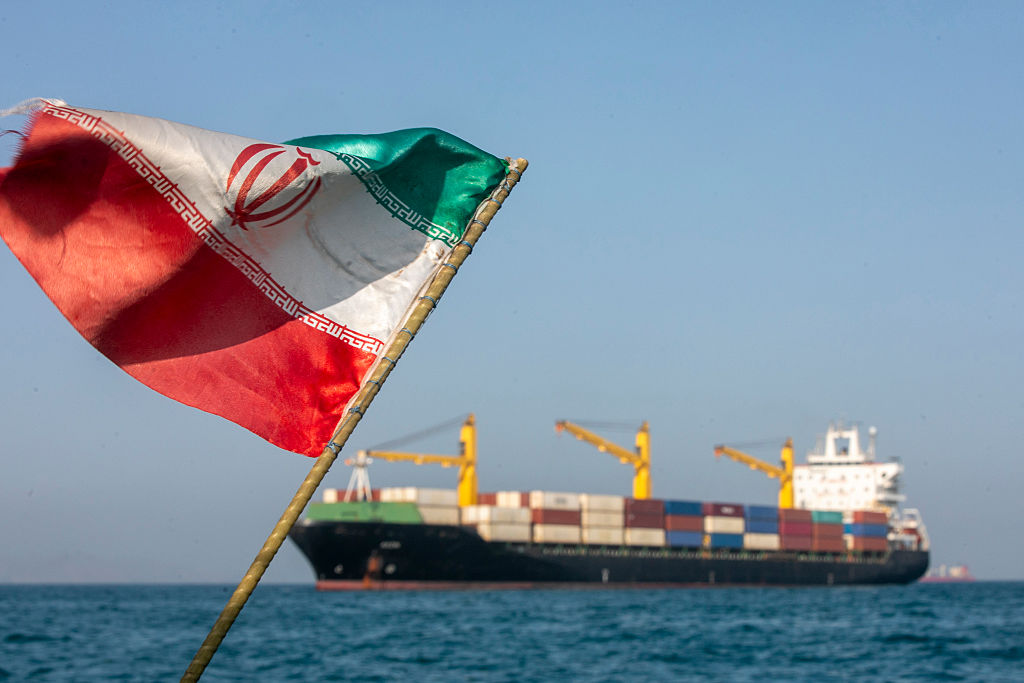
Yesterday, Iran struck a cargo ship in the Gulf. Credit: Getty

Yesterday, Iran struck a cargo ship in the Gulf. Credit: Getty

26 June 2026 - 5:00pm

On both sides of the Persian Gulf, the old international order is under threat. It was reported yesterday that Iraq is the latest big oil producer to consider leaving Opec, which was long seen as a hybrid between a traditional cartel and a multinational organisation. In the Strait of Hormuz, the basic principles of maritime navigation are also at risk. Yesterday, Iran attacked a cargo ship, which suggests that the country’s regime is keen on establishing its own rules and system for ships crossing the Strait. That would be a clear violation of international maritime law, which has been a concept central to global commerce but is looking increasingly tenuous.

In both cases, the solutions to collective action problems are falling apart because of broader geopolitical changes. In Opec’s case, its institutional structure was key to its success: the risk of oil over-production could cause revenue-destructive price wars and thus a plan to keep relations fair was needed.

Now, times have changed. Both America’s rise as a major oil producer and the looming uncertainty over oil demand due to the green energy transition have put Opec under pressure. In particular, a rift has opened between Saudi Arabia, the biggest producer in the group, and some other members, including Iraq. Saudi Arabia has low oil production costs and wants to keep revenue stable to fund its longer-term economic transition. Others, like Iraq, push up against production quotas and want to make hay while the sun is shining.

The UAE, a major Opec oil producer, left the organisation in April following a similar split. Now Iraq reportedly wants a higher production quota for itself, or it will exit too. Although the Iran war didn’t cause these divisions, it exacerbated them. Saudi Arabia was able to weather the closure of the Strait of Hormuz and even emerged with more revenue, thanks to its bypass pipeline. This wasn’t a luxury available to other Persian Gulf countries, like Iraq, which have to make up for lost time and money.

Iran’s ship strike last night signals an even bigger rift. The move comes as the US and Iran are still negotiating a permanent peace deal, and as various cargo ships try to exit the Persian Gulf via the Strait of Hormuz. Iran didn’t take any responsibility for the attack, but the strike hit after the Revolutionary Guards warned against ships taking so-called unauthorised routes.

Setting up what amounts to a state-organised protection racket is an obvious violation of the United Nations Convention on the Law of the Sea’s provisions for transit passage. But at this point, through the Strait’s closure in the first place and the US’s subsequent blockade of vessels carrying Iranian oil, the convention has already been disregarded flagrantly.

Ships may well still be able to get out of the Strait. But the lasting damage will be in the erosion of international norms, which once held the oil economy together, and the second-order effects that follow. As the supply backbone of the world’s most important commodity erodes, pricing swings may well become more volatile. There is also the chance that other countries will try to mimic Iran’s stunt. This could lead to dire consequences for everything from maritime routes to shipping insurance, and, unfortunately, the price paid for everyday goods.

This is an edited version of an article that first appeared in the Eurointelligence newsletter.


Jack Smith is an analyst at Eurointelligence. He focuses on energy policy, security and defence, EU politics, and the domestic politics of Italy, Spain, and the Netherlands.


China is threatening America in the AI race

Reports sugget Zhipu AI  has released a new model that can rival leading US systems. Credit: Getty

Reports sugget Zhipu AI has released a new model that can rival leading US systems. Credit: Getty

1 July 2026 - 10:18am

China is trying to catch up with America on artificial intelligence. The Wall Street Journal has reported that Zhipu AI — one of China’s six “AI tiger” LLMs — has released a new model that can rival leading US systems, including Anthropic’s Mythos, in cybersecurity tasks such as pinpointing security bugs. While this marks a milestone in China’s drive to catch up with Western AI capabilities, strong performance on a single benchmark does not mean it has taken the lead. Chinese models still lag behind their Western counterparts in broader capabilities, such as autonomous operation. Skepticism is therefore warranted before resorting to hysterical conclusions, but complacency about the geopolitical implications of China’s AI advances would be an even greater mistake.

On the infrastructure side, Chinese AI is still constrained by access to advanced chips, with American labs way ahead in computing capacity as well as investment. Analysis from earlier this year suggests that Chinese models are likely to be at least a few months behind those in the US. But they are still continuing to make progress, or that the geopolitical importance of AI will be decided only by whose LLM has ventured deeper into the technological frontier. The practical applications of AI, countries’ to capture foreign markets, and the application of AI into the real economy will matter just as much.

Here, China may hold an advantage. As with its dominance across many critical supply chains, Beijing may not need to produce the most advanced AI systems — only those that are affordable and widely deployable. In doing so, it could consolidate global influence by supplying functional, low-cost AI at scale.

Beijing seems to be pursuing exactly that path, developing an AI “open-source” strategy that offers affordable, widely available AI models for companies and individuals to use and modify as they wish. The production of the DeepSeek AI model, which matched the performance of Silicon Valley tools such as ChatGPT at a fraction of the cost for users, created goodwill among Chinese models with developers.

The four most popular models on OpenRouter, an AI hardware platform for developers, are now all Chinese. The goal for China is not only to win the frontier-model race, but to make its systems the default layer of AI adoption across industries and global markets. For most economies, the choice is increasingly between an affordable tool they can deploy now and a more robust one that may be out of reach.

And while the countries adopting Chinese models may be exposed to political pressure and cyber threats from Beijing, safer and more capable alternatives matter little if they are unaffordable. American AI companies are already under pressure to monetize products whose operating costs are rising. If Chinese open-source models become the cheap default for startups, universities, governments and businesses across the developing world, then America’s AI lead will be eroded from below.

Perhaps more concerning for America in the long run is how AI can give Chinese manufacturing even more strength, through the ongoing integration of AI as a general-purpose technology. China’s new Five-Year Plan mentioned AI more than 50 times and includes an “AI+” action plan aimed at spreading AI across the economy.

Beijing has been pioneering automation of its critical infrastructure for years, with promising recent results in increasing warplane production capacity. In that regard, China’s open-model strategy and manufacturing dominance will reinforce each other. Cheap, adaptable models accelerate deployment across the real economy while those deployments generate real-world data and use cases that can feed back into further model improvement.

The United States should not dismiss the importance of its lead in the AI race. That lead worries Beijing, not least because a more automated Chinese economy would also become more vulnerable to AI-generated cyber threats. But nor should Washington assume that China cannot catch up with American capabilities over time.

This AI competition represents part of a broader struggle over tech supply chains and geopolitical influence. Decisions over whether to adopt US or Chinese models could produce a more fragmented global reality, with different regions relying on different cloud providers, chips and security structures. The result will likely be a global economy which is divided into competing spheres, rather than one which produces a single winner.


Miquel Vila is a political and geopolitical risk consultant focusing on industrial strategy, critical infrastructure and global supply chains.

miquelvilam