




X Close

EU is spearheading the new global Axis of Censorship

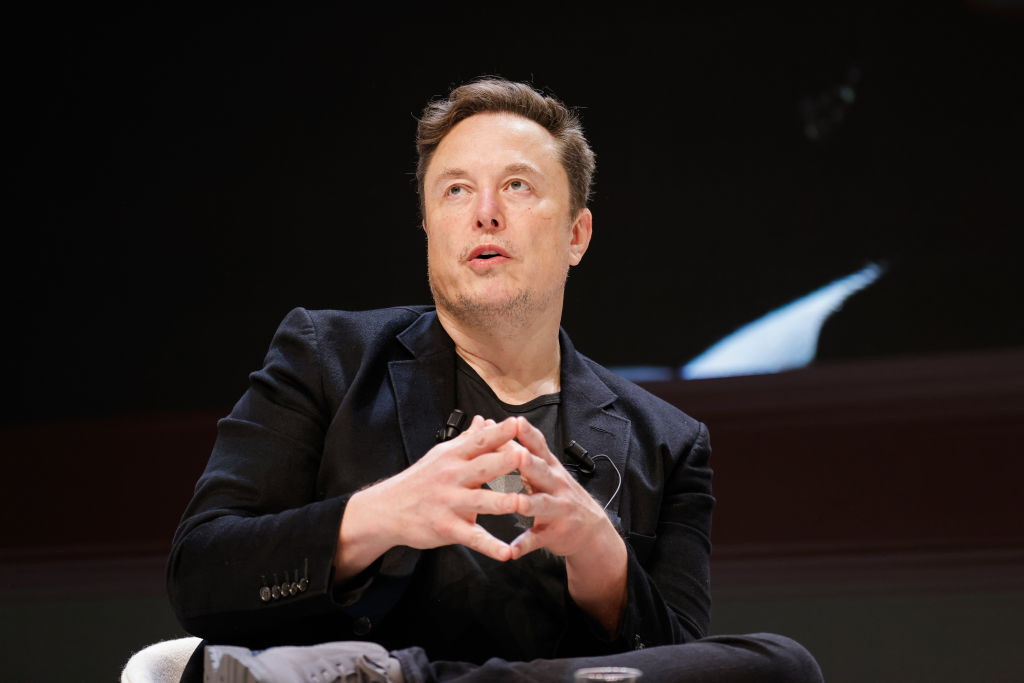
Are we witnessing the emergence of a new form of election interference? Credit: Richard Bord/WireImage via Getty

Are we witnessing the emergence of a new form of election interference? Credit: Richard Bord/WireImage via Getty

13 August 2024 - 8:00pm

In an interview on X, Elon Musk and Donald Trump engaged in a wide-ranging conversation that stretched for over two hours. The interview, which “[B]etween 7:47 PM and 10:47 PM ET… received 73 million views,” was a triumph for free and open discourse, if not necessarily riveting discourse.

But the Musk-Trump conversation also raised darker concerns of censorship. In the lead-up to the conversation, Thierry Breton, a European Commission official, posted a letter on X consisting of 10 full paragraphs of legal jargon concerning EU law, particularly the Digital Services Act (DSA), warning Musk of his obligation to comply with elements of the law dealing with misinformation.

In reality, the letter was a thinly veiled threat to Musk, complete with reminders that “formal proceedings are already ongoing against X under the DSA, notably linked to the dissemination of illegal content.” Curiously, the letter displays remarkable savvy in social media attention-getting, with Breton now surfing a massive wave of scorn and ridicule — exactly the kind of sentiment that drives post into viral territory.

But the letter also displays a worrying willingness by the EU — a body that, at least in the past, was a global champion of the right to free expression — to wade into murky waters. While the EU no doubt sees this action as a positive step in its role as the backbone of the emerging global information police force, others will surely see it as a case of astonishing government overreach. Worse still, that the EU should threaten Musk for interviewing a presidential candidate shows a desire to stifle debate and hints at institutional partisanship.

On its face, Breton’s letter is about ensuring compliance with European law. In reality, the letter represents a broader trend of state influence over digital platforms. The fact that “recent events in the United Kingdom” is referenced in the first sentence — before even mentioning the actual interview in question — reveals the power dynamic at work. Those recent events in the UK are the riots that swept the nation in the wake of the killing of three children — and the equally sweeping crackdown by the British authorities on people who expressed ideas or opinions found objectionable by the police. As the UK’s official government account warned just days before the Musk interview: “Think before you post.”

The effort to control information is not, in itself, illegitimate. While a broad interpretation of the constitutional right of freedom of speech has been enshrined by two centuries of American case law, the same is not true in Europe, where there is a markedly different stance on the issue. The real problem in this case, however, is the appearance that laws like the DSA are being used in service of influencing an election.

This was underlined in the US when a reporter at the Washington Post echoed the Breton line by asking Biden’s press secretary if the administration planned to “intervene” in the Musk-Trump interview. As with Breton’s letter, the Post reporter’s rationalisation was that there could be “misinformation” spread by the interview. The fact that the press secretary “welcomed” the reporter’s concern, instead of reminding him that doing so would be a grave violation of electoral norms, underscores the point.

What we’re seeing is an embrace of speech controls that, at minimum, coincide in timing, substance and political affiliation with the prerogatives of the global Left. This phenomenon, what we might call the emerging Axis of Censorship, is not just about regulating speech; it is about manipulating democratic processes — like freedom of the press and of individual expression — to favour certain outcomes over others.

The response to Breton’s letter has been fierce. But perhaps it was most sharply put by Ayaan Hirsi Ali who asked, “Who are you? An escapee from the fallen Soviet Union? What will you do next? Bring back the Gulag? People ask me: who is subverting our democracies? Well, here is Mr. Breton, in his own words.”


China is threatening America in the AI race

Reports sugget Zhipu AI  has released a new model that can rival leading US systems. Credit: Getty

Reports sugget Zhipu AI has released a new model that can rival leading US systems. Credit: Getty

1 July 2026 - 10:18am

China is trying to catch up with America on artificial intelligence. The Wall Street Journal has reported that Zhipu AI — one of China’s six “AI tiger” LLMs — has released a new model that can rival leading US systems, including Anthropic’s Mythos, in cybersecurity tasks such as pinpointing security bugs. While this marks a milestone in China’s drive to catch up with Western AI capabilities, strong performance on a single benchmark does not mean it has taken the lead. Chinese models still lag behind their Western counterparts in broader capabilities, such as autonomous operation. Skepticism is therefore warranted before resorting to hysterical conclusions, but complacency about the geopolitical implications of China’s AI advances would be an even greater mistake.

On the infrastructure side, Chinese AI is still constrained by access to advanced chips, with American labs way ahead in computing capacity as well as investment. Analysis from earlier this year suggests that Chinese models are likely to be at least a few months behind those in the US. But they are still continuing to make progress, or that the geopolitical importance of AI will be decided only by whose LLM has ventured deeper into the technological frontier. The practical applications of AI, countries’ to capture foreign markets, and the application of AI into the real economy will matter just as much.

Here, China may hold an advantage. As with its dominance across many critical supply chains, Beijing may not need to produce the most advanced AI systems — only those that are affordable and widely deployable. In doing so, it could consolidate global influence by supplying functional, low-cost AI at scale.

Beijing seems to be pursuing exactly that path, developing an AI “open-source” strategy that offers affordable, widely available AI models for companies and individuals to use and modify as they wish. The production of the DeepSeek AI model, which matched the performance of Silicon Valley tools such as ChatGPT at a fraction of the cost for users, created goodwill among Chinese models with developers.

The four most popular models on OpenRouter, an AI hardware platform for developers, are now all Chinese. The goal for China is not only to win the frontier-model race, but to make its systems the default layer of AI adoption across industries and global markets. For most economies, the choice is increasingly between an affordable tool they can deploy now and a more robust one that may be out of reach.

And while the countries adopting Chinese models may be exposed to political pressure and cyber threats from Beijing, safer and more capable alternatives matter little if they are unaffordable. American AI companies are already under pressure to monetize products whose operating costs are rising. If Chinese open-source models become the cheap default for startups, universities, governments and businesses across the developing world, then America’s AI lead will be eroded from below.

Perhaps more concerning for America in the long run is how AI can give Chinese manufacturing even more strength, through the ongoing integration of AI as a general-purpose technology. China’s new Five-Year Plan mentioned AI more than 50 times and includes an “AI+” action plan aimed at spreading AI across the economy.

Beijing has been pioneering automation of its critical infrastructure for years, with promising recent results in increasing warplane production capacity. In that regard, China’s open-model strategy and manufacturing dominance will reinforce each other. Cheap, adaptable models accelerate deployment across the real economy while those deployments generate real-world data and use cases that can feed back into further model improvement.

The United States should not dismiss the importance of its lead in the AI race. That lead worries Beijing, not least because a more automated Chinese economy would also become more vulnerable to AI-generated cyber threats. But nor should Washington assume that China cannot catch up with American capabilities over time.

This AI competition represents part of a broader struggle over tech supply chains and geopolitical influence. Decisions over whether to adopt US or Chinese models could produce a more fragmented global reality, with different regions relying on different cloud providers, chips and security structures. The result will likely be a global economy which is divided into competing spheres, rather than one which produces a single winner.


Miquel Vila is a political and geopolitical risk consultant focusing on industrial strategy, critical infrastructure and global supply chains.

miquelvilam