




X Close

EJ Antoni nomination will damage BLS credibility

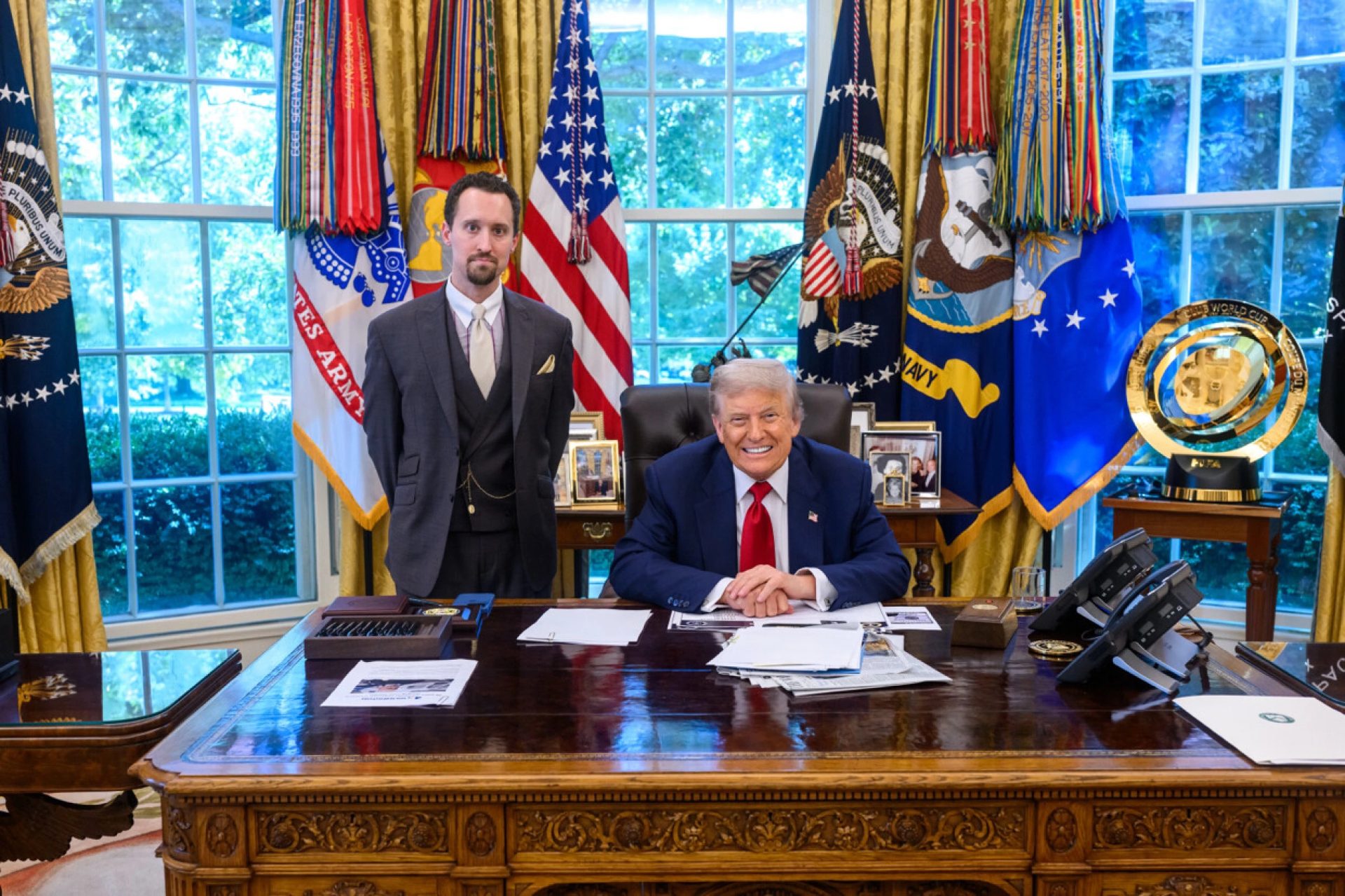
President Trump with his pick for BLS commissioner, EJ Antoni. Credit: White House

President Trump with his pick for BLS commissioner, EJ Antoni. Credit: White House

12 August 2025 - 7:30pm

When President Donald Trump fired Bureau of Labor Statistics (BLS) commissioner Erika McEntarfer earlier this month, the dismissal sparked fears about the politicisation of the agency responsible for collecting the nation’s economic data. And with Trump’s announcement of Dr E.J. Antoni to serve as McEntarfer’s successor, the President did nothing to dispel those initial fears.

Antoni, an outspoken policy activist with strong pro-Trump views and a modest résumé, previously served as chief economist at the Right-wing Heritage Foundation. A contributor to Project 2025, he was a vocal critic of the BLS’s methodologies, dismissing them as “phoney baloney”. At stake, therefore, are the very terms by which the health of the US economy is defined and measured.

Establishment liberals and Never-Trump conservatives were quick to condemn the move. Former Obama economic adviser Jason Furman called Antoni “a completely unqualified … extreme partisan [who] does not have any relevant expertise”, while Jessica Riedl of the Right-wing Manhattan Institute — herself a former Heritage economist — was equally blunt: “The articles and tweets I’ve seen him publish are probably the most error-filled of any think tank economist right now.”

Support, unsurprisingly, came from Trump allies such as Steve Bannon and Stephen Moore, who echoed the President in casting doubt on the BLS’s July jobs report, which had revised May and June’s numbers downward by 285,000. Although such revisions are standard practice, Antoni seized on them to reinforce the MAGA Right’s narrative of unreliable economic data. He appeared on Bannon’s podcast to attack BLS leadership, later posting that “there are better ways to collect, process, and disseminate data.”

During that interview, Antoni urged the removal of McEntarfer and her replacement with a MAGA Republican — advice neatly aligned with the White House’s position. He had previously gone further, calling on the Department of Commerce “to take a chainsaw to BLS”. Now, as he prepares to take the helm, critics wonder whether he will attempt exactly that.

One can reasonably question the BLS’s methods, and Antoni is not necessarily acting in bad faith by doing so. But — as with many officials in this administration — it is the tone and tenor of his challenges that risk undermining the agency’s credibility. His combative style offers little reassurance to sceptics and non-MAGA stakeholders accustomed to the neutral, technocratic posture of previous commissioners.

In such cases, the perception of politicisation alone can be enough to erode an agency’s usefulness. That risk is particularly acute for the BLS, whose data underpins decisions in both the public and private sectors and directly influences the value of Treasury Inflation-Protected Securities (TIPS). Because TIPS are tied to the Consumer Price Index, any doubts about data integrity could raise the federal government’s borrowing costs and carry serious fiscal policy consequences.

Antoni’s appointment is also expected to erode confidence in BLS and raise the visibility of alternative sources of economic information. The American political class has traditionally rested on the assumption that certain areas of public life, such as economic and scientific data, are sacrosanct and beyond the reach of partisanship. By elevating Antoni and altering the institutional logic of the BLS, the Trump administration is about to teach them yet another lesson about its own Schmittian view of the world, in which nothing — not even the facts — are free from political contestation.


Michael Cuenco is Senior Editor at American Affairs.
1TrueCuencoism

China is threatening America in the AI race

Reports sugget Zhipu AI  has released a new model that can rival leading US systems. Credit: Getty

Reports sugget Zhipu AI has released a new model that can rival leading US systems. Credit: Getty

1 July 2026 - 10:18am

China is trying to catch up with America on artificial intelligence. The Wall Street Journal has reported that Zhipu AI — one of China’s six “AI tiger” LLMs — has released a new model that can rival leading US systems, including Anthropic’s Mythos, in cybersecurity tasks such as pinpointing security bugs. While this marks a milestone in China’s drive to catch up with Western AI capabilities, strong performance on a single benchmark does not mean it has taken the lead. Chinese models still lag behind their Western counterparts in broader capabilities, such as autonomous operation. Skepticism is therefore warranted before resorting to hysterical conclusions, but complacency about the geopolitical implications of China’s AI advances would be an even greater mistake.

On the infrastructure side, Chinese AI is still constrained by access to advanced chips, with American labs way ahead in computing capacity as well as investment. Analysis from earlier this year suggests that Chinese models are likely to be at least a few months behind those in the US. But they are still continuing to make progress, or that the geopolitical importance of AI will be decided only by whose LLM has ventured deeper into the technological frontier. The practical applications of AI, countries’ to capture foreign markets, and the application of AI into the real economy will matter just as much.

Here, China may hold an advantage. As with its dominance across many critical supply chains, Beijing may not need to produce the most advanced AI systems — only those that are affordable and widely deployable. In doing so, it could consolidate global influence by supplying functional, low-cost AI at scale.

Beijing seems to be pursuing exactly that path, developing an AI “open-source” strategy that offers affordable, widely available AI models for companies and individuals to use and modify as they wish. The production of the DeepSeek AI model, which matched the performance of Silicon Valley tools such as ChatGPT at a fraction of the cost for users, created goodwill among Chinese models with developers.

The four most popular models on OpenRouter, an AI hardware platform for developers, are now all Chinese. The goal for China is not only to win the frontier-model race, but to make its systems the default layer of AI adoption across industries and global markets. For most economies, the choice is increasingly between an affordable tool they can deploy now and a more robust one that may be out of reach.

And while the countries adopting Chinese models may be exposed to political pressure and cyber threats from Beijing, safer and more capable alternatives matter little if they are unaffordable. American AI companies are already under pressure to monetize products whose operating costs are rising. If Chinese open-source models become the cheap default for startups, universities, governments and businesses across the developing world, then America’s AI lead will be eroded from below.

Perhaps more concerning for America in the long run is how AI can give Chinese manufacturing even more strength, through the ongoing integration of AI as a general-purpose technology. China’s new Five-Year Plan mentioned AI more than 50 times and includes an “AI+” action plan aimed at spreading AI across the economy.

Beijing has been pioneering automation of its critical infrastructure for years, with promising recent results in increasing warplane production capacity. In that regard, China’s open-model strategy and manufacturing dominance will reinforce each other. Cheap, adaptable models accelerate deployment across the real economy while those deployments generate real-world data and use cases that can feed back into further model improvement.

The United States should not dismiss the importance of its lead in the AI race. That lead worries Beijing, not least because a more automated Chinese economy would also become more vulnerable to AI-generated cyber threats. But nor should Washington assume that China cannot catch up with American capabilities over time.

This AI competition represents part of a broader struggle over tech supply chains and geopolitical influence. Decisions over whether to adopt US or Chinese models could produce a more fragmented global reality, with different regions relying on different cloud providers, chips and security structures. The result will likely be a global economy which is divided into competing spheres, rather than one which produces a single winner.


Miquel Vila is a political and geopolitical risk consultant focusing on industrial strategy, critical infrastructure and global supply chains.

miquelvilam