




X Close

Does Britain really need Mehdi Hasan’s Zeteo UK?

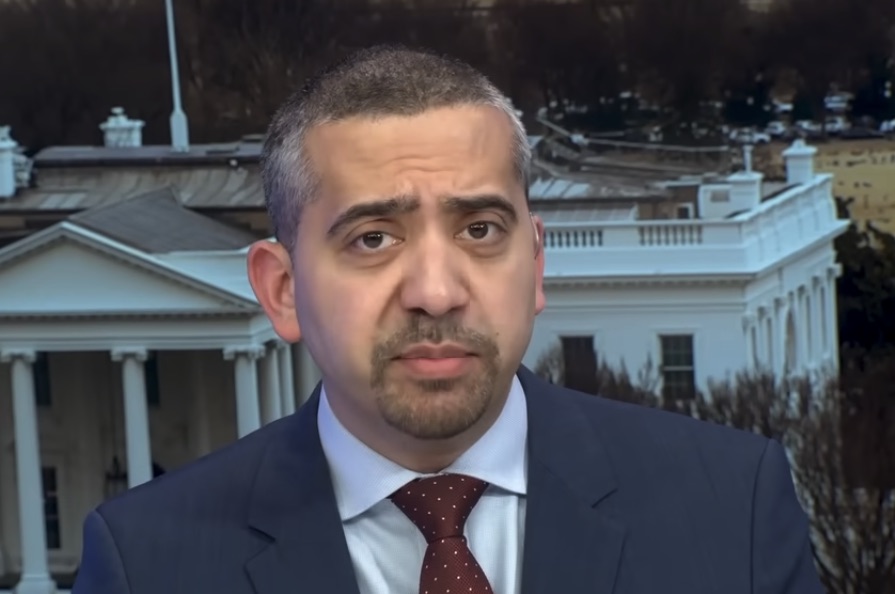
Hasan has labelled Zeteo UK ‘a movement for media accountability’. Credit: Zeteo/YouTube

Hasan has labelled Zeteo UK ‘a movement for media accountability’. Credit: Zeteo/YouTube

10 June 2026 - 4:20pm

Mehdi Hasan is back. He is little changed from when he was last dominating the Left-wing scene in Britain, holding forth on Islam in the Oxford Union chamber and debating Douglas Murray about multiculturalism.

The two men, Hasan and Murray, have led parallel lives. They are the same age and were contemporaries at Oxford. They are the heirs to that great British debater, Christopher Hitchens. Murray is Hitchens in his neocon pomp; Hasan is a glimpse at what might have been had the master stayed true to his New Statesman origins. Propelled by their accents and elite British training in the argumentative arts, Murray and Hasan, like Hitchens, sought their fortunes in America. They are scrappy British bulldogs, filled with that pugnacious drive to, as Hasan’s book title says, “Win Every Argument”.

Hasan is now bringing the argument back to his native land. Yesterday, he unveiled Zeteo UK, the British cousin of Zeteo, which he launched two years ago in opposition to the American “mainstream media”. With 677,000 subscribers on Substack and over two million subscribers on YouTube, it is now a major player in the bustling marketplace of “alternative media”. The question is whether it can replicate that success in Britain.

According to Hasan, Zeteo UK is “not just a media company; it’s a movement for media accountability”, one free from “billionaire influence”. In the launch video, he takes aim at the BBC. Mainstream media outlets are not merely competitors in the battle for clicks and attention. They are Zeteo‘s number one enemy.

Israel is at the centre of the Zeteo project and worldview. The first video in the publication’s “Debunked!” series was “Debunked! Top seven lies about Gaza.” Israel is, according to Zeteo, the key reason we shouldn’t trust the legacy media, which is “happily manufacturing consent” for Israel’s wars — and is no doubt paid handsomely to do so. Zeteo UK will be pitching itself as the main outlet for what the Economist has recently called “Gen-Z socialism”: anti-billionaire, anti-West, and above all, anti-Israel.

In Britain, however, Hasan’s venture is entering a saturated market. Recent years have seen a blossoming of alternative media on both sides of the political aisle. On the Left, Novara Media sets the template. While the more traditional bastions of the British Left, the Guardian and the New Statesman, kept a cautious distance, Novara was the cheerleader of Corbynism. PoliticsJoe is another relic of the 2010s era of Left populism. Its modus operandi is the vox pop, often involving games of gammon-baiting. What Novara and PoliticsJoe had in common was that they were scrappy start-ups by genuine outsiders and unknowns, fluent in youth culture and new media. Zeteo UK’s launch video, on the other hand, boasts its big names, most of whom, like Hasan, have been drawn from the “legacy media” ranks. The faces in its line-up, including Owen Jones and Grace Blakeley, are all familiar. There is little fresh, young talent.

There may, however, be a gap in the market for Zeteo UK to exploit. The politics that Hasan has long preached — his proposals for political union between the Muslim community and young Left-wingers — have now found considerable success in the Green Party of Zack Polanski. It is little surprise, then, that Polanski has welcomed the news. Zeteo UK could serve as the media arm of the Green Party much as Novara once did for Corbyn’s Labour.

Hasan will not want to dwell on anything that might breach the peace between the two factions — there will likely be little on trans rights. Israel and the billionaires: these are the key elements of “Gen-Z socialism”, and of the emerging political alignment on the Left. These are, of course, global subjects, calling into question whether there is really a need for a nationally specific Zeteo spin-off. But in Britain, as in America, these subjects will be Zeteo’s bread and butter.


Samuel Rubinstein is a writer and historian.
si_rubinstein

China is threatening America in the AI race

Reports sugget Zhipu AI  has released a new model that can rival leading US systems. Credit: Getty

Reports sugget Zhipu AI has released a new model that can rival leading US systems. Credit: Getty

1 July 2026 - 10:18am

China is trying to catch up with America on artificial intelligence. The Wall Street Journal has reported that Zhipu AI — one of China’s six “AI tiger” LLMs — has released a new model that can rival leading US systems, including Anthropic’s Mythos, in cybersecurity tasks such as pinpointing security bugs. While this marks a milestone in China’s drive to catch up with Western AI capabilities, strong performance on a single benchmark does not mean it has taken the lead. Chinese models still lag behind their Western counterparts in broader capabilities, such as autonomous operation. Skepticism is therefore warranted before resorting to hysterical conclusions, but complacency about the geopolitical implications of China’s AI advances would be an even greater mistake.

On the infrastructure side, Chinese AI is still constrained by access to advanced chips, with American labs way ahead in computing capacity as well as investment. Analysis from earlier this year suggests that Chinese models are likely to be at least a few months behind those in the US. But they are still continuing to make progress, or that the geopolitical importance of AI will be decided only by whose LLM has ventured deeper into the technological frontier. The practical applications of AI, countries’ to capture foreign markets, and the application of AI into the real economy will matter just as much.

Here, China may hold an advantage. As with its dominance across many critical supply chains, Beijing may not need to produce the most advanced AI systems — only those that are affordable and widely deployable. In doing so, it could consolidate global influence by supplying functional, low-cost AI at scale.

Beijing seems to be pursuing exactly that path, developing an AI “open-source” strategy that offers affordable, widely available AI models for companies and individuals to use and modify as they wish. The production of the DeepSeek AI model, which matched the performance of Silicon Valley tools such as ChatGPT at a fraction of the cost for users, created goodwill among Chinese models with developers.

The four most popular models on OpenRouter, an AI hardware platform for developers, are now all Chinese. The goal for China is not only to win the frontier-model race, but to make its systems the default layer of AI adoption across industries and global markets. For most economies, the choice is increasingly between an affordable tool they can deploy now and a more robust one that may be out of reach.

And while the countries adopting Chinese models may be exposed to political pressure and cyber threats from Beijing, safer and more capable alternatives matter little if they are unaffordable. American AI companies are already under pressure to monetize products whose operating costs are rising. If Chinese open-source models become the cheap default for startups, universities, governments and businesses across the developing world, then America’s AI lead will be eroded from below.

Perhaps more concerning for America in the long run is how AI can give Chinese manufacturing even more strength, through the ongoing integration of AI as a general-purpose technology. China’s new Five-Year Plan mentioned AI more than 50 times and includes an “AI+” action plan aimed at spreading AI across the economy.

Beijing has been pioneering automation of its critical infrastructure for years, with promising recent results in increasing warplane production capacity. In that regard, China’s open-model strategy and manufacturing dominance will reinforce each other. Cheap, adaptable models accelerate deployment across the real economy while those deployments generate real-world data and use cases that can feed back into further model improvement.

The United States should not dismiss the importance of its lead in the AI race. That lead worries Beijing, not least because a more automated Chinese economy would also become more vulnerable to AI-generated cyber threats. But nor should Washington assume that China cannot catch up with American capabilities over time.

This AI competition represents part of a broader struggle over tech supply chains and geopolitical influence. Decisions over whether to adopt US or Chinese models could produce a more fragmented global reality, with different regions relying on different cloud providers, chips and security structures. The result will likely be a global economy which is divided into competing spheres, rather than one which produces a single winner.


Miquel Vila is a political and geopolitical risk consultant focusing on industrial strategy, critical infrastructure and global supply chains.

miquelvilam