




X Close

Covid-style controls against disorder are not the answer

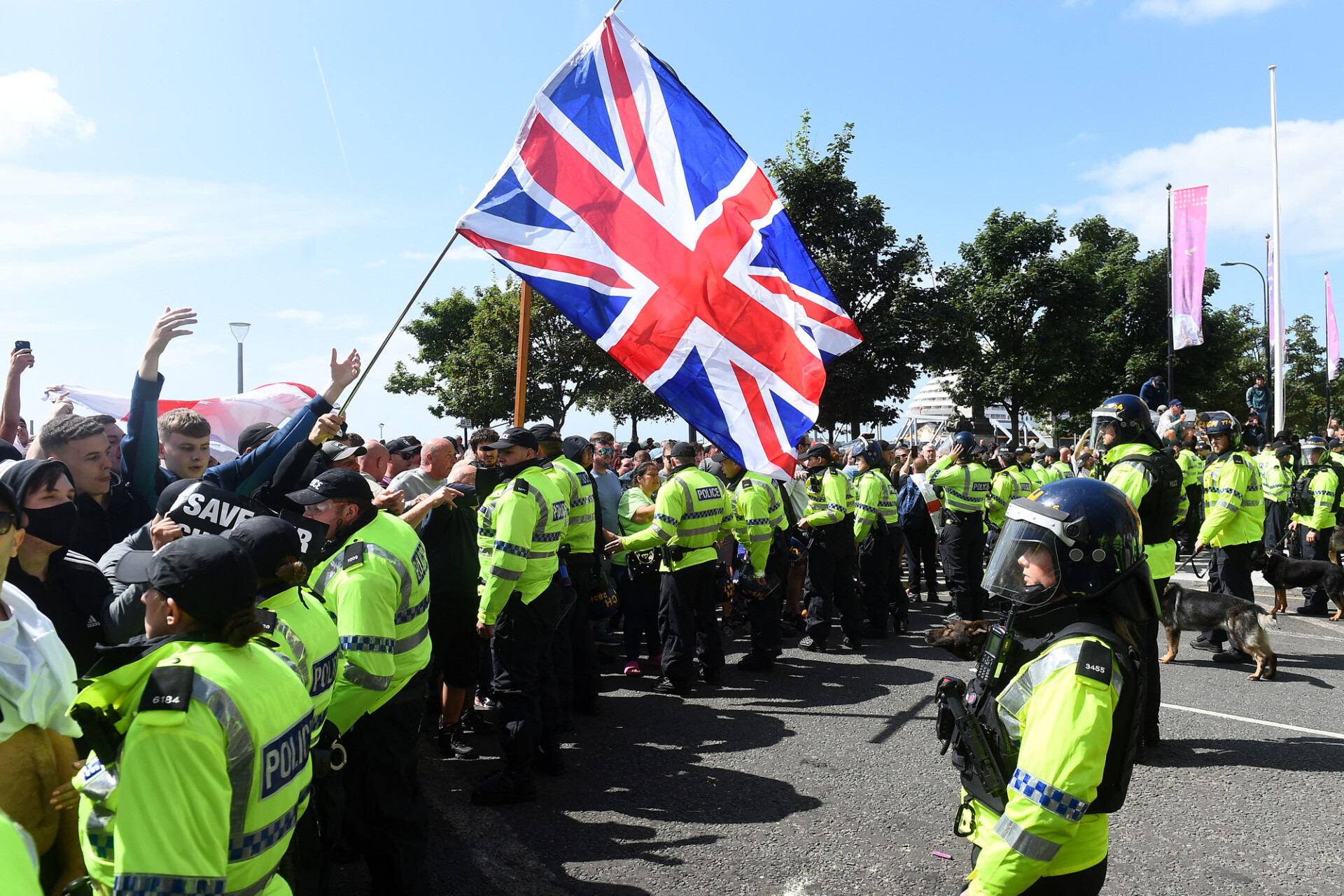
Those who make our laws should not decide which laws we can protest against. Credit: Getty

Those who make our laws should not decide which laws we can protest against. Credit: Getty

5 August 2024 - 7:00am

When the last Government enacted draconian restrictions on the right to assembly and protest on the pretext of limiting the spread of Covid-19, there were warnings about the precedent this could set. Namely, that basic civil rights could be put aside by politicians with little scrutiny or serious challenge.

Those concerns are beginning to seem prophetic. John Woodcock, ex-Labour MP and Government advisor on political violence, argued this weekend that reinstating Covid-like restrictions would be the right response to the violent disorder taking place around the country following the dreadful events in Southport last week. At the same time, Keir Starmer has signalled moves that include more Government control of online information and the expansion of state surveillance through facial recognition.

Civil rights groups such as Big Brother Watch have expressed concern about the implications of such proposals for civil rights. But there is an even more fundamental principle that has been under attack for some time which has received much less attention: those who make our laws should not decide which of those laws we are allowed to protest against.

Violence during public protests, especially against the police, is inexcusable, and the targeting by rioters of migrant hotels this weekend is deeply troubling. But the suggestion in some quarters that the main problem is violence from far-Right protestors is wide of the mark. In recent years, we have seen violent protests by extremists from across the political spectrum including groups linked to the far-Left, Islam, anti-racism, Just Stop Oil and the transgender movement.

Yet despite systematic aggression and violence from all these factions, the one group politicians have decided to ban is anti-abortion activists outside clinics. Such protests in the UK have been entirely peaceful, largely consisting of Christians praying quietly and offering non-judgemental support to pregnant women: no threats to the police and no violent disorder.

This “buffer zone” law sets a hugely significant precedent that should worry people of all political persuasions: MPs have taken it on themselves also to adjudicate which issues people have the right to protest against. Under the buffer zone law, for example, animal rights activists could protest against animal experimentation on drugs outside a clinic or hospital even if the protests caused upset to staff or patients. But if an elderly Christian lady decides to protest (or even pray) against abortion, at the same venue, MPs have decided she should be deemed to be committing a criminal offence. In contrast, protests by far-Right (or far-Left) extremists in Southport or elsewhere remain legal, as long as they do not veer into violence.

This is not the first time MPs have tried to pull such a trick. During much of the Covid pandemic, lockdown laws passed by MPs essentially banned mass protests against those same lockdown laws. Yet when it came to a different issue, many of the MPs who supported crackdowns on anti-lockdown marches were quite happy to encourage and even take part in protests for the Black Lives Matter movement.

Once the principle is established that politicians can decide which issues we can protest about and where, then the act of protest is no longer a fundamental right. Rather it is something for which we require government permission to be given or rejected depending on the issue involved. That is a development those who cheered on Covid restrictions or abortion buffer zone laws may live to regret.


David Paton is a Professor of Industrial Economics at Nottingham University Business School.

cricketwyvern

China is threatening America in the AI race

Reports sugget Zhipu AI  has released a new model that can rival leading US systems. Credit: Getty

Reports sugget Zhipu AI has released a new model that can rival leading US systems. Credit: Getty

1 July 2026 - 10:18am

China is trying to catch up with America on artificial intelligence. The Wall Street Journal has reported that Zhipu AI — one of China’s six “AI tiger” LLMs — has released a new model that can rival leading US systems, including Anthropic’s Mythos, in cybersecurity tasks such as pinpointing security bugs. While this marks a milestone in China’s drive to catch up with Western AI capabilities, strong performance on a single benchmark does not mean it has taken the lead. Chinese models still lag behind their Western counterparts in broader capabilities, such as autonomous operation. Skepticism is therefore warranted before resorting to hysterical conclusions, but complacency about the geopolitical implications of China’s AI advances would be an even greater mistake.

On the infrastructure side, Chinese AI is still constrained by access to advanced chips, with American labs way ahead in computing capacity as well as investment. Analysis from earlier this year suggests that Chinese models are likely to be at least a few months behind those in the US. But they are still continuing to make progress, or that the geopolitical importance of AI will be decided only by whose LLM has ventured deeper into the technological frontier. The practical applications of AI, countries’ to capture foreign markets, and the application of AI into the real economy will matter just as much.

Here, China may hold an advantage. As with its dominance across many critical supply chains, Beijing may not need to produce the most advanced AI systems — only those that are affordable and widely deployable. In doing so, it could consolidate global influence by supplying functional, low-cost AI at scale.

Beijing seems to be pursuing exactly that path, developing an AI “open-source” strategy that offers affordable, widely available AI models for companies and individuals to use and modify as they wish. The production of the DeepSeek AI model, which matched the performance of Silicon Valley tools such as ChatGPT at a fraction of the cost for users, created goodwill among Chinese models with developers.

The four most popular models on OpenRouter, an AI hardware platform for developers, are now all Chinese. The goal for China is not only to win the frontier-model race, but to make its systems the default layer of AI adoption across industries and global markets. For most economies, the choice is increasingly between an affordable tool they can deploy now and a more robust one that may be out of reach.

And while the countries adopting Chinese models may be exposed to political pressure and cyber threats from Beijing, safer and more capable alternatives matter little if they are unaffordable. American AI companies are already under pressure to monetize products whose operating costs are rising. If Chinese open-source models become the cheap default for startups, universities, governments and businesses across the developing world, then America’s AI lead will be eroded from below.

Perhaps more concerning for America in the long run is how AI can give Chinese manufacturing even more strength, through the ongoing integration of AI as a general-purpose technology. China’s new Five-Year Plan mentioned AI more than 50 times and includes an “AI+” action plan aimed at spreading AI across the economy.

Beijing has been pioneering automation of its critical infrastructure for years, with promising recent results in increasing warplane production capacity. In that regard, China’s open-model strategy and manufacturing dominance will reinforce each other. Cheap, adaptable models accelerate deployment across the real economy while those deployments generate real-world data and use cases that can feed back into further model improvement.

The United States should not dismiss the importance of its lead in the AI race. That lead worries Beijing, not least because a more automated Chinese economy would also become more vulnerable to AI-generated cyber threats. But nor should Washington assume that China cannot catch up with American capabilities over time.

This AI competition represents part of a broader struggle over tech supply chains and geopolitical influence. Decisions over whether to adopt US or Chinese models could produce a more fragmented global reality, with different regions relying on different cloud providers, chips and security structures. The result will likely be a global economy which is divided into competing spheres, rather than one which produces a single winner.


Miquel Vila is a political and geopolitical risk consultant focusing on industrial strategy, critical infrastructure and global supply chains.

miquelvilam