



X Close

Chevron is running US foreign policy in Venezuela

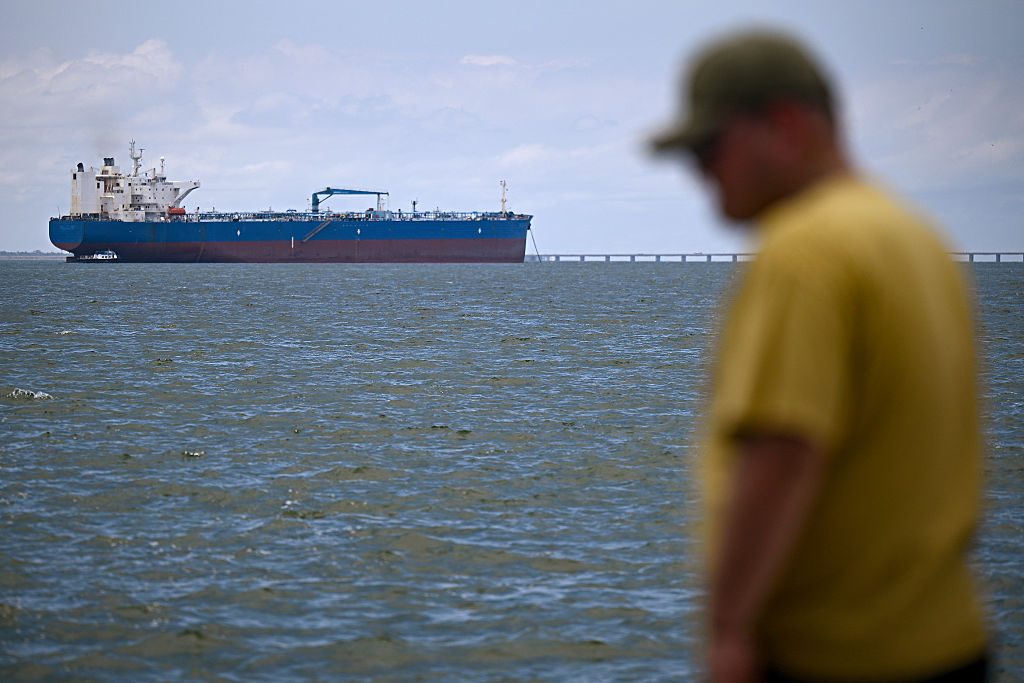
The White House has U-turned on Chevron operations in Venezuela. Credit: Getty

The White House has U-turned on Chevron operations in Venezuela. Credit: Getty

25 July 2025 - 6:30pm

After decades of shady dealings with one of the world’s most egregious dictatorships, US oil companies are on the wrong side of history once again. This time, American leaders appear to be falling into line.

It was reported yesterday that the White House will allow oil and gas giant Chevron to restart operations in Venezuela, just months after Donald Trump revoked the company’s export licence because of human rights concerns. Once the face of the “maximum pressure” campaign, the US President is now increasingly in favour of restoring diplomatic ties with Venezuela in exchange for cheap oil, an American stake, and deportation deals. Chevron, meanwhile, has spent millions lobbying for this outcome.

Chevron and other US energy corporations have been deeply embedded in Venezuela since the Cold War. Their partnerships and support for exploitative economic policies have contributed to entrenching inequality and political exclusion, fuelling the revolutionary backlash which brought Hugo Chávez to power in 1999. In many ways, Big Oil helped build the very system it now seeks to finance.

Venezuela today possesses the world’s largest proven oil reserves, with over 300 billion barrels according to a BP study, mostly concentrated in the Orinoco region — an area crowded with criminal groups and guerrillas. Chevron, in particular, has pursued an aggressive campaign to increase operations there, spending $6.67 million on lobbying the US government in 2024 alone.

This push has come without any kind of demands for democratic or human rights concessions, following Nicolás Maduro’s heavily disputed victory in last year’s presidential elections. While Chevron CEO Mike Wirth has said that the company is “apolitical in Venezuela and in other countries”, the fact remains that it now produces nearly a third of the Maduro regime’s annual oil income, directly funding a government accused of widespread torture, election fraud, and violent repression.

The oil lobby’s influence transcends party lines. During the Biden presidency, Washington granted licenses for Chevron to operate in joint ventures with PDVSA, Venezuela’s state-run oil company, citing energy market disruptions from the Ukraine war as the main reason. This appeared to be a case of swapping one tyrant’s dirty oil for another’s; environmental campaign group Global Witness described the move as a “persistent campaign” to prioritise oil over human rights.

Trump also made oil a cornerstone of his quiet pivot toward Caracas. Despite elevating hawks such as Marco Rubio and campaigning heavily with the anti-Maduro crowd in Florida, Trump reportedly softened his stance following pressure from oil executives in Louisiana and Texas, who urged him to “just move on” and get oil flowing.

Chevron gave over $8 million to the Republican Party and Trump’s 2024 campaign, according to the campaign finance tracker OpenSecrets. It was also the fourth-largest donor overall to Trump’s inauguration with a contribution of $2 million, part of a broader $75 million windfall from the fossil fuel industry to Trump-aligned PACs.

Having threatened in March to impose a 25% tariff on countries buying Venezuelan oil, two months later the Trump administration was reportedly in secret negotiations to allow Maduro to export more oil in exchange for accepting deportation flights. Trump views this as a way to obtain cheap oil, satisfy his donors, and continue the mass deportation campaign.

Even Venezuela’s US-backed opposition leaders have shown little resistance to Big Oil’s agenda. Presidential candidates Edmundo González and María Corina Machado, who ran in the last election, both expressed support for increased oil investment in Venezuela and met privately with US energy executives last year. This is an indictment of how big money regularly shapes US foreign policy, often behind the veil of strategic necessity or democratic values. The oil industry is no different, and big businesses have maximised profit on the backs of the Venezuelan people. Trump must ask himself an important question: does he really want Chevron and its shareholders deciding American foreign policy?


Joseph Bouchard is a journalist and researcher covering security and geopolitics in Latin America. He is a PhD student in Politics at the University of Virginia.

GeopolWonk

China is threatening America in the AI race

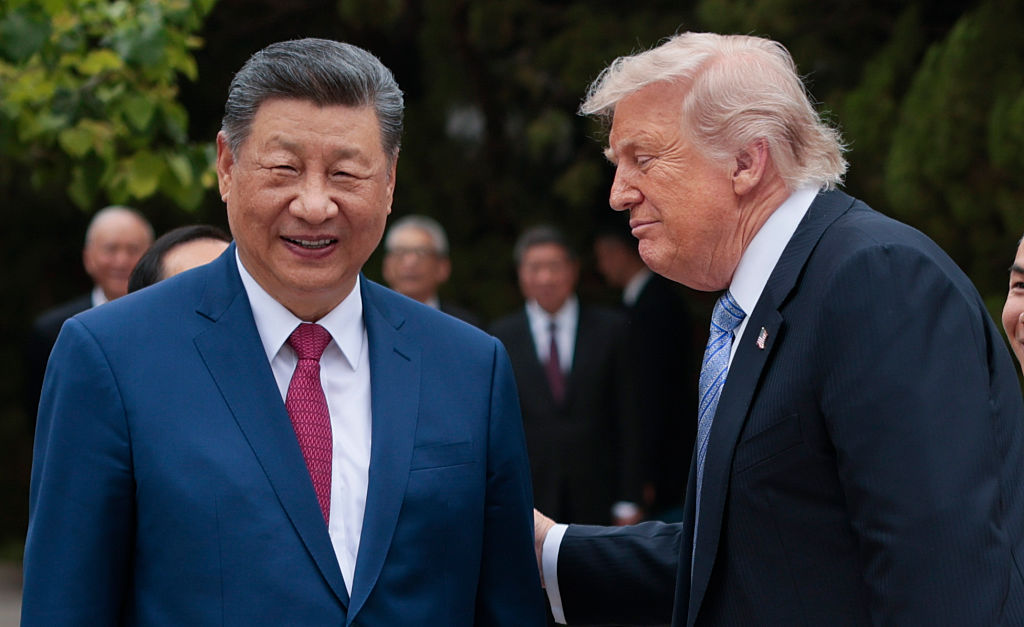
Reports sugget Zhipu AI  has released a new model that can rival leading US systems. Credit: Getty

Reports sugget Zhipu AI has released a new model that can rival leading US systems. Credit: Getty

1 July 2026 - 10:18am

China is trying to catch up with America on artificial intelligence. The Wall Street Journal has reported that Zhipu AI — one of China’s six “AI tiger” LLMs — has released a new model that can rival leading US systems, including Anthropic’s Mythos, in cybersecurity tasks such as pinpointing security bugs. While this marks a milestone in China’s drive to catch up with Western AI capabilities, strong performance on a single benchmark does not mean it has taken the lead. Chinese models still lag behind their Western counterparts in broader capabilities, such as autonomous operation. Skepticism is therefore warranted before resorting to hysterical conclusions, but complacency about the geopolitical implications of China’s AI advances would be an even greater mistake.

On the infrastructure side, Chinese AI is still constrained by access to advanced chips, with American labs way ahead in computing capacity as well as investment. Analysis from earlier this year suggests that Chinese models are likely to be at least a few months behind those in the US. But they are still continuing to make progress, or that the geopolitical importance of AI will be decided only by whose LLM has ventured deeper into the technological frontier. The practical applications of AI, countries’ to capture foreign markets, and the application of AI into the real economy will matter just as much.

Here, China may hold an advantage. As with its dominance across many critical supply chains, Beijing may not need to produce the most advanced AI systems — only those that are affordable and widely deployable. In doing so, it could consolidate global influence by supplying functional, low-cost AI at scale.

Beijing seems to be pursuing exactly that path, developing an AI “open-source” strategy that offers affordable, widely available AI models for companies and individuals to use and modify as they wish. The production of the DeepSeek AI model, which matched the performance of Silicon Valley tools such as ChatGPT at a fraction of the cost for users, created goodwill among Chinese models with developers.

The four most popular models on OpenRouter, an AI hardware platform for developers, are now all Chinese. The goal for China is not only to win the frontier-model race, but to make its systems the default layer of AI adoption across industries and global markets. For most economies, the choice is increasingly between an affordable tool they can deploy now and a more robust one that may be out of reach.

And while the countries adopting Chinese models may be exposed to political pressure and cyber threats from Beijing, safer and more capable alternatives matter little if they are unaffordable. American AI companies are already under pressure to monetize products whose operating costs are rising. If Chinese open-source models become the cheap default for startups, universities, governments and businesses across the developing world, then America’s AI lead will be eroded from below.

Perhaps more concerning for America in the long run is how AI can give Chinese manufacturing even more strength, through the ongoing integration of AI as a general-purpose technology. China’s new Five-Year Plan mentioned AI more than 50 times and includes an “AI+” action plan aimed at spreading AI across the economy.

Beijing has been pioneering automation of its critical infrastructure for years, with promising recent results in increasing warplane production capacity. In that regard, China’s open-model strategy and manufacturing dominance will reinforce each other. Cheap, adaptable models accelerate deployment across the real economy while those deployments generate real-world data and use cases that can feed back into further model improvement.

The United States should not dismiss the importance of its lead in the AI race. That lead worries Beijing, not least because a more automated Chinese economy would also become more vulnerable to AI-generated cyber threats. But nor should Washington assume that China cannot catch up with American capabilities over time.

This AI competition represents part of a broader struggle over tech supply chains and geopolitical influence. Decisions over whether to adopt US or Chinese models could produce a more fragmented global reality, with different regions relying on different cloud providers, chips and security structures. The result will likely be a global economy which is divided into competing spheres, rather than one which produces a single winner.


Miquel Vila is a political and geopolitical risk consultant focusing on industrial strategy, critical infrastructure and global supply chains.

miquelvilam