




X Close

Will Syria’s new rulers choose democracy or theocracy?

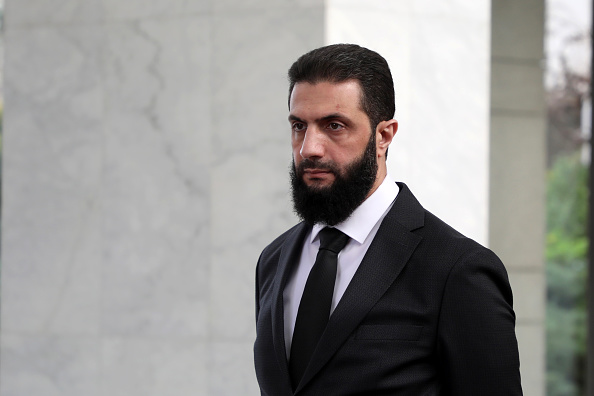
Syrian President Ahmed al-Sharaa assumed office this week. Credit: Getty

Syrian President Ahmed al-Sharaa assumed office this week. Credit: Getty

1 February 2025 - 12:15pm

In December 1993, the Independent ran the headline “Anti-Soviet warrior puts his army on the road to peace”, alongside a photo of an amicable-looking Osama bin Laden. The near-comical way this artefact of former public opinion has aged is a cautionary tale about the errors of assuming that the enemies of your enemies will always be your friends.

The ramifications of this misjudgement have of course not been forgotten. And so when, almost 31 years to the day after that headline was run, President Bashar al-Assad was chased out of Syria by a military coalition led by former jihadists, any joy surrounding the end of the old regime was tempered by trepidation about the new rulers, and what direction they would choose for the country.

Ahmed al-Sharaa, the leader of the group — Hayat Tahrir al-Sham (HTS) — which has since taken charge of the state, founded the Al-Qaeda affiliate Jabhat al-Nusra in 2013. After finding the project of global jihad not to his liking, he split with Al-Qaeda in 2016 and downgraded his group’s ideology to plain old Islamism. Sharaa was this week declared Syria’s new president at a closed conference, where the dissolution of Syria’s 2012 Ba’athist constitution and the Ba’ath Party was also announced.

While HTS governed Idlib province between 2017 and 2024 with a repressive Sharia state apparatus, this zealotry appears to have been abandoned since the group assumed power.  There has been visible outreach to minority communities including Christians, Alawites and Druze to reassure them of their safety. The burning of a Christmas tree in December by rogue actors was condemned by a HTS spokesperson, and a subsequent protest by Christians went ahead unopposed by the authorities. Women are not being forcibly veiled. On New Year’s Eve, crowds of young men and women danced together at techno concerts in Damascus. Sharaa’s efforts to recast himself as a democrat may be met with warranted scepticism, but his outfit is a far cry from the Taliban.

However, even if Sharaa really has become a pragmatic statesman, there are still hardliners and unsavoury individuals within his governing coalition, including close allies. For instance, Shadi al-Waisi, the interim Minister of Justice, has been identified in videos from 2015 overseeing the public executions of two women accused of prostitution. HTS official spokesperson Obaida Arnaout, during a revealing interview in December with a Lebanese television channel on the role of women in post-war Syria, stated that “the woman has her biological and psychological nature and has her uniqueness and composition that must necessarily align with certain tasks.”

How far Sharaa will be able to balance the expectations of the international community and largely secular Syrian public with those of his Islamist allies remains to be seen. Concerns around the latter’s outsized influence emerged last month, after unilateral changes were made to school textbooks by the interim Ministry of Education, giving their content a more Islamic slant. While these changes are hardly surprising under an Islamist regime, they may be a harbinger of what is to come with the drafting of a new constitution, which Sharaa has indicated will be the responsibility of a legal committee. Syria’s vulnerability to theocracy will depend on the influence of hardliners within this process.

Before this happens, though, institutions must be built, refugees returned and stability maintained. The amnesty offered to former Ba’ath Party members and troops by HTS is encouraging. However, recent reports of executions of former regime soldiers by what appear to be rogue militias, as well as an ambush on Interior Ministry troops by Assad loyalists in December, cast doubt on the interim government’s ability to prevent a repeat of Iraq’s descent into post-dictatorship sectarian violence. The prevalence of guns, grievances and fear among the population makes this a serious possibility.

It is early days yet, and there are many things that could go wrong for a democratic transition in a sectarian landscape with a post-jihadist government. But so far in Syria, it seems like pragmatism is trumping puritanism — and even if the latter is closer than might be ideal, there are surely worse reasons to have hope.


Patrick Hess is a London-based writer who covers politics, culture and international relations.


China is threatening America in the AI race

Reports sugget Zhipu AI  has released a new model that can rival leading US systems. Credit: Getty

Reports sugget Zhipu AI has released a new model that can rival leading US systems. Credit: Getty

1 July 2026 - 10:18am

China is trying to catch up with America on artificial intelligence. The Wall Street Journal has reported that Zhipu AI — one of China’s six “AI tiger” LLMs — has released a new model that can rival leading US systems, including Anthropic’s Mythos, in cybersecurity tasks such as pinpointing security bugs. While this marks a milestone in China’s drive to catch up with Western AI capabilities, strong performance on a single benchmark does not mean it has taken the lead. Chinese models still lag behind their Western counterparts in broader capabilities, such as autonomous operation. Skepticism is therefore warranted before resorting to hysterical conclusions, but complacency about the geopolitical implications of China’s AI advances would be an even greater mistake.

On the infrastructure side, Chinese AI is still constrained by access to advanced chips, with American labs way ahead in computing capacity as well as investment. Analysis from earlier this year suggests that Chinese models are likely to be at least a few months behind those in the US. But they are still continuing to make progress, or that the geopolitical importance of AI will be decided only by whose LLM has ventured deeper into the technological frontier. The practical applications of AI, countries’ to capture foreign markets, and the application of AI into the real economy will matter just as much.

Here, China may hold an advantage. As with its dominance across many critical supply chains, Beijing may not need to produce the most advanced AI systems — only those that are affordable and widely deployable. In doing so, it could consolidate global influence by supplying functional, low-cost AI at scale.

Beijing seems to be pursuing exactly that path, developing an AI “open-source” strategy that offers affordable, widely available AI models for companies and individuals to use and modify as they wish. The production of the DeepSeek AI model, which matched the performance of Silicon Valley tools such as ChatGPT at a fraction of the cost for users, created goodwill among Chinese models with developers.

The four most popular models on OpenRouter, an AI hardware platform for developers, are now all Chinese. The goal for China is not only to win the frontier-model race, but to make its systems the default layer of AI adoption across industries and global markets. For most economies, the choice is increasingly between an affordable tool they can deploy now and a more robust one that may be out of reach.

And while the countries adopting Chinese models may be exposed to political pressure and cyber threats from Beijing, safer and more capable alternatives matter little if they are unaffordable. American AI companies are already under pressure to monetize products whose operating costs are rising. If Chinese open-source models become the cheap default for startups, universities, governments and businesses across the developing world, then America’s AI lead will be eroded from below.

Perhaps more concerning for America in the long run is how AI can give Chinese manufacturing even more strength, through the ongoing integration of AI as a general-purpose technology. China’s new Five-Year Plan mentioned AI more than 50 times and includes an “AI+” action plan aimed at spreading AI across the economy.

Beijing has been pioneering automation of its critical infrastructure for years, with promising recent results in increasing warplane production capacity. In that regard, China’s open-model strategy and manufacturing dominance will reinforce each other. Cheap, adaptable models accelerate deployment across the real economy while those deployments generate real-world data and use cases that can feed back into further model improvement.

The United States should not dismiss the importance of its lead in the AI race. That lead worries Beijing, not least because a more automated Chinese economy would also become more vulnerable to AI-generated cyber threats. But nor should Washington assume that China cannot catch up with American capabilities over time.

This AI competition represents part of a broader struggle over tech supply chains and geopolitical influence. Decisions over whether to adopt US or Chinese models could produce a more fragmented global reality, with different regions relying on different cloud providers, chips and security structures. The result will likely be a global economy which is divided into competing spheres, rather than one which produces a single winner.


Miquel Vila is a political and geopolitical risk consultant focusing on industrial strategy, critical infrastructure and global supply chains.

miquelvilam