




X Close

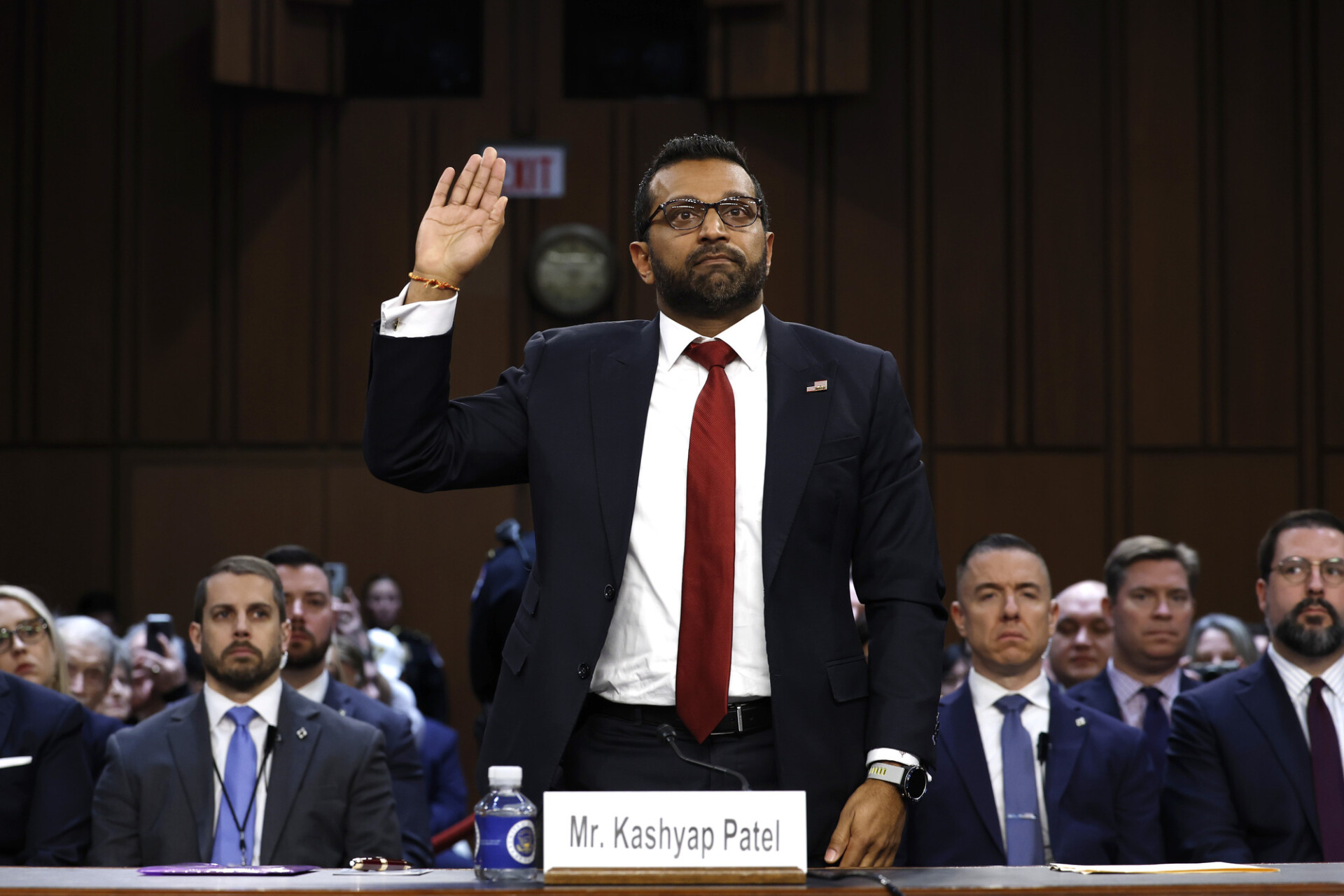
Can Kash Patel restore the FBI’s credibility?

There's a new sheriff in town. Credit: Getty

There's a new sheriff in town. Credit: Getty

February 20 2025 - 8:10pm

Kash Patel’s confirmation as FBI director comes at a time when the Bureau is more embroiled in political controversy than it ever has been in the post-Hoover period. The record of confirmation votes alone is telling. Prior to 2017, only a single vote had ever been cast against a nominee to head the FBI (Rand Paul, who mounted a lonely vote against James Comey over drones in 2013). Only five Democrats voted against Christopher Wray to be FBI director in August 2017. Today, Patel was confirmed on a party-line vote: every Democrat in the Senate along with two moderate Republicans — Susan Collins and Lisa Murkowski — voted against his nomination.

The FBI has become a proxy in battles over populism. James Comey inserted himself and the Bureau into the 2016 presidential race, and top FBI officials (including Comey himself) have become prominent critics of Donald Trump. The controversial post-2020 prosecutions of Trump and his allies turbocharged anxiety among many Right-leaning voters that federal law enforcement was being used to settle political scores.

As a result of all this, the two parties have polarized over the FBI as well as other federal institutions. As Harry Enten recently observed, the Republicans and Democrats used to be in relative agreement about the credibility of the FBI. In 2014, 62% of Republicans thought that the FBI was doing a good or excellent job, while 54% of Democrats believed the same. A decade later, Republican trust in the FBI cratered while Democratic support for it spiked: over two-thirds of Democrats thought the Bureau was doing a good or excellent job in 2024, but only 26% of Republicans agreed.

This crisis of trust was an essential precondition for the appointment of Kash Patel, who first rose to prominence in the hand-to-hand classified combat of the “Russiagate” era. Like other “brokenists” in Trump’s Cabinet, Patel was chosen to be a disruptor. The new director has quite the tightrope to walk in the years ahead.

The Comey-era gambit of portraying the FBI as the sword and shield of “our democracy” against populism has obviously damaged the organization’s public standing. When negative partisanship rules, a federal agency endangers its own position if it seems to back one side in America’s ongoing culture war. If Patel can distance the FBI from hyper-charged political combat, that could help win back trust on both sides of the aisle.

However, turning the FBI into a tool of retribution against Democrats could worsen the cycle of retaliation. Open-ended and highly publicized investigations of high-profile Trump critics would invite further escalation under the next Democratic president. That could set the stage for a dire do-si-do, in which the parties would trade off using the FBI as an attack dog against each other. That bitter dance would also be an existential threat to the FBI itself, as partisans might conclude that it is better to put the Bureau down rather than have it be used against them in the future.

The disruptor agenda will take careful management. Over the past month, the new administration has used DOGE to remove many federal workers, and some populists certainly hope that Patel’s tenure will be a chance to clean house at the FBI. However, a downsizing that is too drastic or sudden may pose major risks both to Patel and the Trump administration. If disaster strikes, the Trump administration could be blamed for slashing needed and experienced FBI agents.

After 2016, some of the political establishment hoped to use an enhanced prosecutorial apparatus as some ultimate backstop to resist populist disruption. Rather than helping stabilize American democracy, that strategy actually heightened political conflict. Now that outsiders have taken power, they have an opportunity to escape the escalation cycle — or else face their own reckoning.


Fred Bauer is a writer from New England.

fredbauerblog

China is threatening America in the AI race

Reports sugget Zhipu AI  has released a new model that can rival leading US systems. Credit: Getty

Reports sugget Zhipu AI has released a new model that can rival leading US systems. Credit: Getty

July 1 2026 - 10:18am

China is trying to catch up with America on artificial intelligence. The Wall Street Journal has reported that Zhipu AI — one of China’s six “AI tiger” LLMs — has released a new model that can rival leading US systems, including Anthropic’s Mythos, in cybersecurity tasks such as pinpointing security bugs. While this marks a milestone in China’s drive to catch up with Western AI capabilities, strong performance on a single benchmark does not mean it has taken the lead. Chinese models still lag behind their Western counterparts in broader capabilities, such as autonomous operation. Skepticism is therefore warranted before resorting to hysterical conclusions, but complacency about the geopolitical implications of China’s AI advances would be an even greater mistake.

On the infrastructure side, Chinese AI is still constrained by access to advanced chips, with American labs way ahead in computing capacity as well as investment. Analysis from earlier this year suggests that Chinese models are likely to be at least a few months behind those in the US. But they are still continuing to make progress, or that the geopolitical importance of AI will be decided only by whose LLM has ventured deeper into the technological frontier. The practical applications of AI, countries’ to capture foreign markets, and the application of AI into the real economy will matter just as much.

Here, China may hold an advantage. As with its dominance across many critical supply chains, Beijing may not need to produce the most advanced AI systems — only those that are affordable and widely deployable. In doing so, it could consolidate global influence by supplying functional, low-cost AI at scale.

Beijing seems to be pursuing exactly that path, developing an AI “open-source” strategy that offers affordable, widely available AI models for companies and individuals to use and modify as they wish. The production of the DeepSeek AI model, which matched the performance of Silicon Valley tools such as ChatGPT at a fraction of the cost for users, created goodwill among Chinese models with developers.

The four most popular models on OpenRouter, an AI hardware platform for developers, are now all Chinese. The goal for China is not only to win the frontier-model race, but to make its systems the default layer of AI adoption across industries and global markets. For most economies, the choice is increasingly between an affordable tool they can deploy now and a more robust one that may be out of reach.

And while the countries adopting Chinese models may be exposed to political pressure and cyber threats from Beijing, safer and more capable alternatives matter little if they are unaffordable. American AI companies are already under pressure to monetize products whose operating costs are rising. If Chinese open-source models become the cheap default for startups, universities, governments and businesses across the developing world, then America’s AI lead will be eroded from below.

Perhaps more concerning for America in the long run is how AI can give Chinese manufacturing even more strength, through the ongoing integration of AI as a general-purpose technology. China’s new Five-Year Plan mentioned AI more than 50 times and includes an “AI+” action plan aimed at spreading AI across the economy.

Beijing has been pioneering automation of its critical infrastructure for years, with promising recent results in increasing warplane production capacity. In that regard, China’s open-model strategy and manufacturing dominance will reinforce each other. Cheap, adaptable models accelerate deployment across the real economy while those deployments generate real-world data and use cases that can feed back into further model improvement.

The United States should not dismiss the importance of its lead in the AI race. That lead worries Beijing, not least because a more automated Chinese economy would also become more vulnerable to AI-generated cyber threats. But nor should Washington assume that China cannot catch up with American capabilities over time.

This AI competition represents part of a broader struggle over tech supply chains and geopolitical influence. Decisions over whether to adopt US or Chinese models could produce a more fragmented global reality, with different regions relying on different cloud providers, chips and security structures. The result will likely be a global economy which is divided into competing spheres, rather than one which produces a single winner.


Miquel Vila is a political and geopolitical risk consultant focusing on industrial strategy, critical infrastructure and global supply chains.

miquelvilam