




X Close

Britain’s progressive super-prison masks wider dysfunction

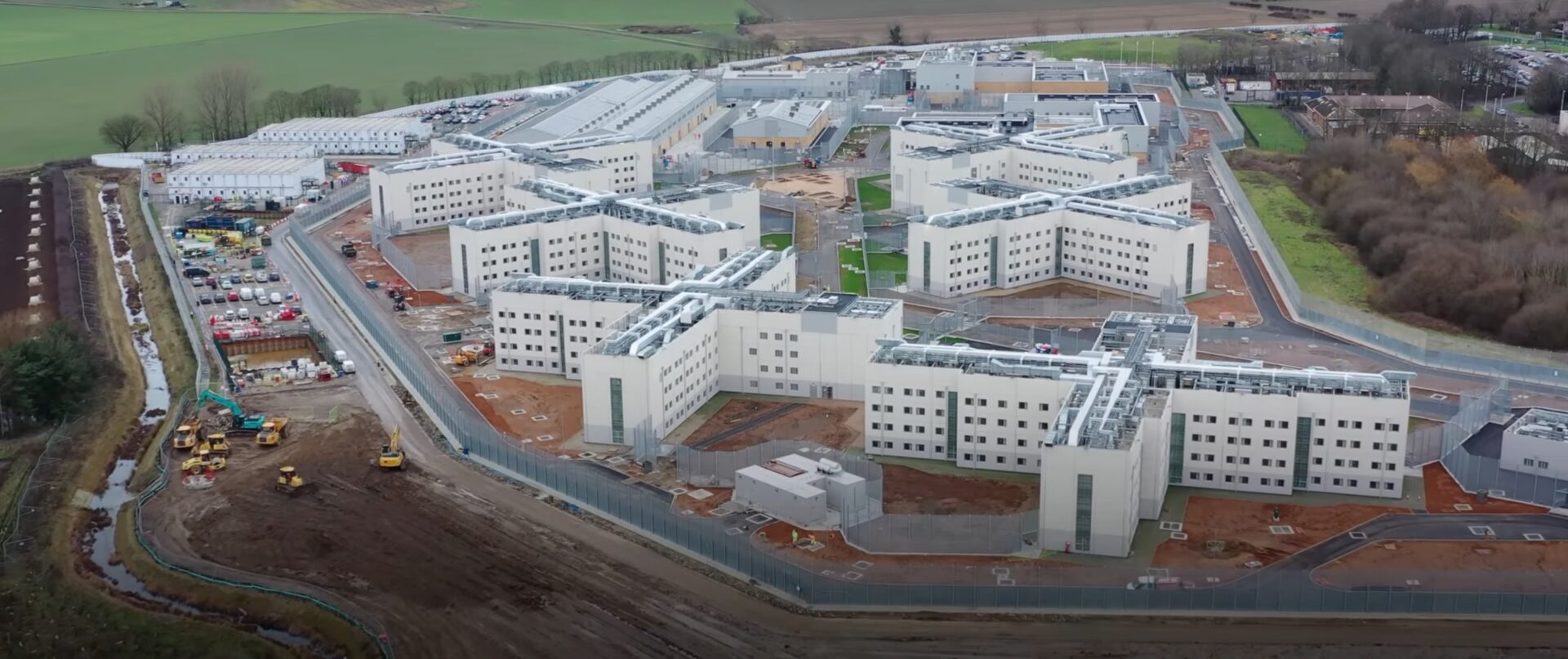
Newly-opened HMP Millsike. Credit: Ministry of Justice/YouTube

Newly-opened HMP Millsike. Credit: Ministry of Justice/YouTube

31 March 2025 - 1:50pm

At the end of last week, the Ministry of Justice — so often a stranger to public scrutiny — released a glossy, self-congratulatory 20-minute video celebrating the construction and delivery of HMP Millsike, a new 1468-place male resettlement prison in East Yorkshire. It was built ahead of schedule and on budget, and Britain is desperately short on prison spaces for those who should be incarcerated, but larger challenges remain than what Millsike can fix.

Much attention has been directed at the prison’s fixtures and fittings, overseen by private contractor Mitie to run for the next 10 years at a cost to the taxpayer of £329 million. The prison’s colour schemes have been carefully coordinated to infuse the place with feelings of calm. We are told that “warm truffle” magnolia walls and burnt orange cell doors are part of a “biophilic” approach to create an environment that fosters positivity, while prisoners will have a say in naming their blocks. Meanwhile, the wings are configured to encourage maximum surveillance — which has the handy by-product of pushing down the staff headcount. Windows are all glass, built to a ballistic standard to deter widespread drone deliveries.

It would be wrong to be too churlish about these innovations. Living and working in a prison is a stressful business, and the built environment is important. We can’t expect offenders to behave well and take responsibility for their lives when released if they are given no autonomy and no opportunities while they are banged up. Crucially, it’s the staff who dictate the prison’s culture, and this is where the real challenge lies. Millsike will employ 700 people from the local community, many of them as prison custody officers, but how many of them will stay is another matter.

Another privately-run resettlement prison, HMP Five Wells, descended into near-anarchy after it opened in 2022. Like HMP Millsike, it was hailed as a “smart prison”, until most of its staff took the smart option and fled its endemic violence: only 272 of the originally appointed 750 remained after the first year of operation. Also like Millsike, it promoted a new progressive approach to incarceration that gave prisoners freedom and choice. Unfortunately, due to the inexperience of the officers, this mostly allowed for more efficient drug dealing.

As to whether Mitie can learn from this experience, the omens are not encouraging. This is the company’s first prison, but not its first foray into the captivity-for-profit sector. Mitie runs immigration detention centres in Britain, with one near Heathrow described last year by the Chief Inspector of Prisons as the worst he had ever seen thanks to widespread drug use, violence and poor staff engagement.

Mitie executive Russ Trent at least has some personal experience of prisons which quickly go wrong after opening. He was the first governor of state-run HMP Berwyn, which was opened in 2017 with a promise to do things differently. Soused in the lexicon of hope — or spectacular naivete, depending on your view — Berwyn became synonymous with violence and corruption, leading the chairman of the prison officers union to observe: “experienced prisoners will take advantage of the softly, softly approach and that’s why Berwyn has got one of the highest assault rates on staff.”

So while the facilities at Millsike are impressive, it is human appointees who make the difference. The prison will have no control over which offenders it receives as the facility gradually builds up its personnel. Its legitimacy and chance of success, however, are largely based on who it recruits and trains up. Whether the paint scheme is warm truffle or falling off the walls, that formula is eternal: suitable and sufficient numbers of frontline staff clearly and confidently in charge. This is how lives are changed, and even saved.


Ian Acheson is a former prison governor and author of Screwed: Britain’s Prison Crisis and How To Escape it.

NotThatBigIan

China is threatening America in the AI race

Reports sugget Zhipu AI  has released a new model that can rival leading US systems. Credit: Getty

Reports sugget Zhipu AI has released a new model that can rival leading US systems. Credit: Getty

1 July 2026 - 10:18am

China is trying to catch up with America on artificial intelligence. The Wall Street Journal has reported that Zhipu AI — one of China’s six “AI tiger” LLMs — has released a new model that can rival leading US systems, including Anthropic’s Mythos, in cybersecurity tasks such as pinpointing security bugs. While this marks a milestone in China’s drive to catch up with Western AI capabilities, strong performance on a single benchmark does not mean it has taken the lead. Chinese models still lag behind their Western counterparts in broader capabilities, such as autonomous operation. Skepticism is therefore warranted before resorting to hysterical conclusions, but complacency about the geopolitical implications of China’s AI advances would be an even greater mistake.

On the infrastructure side, Chinese AI is still constrained by access to advanced chips, with American labs way ahead in computing capacity as well as investment. Analysis from earlier this year suggests that Chinese models are likely to be at least a few months behind those in the US. But they are still continuing to make progress, or that the geopolitical importance of AI will be decided only by whose LLM has ventured deeper into the technological frontier. The practical applications of AI, countries’ to capture foreign markets, and the application of AI into the real economy will matter just as much.

Here, China may hold an advantage. As with its dominance across many critical supply chains, Beijing may not need to produce the most advanced AI systems — only those that are affordable and widely deployable. In doing so, it could consolidate global influence by supplying functional, low-cost AI at scale.

Beijing seems to be pursuing exactly that path, developing an AI “open-source” strategy that offers affordable, widely available AI models for companies and individuals to use and modify as they wish. The production of the DeepSeek AI model, which matched the performance of Silicon Valley tools such as ChatGPT at a fraction of the cost for users, created goodwill among Chinese models with developers.

The four most popular models on OpenRouter, an AI hardware platform for developers, are now all Chinese. The goal for China is not only to win the frontier-model race, but to make its systems the default layer of AI adoption across industries and global markets. For most economies, the choice is increasingly between an affordable tool they can deploy now and a more robust one that may be out of reach.

And while the countries adopting Chinese models may be exposed to political pressure and cyber threats from Beijing, safer and more capable alternatives matter little if they are unaffordable. American AI companies are already under pressure to monetize products whose operating costs are rising. If Chinese open-source models become the cheap default for startups, universities, governments and businesses across the developing world, then America’s AI lead will be eroded from below.

Perhaps more concerning for America in the long run is how AI can give Chinese manufacturing even more strength, through the ongoing integration of AI as a general-purpose technology. China’s new Five-Year Plan mentioned AI more than 50 times and includes an “AI+” action plan aimed at spreading AI across the economy.

Beijing has been pioneering automation of its critical infrastructure for years, with promising recent results in increasing warplane production capacity. In that regard, China’s open-model strategy and manufacturing dominance will reinforce each other. Cheap, adaptable models accelerate deployment across the real economy while those deployments generate real-world data and use cases that can feed back into further model improvement.

The United States should not dismiss the importance of its lead in the AI race. That lead worries Beijing, not least because a more automated Chinese economy would also become more vulnerable to AI-generated cyber threats. But nor should Washington assume that China cannot catch up with American capabilities over time.

This AI competition represents part of a broader struggle over tech supply chains and geopolitical influence. Decisions over whether to adopt US or Chinese models could produce a more fragmented global reality, with different regions relying on different cloud providers, chips and security structures. The result will likely be a global economy which is divided into competing spheres, rather than one which produces a single winner.


Miquel Vila is a political and geopolitical risk consultant focusing on industrial strategy, critical infrastructure and global supply chains.

miquelvilam