




X Close

Britain’s only child future will create a more atomised society

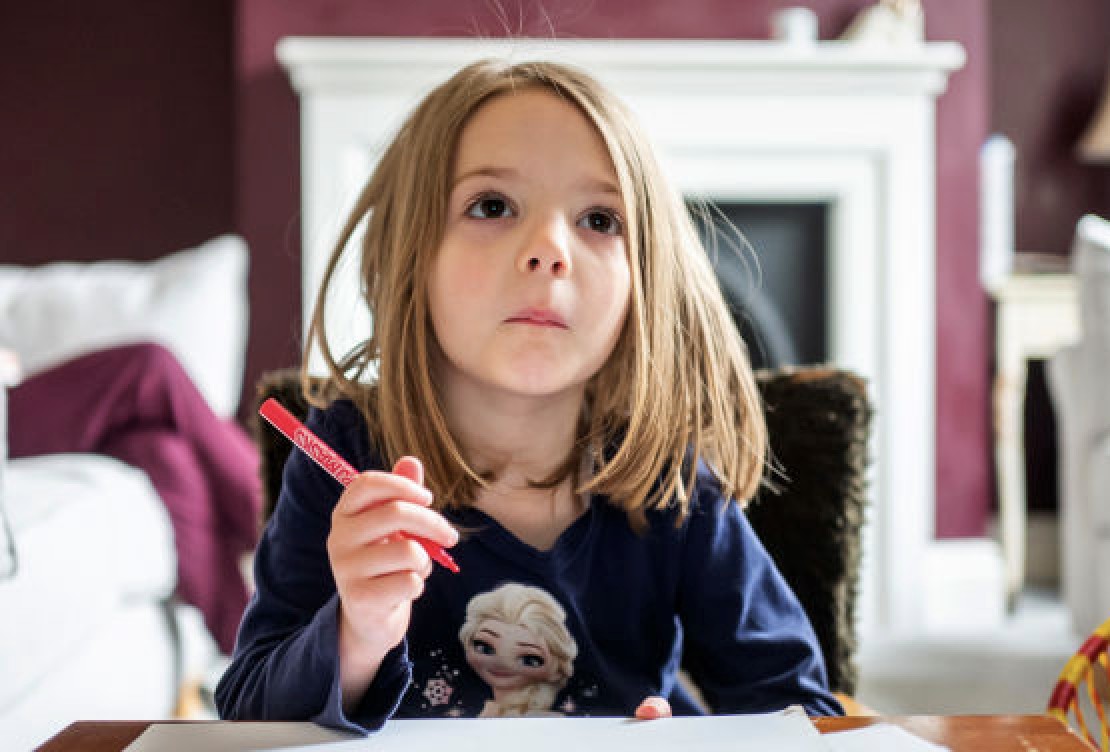
'Today, quite by accident, modern society has begun breeding out the middle child.' Credit: Getty

‘Today, quite by accident, modern society has begun breeding out the middle child.’ Credit: Getty

12 June 2026 - 10:00am

The Western world spent years worrying about falling birth rates. Everything from the impact on the economy to labour shortages and the burden placed on an ever-smaller working-age population has been analysed. But one aspect has often gone overlooked.

Figures released this week by the ONS reveal that one-child families are becoming increasingly common, with the proportion of women having only one child rising by almost 50% compared with their mothers’ generation. Children today are likely to grow up with fewer siblings than any previous generation, and one under-acknowledged impact of this is that there will likely be a drastic shift in the temperament of those who make up British society.

The sibling relationship is typically the longest and arguably the most important in a person’s life. More than a century ago, Austrian psychiatrist Alfred Adler suggested that the child who gets the hand-me-downs grows up differently from the child who hands them down. According to Adler, firstborns begin life as the undisputed centre of the universe until a younger sibling arrives and stages a bloodless coup. Middle children become accustomed to negotiating life between competing factions, while youngest children and only children enjoy the pleasures and perils of being fussed over. Unsurprisingly, the reality is more complicated than the theory.

Birth-order theory has spent a century irritating people because it can be simplistic and often comes from the perspective of the conventional, nuclear family. But there are so many variables that this theory can quickly unravel, depending on family circumstances. Like most psychological theories, birth order is interesting to reflect upon, but not strong enough to base decisions upon.

Enthusiasts of birth-order theories have always enjoyed matching personalities to professions. According to the stereotype, firstborns gravitate towards respectable occupations involving responsibility, delayed gratification and sensible shoes. They are more likely to become doctors, scientists, engineers and managers. Younger siblings, by contrast, are more likely to work for themselves. They become entrepreneurs, artists and adventurers, preferring to ask for forgiveness rather than permission.

Middle children occupy a category all of their own. Forever negotiating between older and younger siblings, they are typically drawn towards professions requiring diplomacy and emotional intelligence. They become teachers, therapists, writers and politicians. In other words, they spend their adult lives doing professionally what they practised around the kitchen table as children, trying to persuade everybody to calm down and see the other person’s point of view.

Modern research has found traces of these patterns, albeit in a more modest form. A study from Ohio State University found that firstborns and only children showed stronger cognitive and analytical interests. Meanwhile, economists Sandra Black and colleagues found that firstborns were disproportionately represented in management and leadership positions while younger siblings were more likely to strike out on their own. While the eldest child is climbing the corporate ladder, the youngest is trying to go viral.

We seem to be conducting a fascinating social experiment. For most of history, society produced a healthy supply of eldest children, youngest children and, in abundance, middle children. Today, quite by accident, modern society has begun breeding out the middle child.

Roughly 57% of families in Britain today have either one or two children. In other words, most families produce no middle child at all. If birth order influences personality even slightly, we are still giving birth to plenty of leaders and plenty of risk-takers. It is the diplomats who are becoming an endangered species.

As a fairly typical middle child myself, I believe I can already see the effects among the younger generation. Public life feels increasingly tribal; what seems to be in shorter supply are the people saying, “Hang on, perhaps they have a point?” Society is inadvertently creating more lone wolves and fewer peacemakers — I suspect we’re going to miss them.


Stella O’Malley is a psychotherapist and bestselling author. She is Founder-Director of Genspect, an international organisation that advocates for a healthy approach to sex and gender.

stellaomalley3

China is threatening America in the AI race

Reports sugget Zhipu AI  has released a new model that can rival leading US systems. Credit: Getty

Reports sugget Zhipu AI has released a new model that can rival leading US systems. Credit: Getty

1 July 2026 - 10:18am

China is trying to catch up with America on artificial intelligence. The Wall Street Journal has reported that Zhipu AI — one of China’s six “AI tiger” LLMs — has released a new model that can rival leading US systems, including Anthropic’s Mythos, in cybersecurity tasks such as pinpointing security bugs. While this marks a milestone in China’s drive to catch up with Western AI capabilities, strong performance on a single benchmark does not mean it has taken the lead. Chinese models still lag behind their Western counterparts in broader capabilities, such as autonomous operation. Skepticism is therefore warranted before resorting to hysterical conclusions, but complacency about the geopolitical implications of China’s AI advances would be an even greater mistake.

On the infrastructure side, Chinese AI is still constrained by access to advanced chips, with American labs way ahead in computing capacity as well as investment. Analysis from earlier this year suggests that Chinese models are likely to be at least a few months behind those in the US. But they are still continuing to make progress, or that the geopolitical importance of AI will be decided only by whose LLM has ventured deeper into the technological frontier. The practical applications of AI, countries’ to capture foreign markets, and the application of AI into the real economy will matter just as much.

Here, China may hold an advantage. As with its dominance across many critical supply chains, Beijing may not need to produce the most advanced AI systems — only those that are affordable and widely deployable. In doing so, it could consolidate global influence by supplying functional, low-cost AI at scale.

Beijing seems to be pursuing exactly that path, developing an AI “open-source” strategy that offers affordable, widely available AI models for companies and individuals to use and modify as they wish. The production of the DeepSeek AI model, which matched the performance of Silicon Valley tools such as ChatGPT at a fraction of the cost for users, created goodwill among Chinese models with developers.

The four most popular models on OpenRouter, an AI hardware platform for developers, are now all Chinese. The goal for China is not only to win the frontier-model race, but to make its systems the default layer of AI adoption across industries and global markets. For most economies, the choice is increasingly between an affordable tool they can deploy now and a more robust one that may be out of reach.

And while the countries adopting Chinese models may be exposed to political pressure and cyber threats from Beijing, safer and more capable alternatives matter little if they are unaffordable. American AI companies are already under pressure to monetize products whose operating costs are rising. If Chinese open-source models become the cheap default for startups, universities, governments and businesses across the developing world, then America’s AI lead will be eroded from below.

Perhaps more concerning for America in the long run is how AI can give Chinese manufacturing even more strength, through the ongoing integration of AI as a general-purpose technology. China’s new Five-Year Plan mentioned AI more than 50 times and includes an “AI+” action plan aimed at spreading AI across the economy.

Beijing has been pioneering automation of its critical infrastructure for years, with promising recent results in increasing warplane production capacity. In that regard, China’s open-model strategy and manufacturing dominance will reinforce each other. Cheap, adaptable models accelerate deployment across the real economy while those deployments generate real-world data and use cases that can feed back into further model improvement.

The United States should not dismiss the importance of its lead in the AI race. That lead worries Beijing, not least because a more automated Chinese economy would also become more vulnerable to AI-generated cyber threats. But nor should Washington assume that China cannot catch up with American capabilities over time.

This AI competition represents part of a broader struggle over tech supply chains and geopolitical influence. Decisions over whether to adopt US or Chinese models could produce a more fragmented global reality, with different regions relying on different cloud providers, chips and security structures. The result will likely be a global economy which is divided into competing spheres, rather than one which produces a single winner.


Miquel Vila is a political and geopolitical risk consultant focusing on industrial strategy, critical infrastructure and global supply chains.

miquelvilam