




X Close

AIPAC’s Democratic purge continues as Cori Bush loses

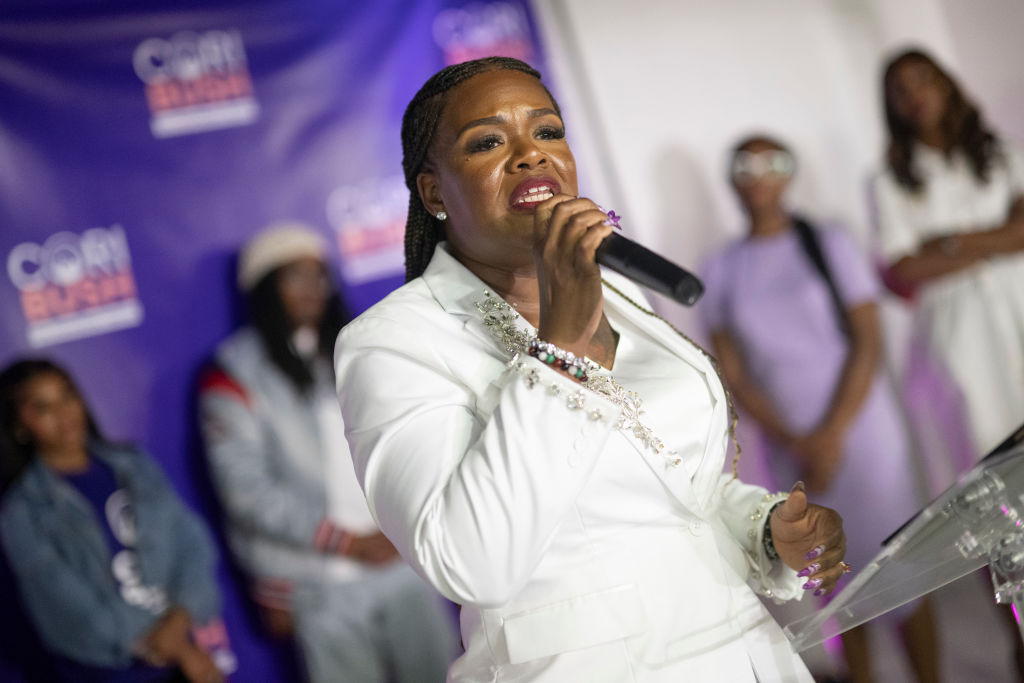
Democrats are more scared than ever to criticise Israel. Credit: Getty

Democrats are more scared than ever to criticise Israel. Credit: Getty

7 August 2024 - 8:00pm

The American Israel Public Affairs Committee (AIPAC) is methodically reshaping the Democratic Party, picking off progressive candidates one by one. Its latest triumph is the unseating of Cori Bush, the firebrand congresswoman from Missouri’s 1st district. Bush, a former nurse and Black Lives Matter activist, fell to Wesley Bell, a county prosecutor who ran as a “pragmatic” progressive. The secret ingredient in Bell’s victory? Over $8 million in spending from AIPAC-affiliated super PACs — the second most expensive primary of all time.

This wasn’t AIPAC’s first rodeo. Just weeks earlier, they helped topple another member of the progressive “Squad,” Jamaal Bowman of New York. The price tag for that race was a cool $15 million. These astronomical sums are transforming once-sleepy House primaries in safe Democratic districts into high-stakes battlegrounds, with AIPAC as the heavyweight champion.

The pattern appears to be clear: speak out against Israel’s ongoing aggression in Gaza, and AIPAC will open its considerable war chest to fund your opponent. It’s a simple equation that’s yielding results. Bush and Bowman are just the latest casualties in a broader campaign to purge the Democratic Party and Left-aligned spaces like academia more generally of voices critical of Israel.

But AIPAC’s success wasn’t solely due to its financial muscle. Bush’s own ineffectiveness in Congress played a significant role in her downfall. During her tenure, she failed to pass a single piece of legislation, focusing instead on divisive rhetoric and symbolic gestures. Her obsession with the Gaza conflict seemed tone-deaf to many St. Louis residents grappling with more immediate concerns like crumbling infrastructure and economic hardship.

AIPAC and its allies shrewdly exploited this disconnect. Rather than focusing on the war in Gaza, their messaging highlighted Bush’s poor congressional record on bread-and-butter issues. Mailers and ads branded her as “INEFFECTIVE,” spotlighting missed votes and her opposition to key Biden administration initiatives. This strategy hit all the right notes, resonating with voters who felt neglected by their representative.

It bears restating how effective this strategy has become. AIPAC isn’t just influencing elections; they’re fundamentally altering the DNA of the Democratic Party. With each victory, they send a chilling message to other progressives: criticise Israel at your own peril — and if you must, choose your words carefully, as Vermont Senator Bernie Sanders has.

The impact of these defeats ripples far beyond the individual races. Any Democrat in a contested primary will think twice before uttering a word of support for Palestinians or criticism of Israeli policy. The result? A party increasingly monolithic in its stance on Israel, even as polling shows that rank-and-file Democrats remain divided on the issue. More than this, some data suggests that grassroots Democrats are growing more sympathetic to the Palestinian cause — particularly Democrats under 35. But AIPAC’s strategy doesn’t rely on popular support. It’s about leveraging financial might to shape the choices available to voters.

Critics argue that AIPAC’s outsized influence threatens the democratic process, turning elections into auctions won by the highest bidder. They’re not wrong. Indeed, if AIPAC continues its winning streak, the future of progressive politics in the Democratic Party looks increasingly bleak. The congressional “Squad,” once hailed as the vanguard of a new Left-wing movement, could end up being systematically dismantled. Essentially it has gone from, in the words of one writer, a legislative unit to a “lefty group chat made public”.

That said, AIPAC’s reshaping of the Democratic Party may prove a Pyrrhic victory. By silencing critical voices and enforcing ideological conformity, they risk creating a party out of step with its own base, particularly if it depresses general election turnout.

For now, though, AIPAC’s influence shows no signs of waning. As long as money remains the lifeblood of American politics, groups with deep pockets will continue to win elections, particularly in easy-to-influence congressional primaries. The question is: can those sympathetic to the Palestinian cause adapt to this new reality — some have fended off AIPAC-funded challenges, after all — or will they become relics of a different era in Democratic politics? I’d put my own money on the latter, and more’s the pity for civic discourse.


Oliver Bateman is a historian and journalist based in Pittsburgh. He blogs, vlogs, and podcasts at his Substack, Oliver Bateman Does the Work

MoustacheClubUS

China is threatening America in the AI race

Reports sugget Zhipu AI  has released a new model that can rival leading US systems. Credit: Getty

Reports sugget Zhipu AI has released a new model that can rival leading US systems. Credit: Getty

1 July 2026 - 10:18am

China is trying to catch up with America on artificial intelligence. The Wall Street Journal has reported that Zhipu AI — one of China’s six “AI tiger” LLMs — has released a new model that can rival leading US systems, including Anthropic’s Mythos, in cybersecurity tasks such as pinpointing security bugs. While this marks a milestone in China’s drive to catch up with Western AI capabilities, strong performance on a single benchmark does not mean it has taken the lead. Chinese models still lag behind their Western counterparts in broader capabilities, such as autonomous operation. Skepticism is therefore warranted before resorting to hysterical conclusions, but complacency about the geopolitical implications of China’s AI advances would be an even greater mistake.

On the infrastructure side, Chinese AI is still constrained by access to advanced chips, with American labs way ahead in computing capacity as well as investment. Analysis from earlier this year suggests that Chinese models are likely to be at least a few months behind those in the US. But they are still continuing to make progress, or that the geopolitical importance of AI will be decided only by whose LLM has ventured deeper into the technological frontier. The practical applications of AI, countries’ to capture foreign markets, and the application of AI into the real economy will matter just as much.

Here, China may hold an advantage. As with its dominance across many critical supply chains, Beijing may not need to produce the most advanced AI systems — only those that are affordable and widely deployable. In doing so, it could consolidate global influence by supplying functional, low-cost AI at scale.

Beijing seems to be pursuing exactly that path, developing an AI “open-source” strategy that offers affordable, widely available AI models for companies and individuals to use and modify as they wish. The production of the DeepSeek AI model, which matched the performance of Silicon Valley tools such as ChatGPT at a fraction of the cost for users, created goodwill among Chinese models with developers.

The four most popular models on OpenRouter, an AI hardware platform for developers, are now all Chinese. The goal for China is not only to win the frontier-model race, but to make its systems the default layer of AI adoption across industries and global markets. For most economies, the choice is increasingly between an affordable tool they can deploy now and a more robust one that may be out of reach.

And while the countries adopting Chinese models may be exposed to political pressure and cyber threats from Beijing, safer and more capable alternatives matter little if they are unaffordable. American AI companies are already under pressure to monetize products whose operating costs are rising. If Chinese open-source models become the cheap default for startups, universities, governments and businesses across the developing world, then America’s AI lead will be eroded from below.

Perhaps more concerning for America in the long run is how AI can give Chinese manufacturing even more strength, through the ongoing integration of AI as a general-purpose technology. China’s new Five-Year Plan mentioned AI more than 50 times and includes an “AI+” action plan aimed at spreading AI across the economy.

Beijing has been pioneering automation of its critical infrastructure for years, with promising recent results in increasing warplane production capacity. In that regard, China’s open-model strategy and manufacturing dominance will reinforce each other. Cheap, adaptable models accelerate deployment across the real economy while those deployments generate real-world data and use cases that can feed back into further model improvement.

The United States should not dismiss the importance of its lead in the AI race. That lead worries Beijing, not least because a more automated Chinese economy would also become more vulnerable to AI-generated cyber threats. But nor should Washington assume that China cannot catch up with American capabilities over time.

This AI competition represents part of a broader struggle over tech supply chains and geopolitical influence. Decisions over whether to adopt US or Chinese models could produce a more fragmented global reality, with different regions relying on different cloud providers, chips and security structures. The result will likely be a global economy which is divided into competing spheres, rather than one which produces a single winner.


Miquel Vila is a political and geopolitical risk consultant focusing on industrial strategy, critical infrastructure and global supply chains.

miquelvilam