




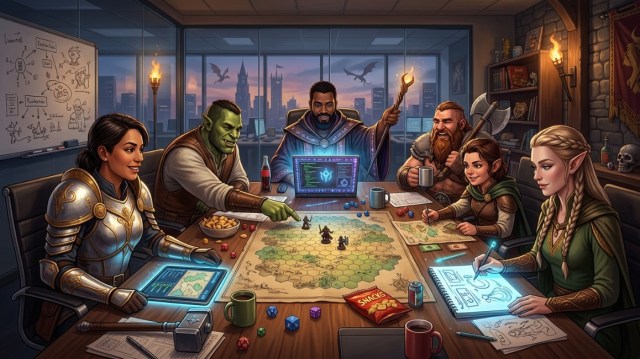




Dungeons & Dragons may seem far removed from software development, but the two worlds have plenty in common. Both involve solving complicated problems, working within defined systems, adapting when plans fail, and collaborating with people who bring different skills to the table. A D&D session gives developers a relaxed environment in which to practise these abilities without deadlines, production incidents, or overflowing ticket queues.
Every adventuring party depends on teamwork. Fighters protect vulnerable allies, rogues uncover hidden dangers, clerics keep everyone standing, and Wizards provide powerful—but carefully limited—solutions. This resembles a healthy software team, where engineers, designers, testers, product managers, and operations specialists contribute distinct expertise. Success comes not from one person dominating the game, but from understanding how each role supports the group.
Playing a Wizard is especially relevant to software development. Wizards study complex systems, prepare tools in advance, and select the right spell for the problem at hand. Their most spectacular ability is not always the best choice: sometimes a subtle illusion, timely counterspell, or carefully placed Web is more useful than a fireball. Likewise, strong developers learn that the cleverest code is not necessarily the most effective solution. Good judgment, preparation, and awareness of consequences matter more than raw technical power.
D&D also creates a safe space for practising communication and handling uncertainty. Players must explain ideas, negotiate competing plans, make decisions with incomplete information, and recover together when the dice derail a strategy. These moments can reveal how colleagues approach risk, leadership, conflict, and failure. Because the consequences are fictional, the team can experiment, laugh, and learn without threatening a real project.
Most importantly, a campaign builds shared stories. The time the Wizard accidentally set the tavern on fire—or saved the entire party with one perfectly chosen spell—becomes part of the team’s culture. Those memories make colleagues feel more human to one another, strengthening the trust that supports honest feedback and productive collaboration. For software teams seeking a creative alternative to conventional team-building exercises, Dungeons & Dragons offers something rare: structured problem-solving that feels like play.