




X Close

What’s behind Iran’s mysterious gas explosions?

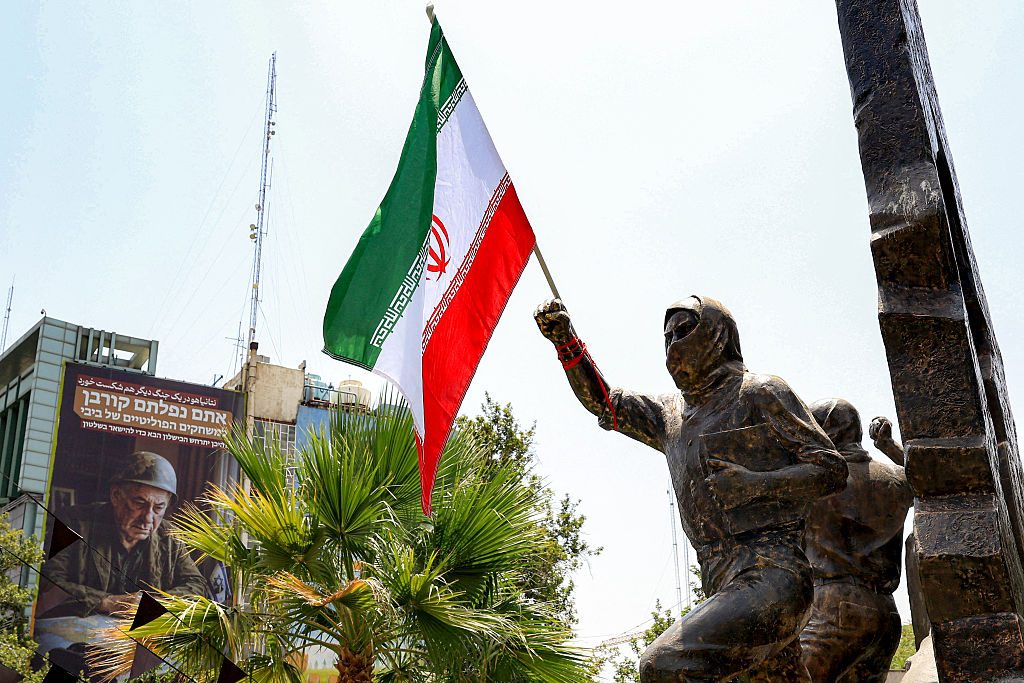
Tehran and other major cities have suffered major infrastructure failures in recent weeks. Credit: Getty

Tehran and other major cities have suffered major infrastructure failures in recent weeks. Credit: Getty

July 14 2025 - 5:30pm

“Wouldn’t it have been better if the Islamic Republic had repaired its gas pipelines instead of sending millions of dollars to the region’s bankrupt terrorists?” That was the sarcastic response posted by Israel’s Ministry of Foreign Affairs’ Persian-language social media accounts today, following a wave of mysterious explosions across Iran in the aftermath of the 12-day conflict between the two countries.

Since last month’s ceasefire, there have been a series of unexplained fires and explosions across Iran, officially blamed on faulty gas lines. The most recent took place this morning in a six-storey residential building in the religious city of Qom. State media attributed the blast to a “gas leak” on the first floor. Yet, only a few hours later, there were reports of a major fire at the Khatam al-Anbiya residential complex to the west of Tehran. The complex is linked to the Islamic Revolutionary Guard Corps (IRGC)’s Khatam al-Anbiya Construction Headquarters, which is the IRGC’s main engineering and construction arm.

A more suspicious case occurred last week, when an explosion ripped through a high-rise in West Tehran reportedly used by the Judicial Organisation of the Armed Forces. While authorities again cited a gas leak, it later emerged that the building wasn’t even connected to the city’s piped gas network. The Tehran Fire Department claimed the explosion stemmed from gas accumulation on the 15th floor and injured six people. However, state media images revealed the apartment was unfurnished and appeared uninhabited.

Just hours after that explosion, authorities quietly announced the “accidental death” of Ali Tayeb, who was the Supreme Leader’s former representative in an IRGC unit responsible for suppressing protests. No further details were offered and the regime’s silence has only fuelled speculation. That same day, Israel’s Defence Minister Israel Katz issued a stark warning directly to Ali Khamenei. “Israel’s long arm will reach you in Tehran, Tabriz, Isfahan, and anywhere you try to harm us,” he declared. “There is no place to hide.”

The string of explosions began just after the ceasefire. On 24 June, a house was hit in Kermanshah, near the Iraqi border. The following day, a residential unit in western Tehran exploded. Both incidents, again, were blamed on gas. A day later, a fire ripped through a luxury apartment in the capital’s upscale Farmanieh district, a neighbourhood known to house high-ranking regime officials. More than two weeks on, authorities have yet to disclose the cause.

While state media has confirmed these incidents, citizen journalists have shared videos of additional explosions and fires from across Iran, with no official acknowledgement. Defying the risk of arrest, social media users in the country have mocked the authorities’ blanket use of “gas leaks” as an explanation. AI-generated images have circulated showing Benjamin Netanyahu disguised as an Iranian gas inspector, checking buildings for “Zionist gas leaks”.

Both Iran and Israel are known for their secrecy when it comes to covert operations. But confirmation of Israel’s role in such sabotage operations is now more explicit than ever. In an interview with Fox News last week, Netanyahu openly acknowledged for the first time Israel’s involvement in the assassinations of Iranian nuclear scientists. “We eliminated a significant number of their [nuclear] scientists: not the top-tier ones, which we’ve done more recently, but nonetheless key personnel,” he said, adding that Israel has carried out “various other operations and disruptions of many kinds across multiple fronts”.

In this context, the spate of “accidental” explosions across Iran appears less like a series of infrastructure failures and more like a message. At least, that’s how many Iranians interpret them.

Ali Hamedani is a writer and broadcaster, formerly with the BBC World Service.


China is threatening America in the AI race

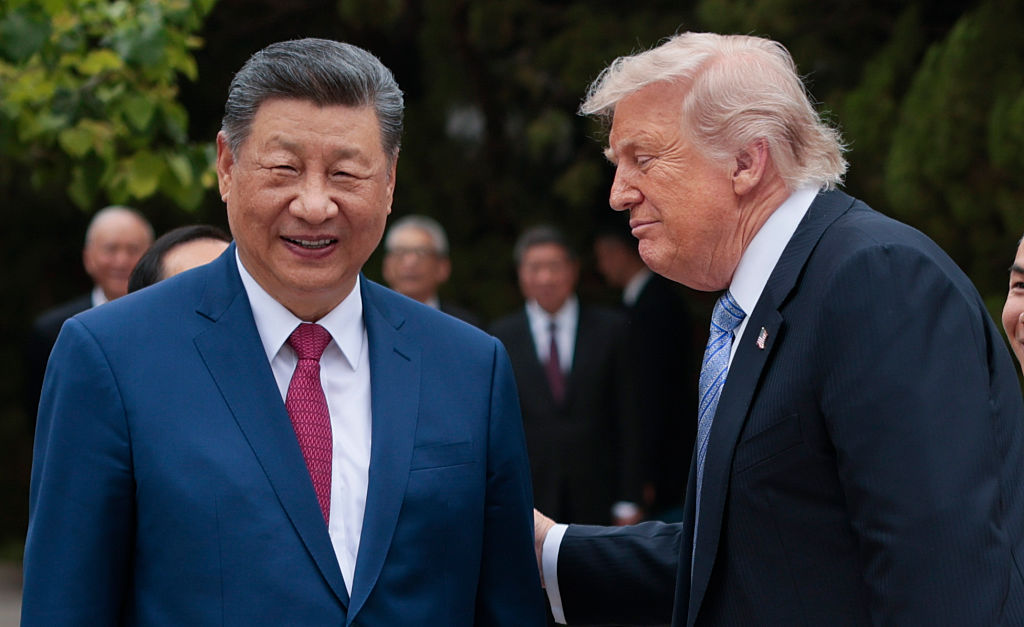
Reports sugget Zhipu AI  has released a new model that can rival leading US systems. Credit: Getty

Reports sugget Zhipu AI has released a new model that can rival leading US systems. Credit: Getty

July 1 2026 - 10:18am

China is trying to catch up with America on artificial intelligence. The Wall Street Journal has reported that Zhipu AI — one of China’s six “AI tiger” LLMs — has released a new model that can rival leading US systems, including Anthropic’s Mythos, in cybersecurity tasks such as pinpointing security bugs. While this marks a milestone in China’s drive to catch up with Western AI capabilities, strong performance on a single benchmark does not mean it has taken the lead. Chinese models still lag behind their Western counterparts in broader capabilities, such as autonomous operation. Skepticism is therefore warranted before resorting to hysterical conclusions, but complacency about the geopolitical implications of China’s AI advances would be an even greater mistake.

On the infrastructure side, Chinese AI is still constrained by access to advanced chips, with American labs way ahead in computing capacity as well as investment. Analysis from earlier this year suggests that Chinese models are likely to be at least a few months behind those in the US. But they are still continuing to make progress, or that the geopolitical importance of AI will be decided only by whose LLM has ventured deeper into the technological frontier. The practical applications of AI, countries’ to capture foreign markets, and the application of AI into the real economy will matter just as much.

Here, China may hold an advantage. As with its dominance across many critical supply chains, Beijing may not need to produce the most advanced AI systems — only those that are affordable and widely deployable. In doing so, it could consolidate global influence by supplying functional, low-cost AI at scale.

Beijing seems to be pursuing exactly that path, developing an AI “open-source” strategy that offers affordable, widely available AI models for companies and individuals to use and modify as they wish. The production of the DeepSeek AI model, which matched the performance of Silicon Valley tools such as ChatGPT at a fraction of the cost for users, created goodwill among Chinese models with developers.

The four most popular models on OpenRouter, an AI hardware platform for developers, are now all Chinese. The goal for China is not only to win the frontier-model race, but to make its systems the default layer of AI adoption across industries and global markets. For most economies, the choice is increasingly between an affordable tool they can deploy now and a more robust one that may be out of reach.

And while the countries adopting Chinese models may be exposed to political pressure and cyber threats from Beijing, safer and more capable alternatives matter little if they are unaffordable. American AI companies are already under pressure to monetize products whose operating costs are rising. If Chinese open-source models become the cheap default for startups, universities, governments and businesses across the developing world, then America’s AI lead will be eroded from below.

Perhaps more concerning for America in the long run is how AI can give Chinese manufacturing even more strength, through the ongoing integration of AI as a general-purpose technology. China’s new Five-Year Plan mentioned AI more than 50 times and includes an “AI+” action plan aimed at spreading AI across the economy.

Beijing has been pioneering automation of its critical infrastructure for years, with promising recent results in increasing warplane production capacity. In that regard, China’s open-model strategy and manufacturing dominance will reinforce each other. Cheap, adaptable models accelerate deployment across the real economy while those deployments generate real-world data and use cases that can feed back into further model improvement.

The United States should not dismiss the importance of its lead in the AI race. That lead worries Beijing, not least because a more automated Chinese economy would also become more vulnerable to AI-generated cyber threats. But nor should Washington assume that China cannot catch up with American capabilities over time.

This AI competition represents part of a broader struggle over tech supply chains and geopolitical influence. Decisions over whether to adopt US or Chinese models could produce a more fragmented global reality, with different regions relying on different cloud providers, chips and security structures. The result will likely be a global economy which is divided into competing spheres, rather than one which produces a single winner.


Miquel Vila is a political and geopolitical risk consultant focusing on industrial strategy, critical infrastructure and global supply chains.

miquelvilam