




X Close

Trump’s trans military ban goes too far

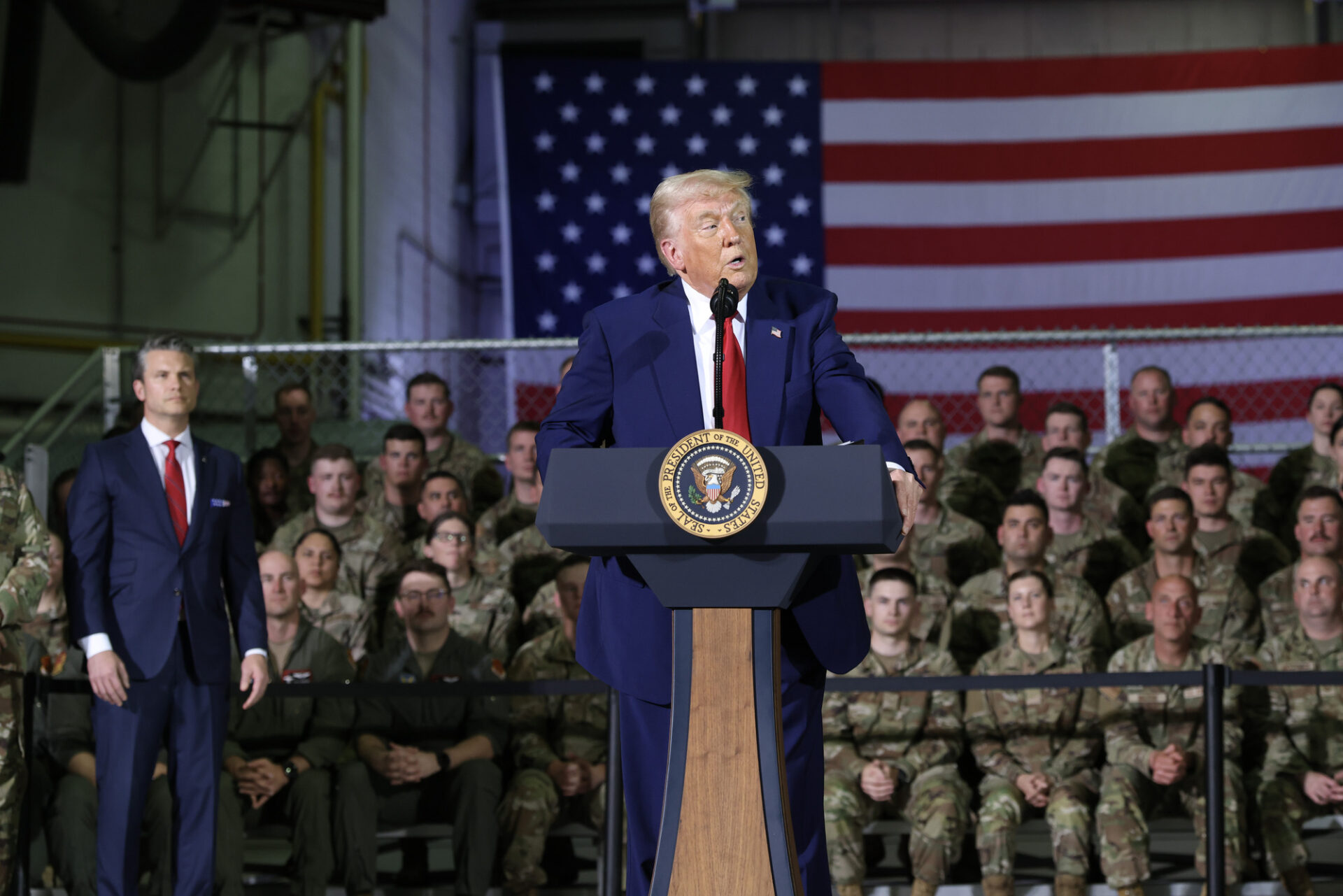
The military ban is punishment disguised as policy. Credit: Getty

The military ban is punishment disguised as policy. Credit: Getty

May 9 2025 - 8:00pm

This week, the US Supreme Court delivered a victory to the Trump administration, allowing its policy to ban trans people from the military to stand. A question many still have is: why did they advance this policy in the first place?

Trump unleashed a slew of executive orders on sex and gender the minute he assumed office. They were all written using language that likely offended some liberals’ sensibilities, though the meat of several of them was entirely digestible. Restoring the definition of man and woman to correlate with male and female, or excluding men from women’s sports — we shouldn’t have needed such presidential actions, but because of the efforts of previous liberal administrations, we did. There’s substantial support among Americans for these reasonable policies.

On 27 January, Trump delivered the executive order “Prioritizing Military Excellence and Readiness”. As with the others, some of what was written there was uncontroversial. Service members must be “free of medical conditions or physical defects that may reasonably be expected to require excessive time lost from duty for necessary treatment or hospitalization.” If they have medical or mental health conditions that interfere with their ability to serve, then the military has the right to exclude them. We should accept that not everyone is equipped to defend the country, and advance those who are.

It’s true that a male who has undergone vaginoplasty might have a hard time dilating his (or her?) neovagina in the middle of a war zone, and that some aspects of medical transition likely conflict with military duties. But trans is now an umbrella term that laps up transsexuals who undergo radical surgeries and young people who don items of clothing marketed to the opposite sex. Many of them would have no problem serving. An autogynephilic male might wear some lacy underwear beneath his fatigues, but couldn’t he still wield a rifle or operate a drone? Without knowing what Trump means by trans — without knowing what anybody means by trans — we don’t know to whom these restrictions apply.

Nor do we know how many people the new rules apply to because it’s hard to discern how many trans people serve in the military. Advocates for Trans Equality say almost 20% of all trans people are “active military service members or veterans, which is almost twice the rate of the general population”. Yet a New York Times headline from the end of February read: “Number of Trans Troops Far Lower Than Estimated, Pentagon Figures Show”.

It seems that when, for political reasons, advocates want the trans population to be big, they insist it is. When they want it to be small, they insist it is, too. Of course, the size of the population depends on the definition and boundaries of the population, bringing us back to the problem of what trans is in the first place. The Times talks about gender dysphoria diagnoses, but we’ve heard plenty of times that one need not have GD to be trans, or even to transition medically to be trans. Other than to pick on trans people, or banish them from the barracks, it’s unclear why this was necessary.

And yet, that seems to be precisely what’s happening. The Defense Department has vowed to comb through medical records to find out whom to cast away, and offered 30 days for trans-identified people to desist or detransition. Defense Secretary Pete Hegseth wrote on X, “No More Trans @ DoD.” In taking this route, Trump and friends have lost any chance to assert that this is about fairness and reality. They’ve now turned it into an exercise by going through records and purging them. They risk making the most hysterical accusations of trans activists come true.

Even without medical transition, asserting a trans identity “conflicts with a soldier’s commitment to an honorable, truthful, and disciplined lifestyle, even in one’s personal life,” per the order. “A man’s assertion that he is a woman, and his requirement that others honor this falsehood, is not consistent with the humility and selflessness required of a service member.”

As an atheist, who sees gender identity as a religious belief, I disagree. I have no more problem with someone believing in gender identity than I do with them believing in Jesus, Allah, Vishnu, or Zeus. The problem arises when we are compelled to participate in and affirm that belief. I know plenty of people who’ve altered their bodies or changed their names or walk through the world looking like the opposite sex, who don’t ask me to deny reality. Transsexualism and reality don’t have to conflict.

I fear this supposed win for Trump will be a Pyrrhic victory, because if the other orders restored reality, this one fulfills the otherwise paranoid delusion among my fellow liberals that trans people are under assault. Just because you’ve won the right to discriminate against a group of people doesn’t mean that you should.

Lisa Selin Davis is the author of Tomboy. She writes at Broadview on Substack.

LisaSelinDavis

China is threatening America in the AI race

Reports sugget Zhipu AI  has released a new model that can rival leading US systems. Credit: Getty

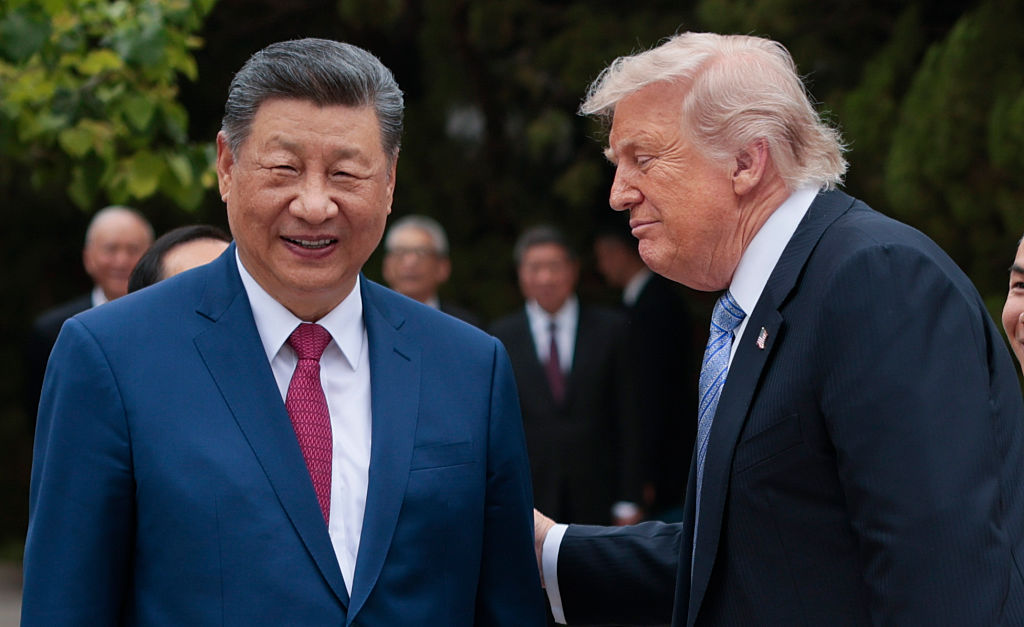
Reports sugget Zhipu AI has released a new model that can rival leading US systems. Credit: Getty

July 1 2026 - 10:18am

China is trying to catch up with America on artificial intelligence. The Wall Street Journal has reported that Zhipu AI — one of China’s six “AI tiger” LLMs — has released a new model that can rival leading US systems, including Anthropic’s Mythos, in cybersecurity tasks such as pinpointing security bugs. While this marks a milestone in China’s drive to catch up with Western AI capabilities, strong performance on a single benchmark does not mean it has taken the lead. Chinese models still lag behind their Western counterparts in broader capabilities, such as autonomous operation. Skepticism is therefore warranted before resorting to hysterical conclusions, but complacency about the geopolitical implications of China’s AI advances would be an even greater mistake.

On the infrastructure side, Chinese AI is still constrained by access to advanced chips, with American labs way ahead in computing capacity as well as investment. Analysis from earlier this year suggests that Chinese models are likely to be at least a few months behind those in the US. But they are still continuing to make progress, or that the geopolitical importance of AI will be decided only by whose LLM has ventured deeper into the technological frontier. The practical applications of AI, countries’ to capture foreign markets, and the application of AI into the real economy will matter just as much.

Here, China may hold an advantage. As with its dominance across many critical supply chains, Beijing may not need to produce the most advanced AI systems — only those that are affordable and widely deployable. In doing so, it could consolidate global influence by supplying functional, low-cost AI at scale.

Beijing seems to be pursuing exactly that path, developing an AI “open-source” strategy that offers affordable, widely available AI models for companies and individuals to use and modify as they wish. The production of the DeepSeek AI model, which matched the performance of Silicon Valley tools such as ChatGPT at a fraction of the cost for users, created goodwill among Chinese models with developers.

The four most popular models on OpenRouter, an AI hardware platform for developers, are now all Chinese. The goal for China is not only to win the frontier-model race, but to make its systems the default layer of AI adoption across industries and global markets. For most economies, the choice is increasingly between an affordable tool they can deploy now and a more robust one that may be out of reach.

And while the countries adopting Chinese models may be exposed to political pressure and cyber threats from Beijing, safer and more capable alternatives matter little if they are unaffordable. American AI companies are already under pressure to monetize products whose operating costs are rising. If Chinese open-source models become the cheap default for startups, universities, governments and businesses across the developing world, then America’s AI lead will be eroded from below.

Perhaps more concerning for America in the long run is how AI can give Chinese manufacturing even more strength, through the ongoing integration of AI as a general-purpose technology. China’s new Five-Year Plan mentioned AI more than 50 times and includes an “AI+” action plan aimed at spreading AI across the economy.

Beijing has been pioneering automation of its critical infrastructure for years, with promising recent results in increasing warplane production capacity. In that regard, China’s open-model strategy and manufacturing dominance will reinforce each other. Cheap, adaptable models accelerate deployment across the real economy while those deployments generate real-world data and use cases that can feed back into further model improvement.

The United States should not dismiss the importance of its lead in the AI race. That lead worries Beijing, not least because a more automated Chinese economy would also become more vulnerable to AI-generated cyber threats. But nor should Washington assume that China cannot catch up with American capabilities over time.

This AI competition represents part of a broader struggle over tech supply chains and geopolitical influence. Decisions over whether to adopt US or Chinese models could produce a more fragmented global reality, with different regions relying on different cloud providers, chips and security structures. The result will likely be a global economy which is divided into competing spheres, rather than one which produces a single winner.


Miquel Vila is a political and geopolitical risk consultant focusing on industrial strategy, critical infrastructure and global supply chains.

miquelvilam