



X Close

Trump’s Mexican border crackdown is working

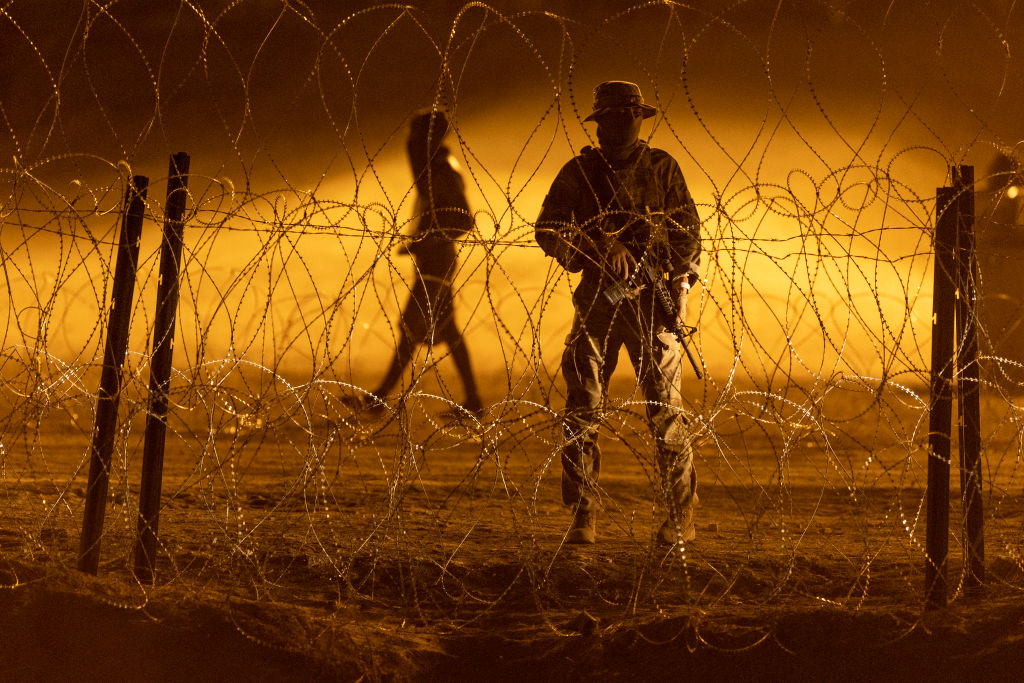
The new administration is racking up wins on the southwestern border. Credit: Getty

The new administration is racking up wins on the southwestern border. Credit: Getty

March 4 2025 - 6:45pm

The Pentagon has announced the deployment of 3,000 active duty soldiers to the Mexican border. The Stryker Brigade Combat Team will, Saturday’s statement declared, “reinforce and expand current border security operations to seal the border and protect the territorial integrity of the United States”.

The timing of this announcement is curious: the number of migrants illegally crossing the border in February plummeted to the lowest monthly level this century. Just 8,000 migrants crossed the border illegally, according to preliminary data from the US Customs and Border Protection. Indeed, crossings have hit such a low that a priest working with migrants claimed that “migrant shelters are going into hibernation.” He attributed this in part to the Trump administration scrapping the CBP One app, which allowed migrants to arrive via a port of entry. But the main reason, he said, was Mexico stopping crossings and returning migrants in its northern states to the south of the country.

Sending troops to the southern border seems moot with the collapse of illegal migrant crossings. But it reinforces the MAGA narrative of taking control of the southwestern border. The US President campaigned on promises to close the border, stopping migrants and fentanyl. He has wielded the threat of 25% tariffs to force Mexican compliance on migration and security matters, imposing them today along with others on Canada and China. Even though Mexican President Claudia Sheinbaum has responded carefully, threatening retaliatory tariffs. The truth is that she’s quietly agreeing to US demands in private and taking actions to avoid further tariffs, which would cripple Mexico’s export-focused economy.

Mexico has complied with many of Trump’s demands, stopping record numbers of migrants, handing over 29 drug cartel bosses after years of delays, and even allowing US drone flights over Mexican territory. The Mexican President appears to have abandoned the “hugs, not bullets” security strategy of her predecessor Andrés Manuel López Obrador, who left office last year, by carrying out more than 10,000 arrests of high-profile targets, seizing 90 tons of drugs, and routinely decommissioning synthetic drug labs. The country has even proposed matching tariffs on Chinese imports, according to Treasury Secretary Scott Bessent.

The question, though, is whether all this is enough. More than 80% of Mexico’s exports go to the United States and it cannot afford further economic hurdles. Mexico had already been taking a tougher approach to migrants before Trump took office, detaining record numbers after the Biden administration closed a pair of rail bridges into Texas, hampering cross-border trade.

So we should expect Mexico to continue serving up tangible wins for Trump, without Sheinbaum’s government losing face. She has skillfully handled Trump, who told reporters: “President Sheinbaum is a woman I like very much.” This is important because, to borrow Trump’s phrase, Mexico does not have many cards right now. “There’s absolutely nothing left to give Trump,” says Federico Estévez, political science professor at the Autonomous Technological Institute of Mexico. “He’s left Mexico with absolutely nothing to do but to grin and bear it.”

David Agren is a freelance journalist based in Mexico City.


China is threatening America in the AI race

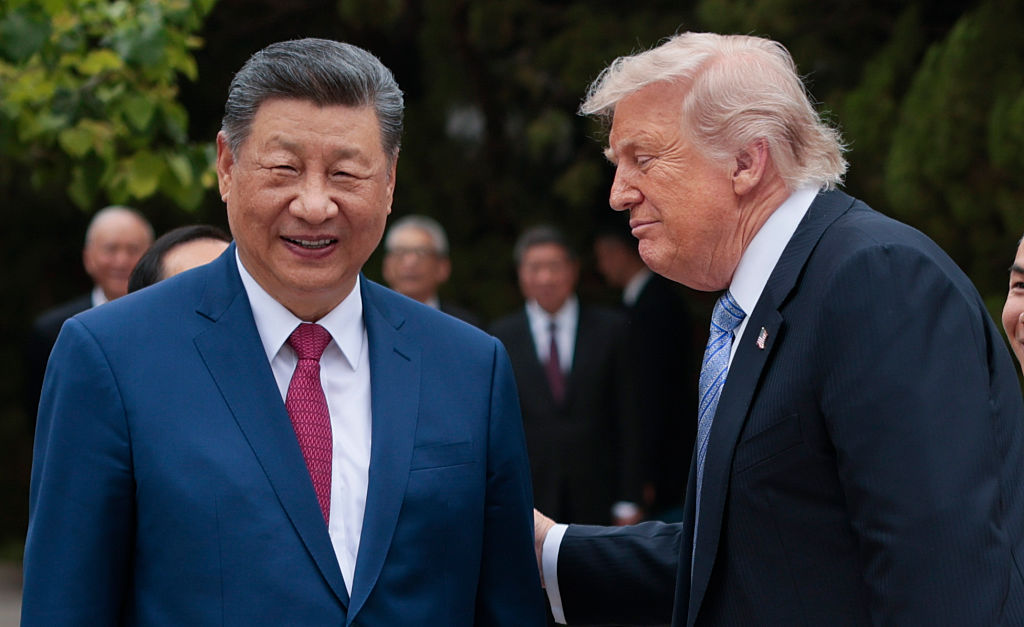
Reports sugget Zhipu AI  has released a new model that can rival leading US systems. Credit: Getty

Reports sugget Zhipu AI has released a new model that can rival leading US systems. Credit: Getty

July 1 2026 - 10:18am

China is trying to catch up with America on artificial intelligence. The Wall Street Journal has reported that Zhipu AI — one of China’s six “AI tiger” LLMs — has released a new model that can rival leading US systems, including Anthropic’s Mythos, in cybersecurity tasks such as pinpointing security bugs. While this marks a milestone in China’s drive to catch up with Western AI capabilities, strong performance on a single benchmark does not mean it has taken the lead. Chinese models still lag behind their Western counterparts in broader capabilities, such as autonomous operation. Skepticism is therefore warranted before resorting to hysterical conclusions, but complacency about the geopolitical implications of China’s AI advances would be an even greater mistake.

On the infrastructure side, Chinese AI is still constrained by access to advanced chips, with American labs way ahead in computing capacity as well as investment. Analysis from earlier this year suggests that Chinese models are likely to be at least a few months behind those in the US. But they are still continuing to make progress, or that the geopolitical importance of AI will be decided only by whose LLM has ventured deeper into the technological frontier. The practical applications of AI, countries’ to capture foreign markets, and the application of AI into the real economy will matter just as much.

Here, China may hold an advantage. As with its dominance across many critical supply chains, Beijing may not need to produce the most advanced AI systems — only those that are affordable and widely deployable. In doing so, it could consolidate global influence by supplying functional, low-cost AI at scale.

Beijing seems to be pursuing exactly that path, developing an AI “open-source” strategy that offers affordable, widely available AI models for companies and individuals to use and modify as they wish. The production of the DeepSeek AI model, which matched the performance of Silicon Valley tools such as ChatGPT at a fraction of the cost for users, created goodwill among Chinese models with developers.

The four most popular models on OpenRouter, an AI hardware platform for developers, are now all Chinese. The goal for China is not only to win the frontier-model race, but to make its systems the default layer of AI adoption across industries and global markets. For most economies, the choice is increasingly between an affordable tool they can deploy now and a more robust one that may be out of reach.

And while the countries adopting Chinese models may be exposed to political pressure and cyber threats from Beijing, safer and more capable alternatives matter little if they are unaffordable. American AI companies are already under pressure to monetize products whose operating costs are rising. If Chinese open-source models become the cheap default for startups, universities, governments and businesses across the developing world, then America’s AI lead will be eroded from below.

Perhaps more concerning for America in the long run is how AI can give Chinese manufacturing even more strength, through the ongoing integration of AI as a general-purpose technology. China’s new Five-Year Plan mentioned AI more than 50 times and includes an “AI+” action plan aimed at spreading AI across the economy.

Beijing has been pioneering automation of its critical infrastructure for years, with promising recent results in increasing warplane production capacity. In that regard, China’s open-model strategy and manufacturing dominance will reinforce each other. Cheap, adaptable models accelerate deployment across the real economy while those deployments generate real-world data and use cases that can feed back into further model improvement.

The United States should not dismiss the importance of its lead in the AI race. That lead worries Beijing, not least because a more automated Chinese economy would also become more vulnerable to AI-generated cyber threats. But nor should Washington assume that China cannot catch up with American capabilities over time.

This AI competition represents part of a broader struggle over tech supply chains and geopolitical influence. Decisions over whether to adopt US or Chinese models could produce a more fragmented global reality, with different regions relying on different cloud providers, chips and security structures. The result will likely be a global economy which is divided into competing spheres, rather than one which produces a single winner.


Miquel Vila is a political and geopolitical risk consultant focusing on industrial strategy, critical infrastructure and global supply chains.

miquelvilam
