


X Close

Slumdog Millionaire is not cultural appropriation

Dev Patel in 2008’s Slumdog Millionaire. Credit: IMDb

Dev Patel in 2008’s Slumdog Millionaire. Credit: IMDb

June 22 2025 - 4:15pm

“Cultural appropriation” was one of the more unfortunate ideas to take hold during the domination of mainstream pop culture by progressive identity politics over the past decade. But just as it has been proclaimed that we are entering a “post-woke” era and that Left-wing identitarianism is becoming passé, the film director Danny Boyle has demonstrated that its residues linger on.

In an interview published on Friday, Boyle claimed that he wouldn’t be able to make his 2008 film Slumdog Millionaire today because of cultural appropriation. While maintaining that he is still proud of the Best Picture Oscar-winner, which was set and filmed in India, he noted that recent cultural shifts meant he “wouldn’t even contemplate doing something like that today. It wouldn’t even get financed. Even if I was involved, I’d be looking for a young Indian filmmaker to shoot it.” And, Boyle emphasized, “that’s how it should be.”

Rather than this mea culpa providing evidence of a more enlightened Western approach towards other cultures, especially those formerly subject to European colonialism, it reveals how liberal attitudes have become increasingly provincial in the name of respecting “diversity”. Boyle’s argument does not represent cultural progress, but instead regression in the guise of progress. That a film set in Mumbai starring Indian actors but directed by an Englishman could be considered a cultural event in the West in 2008 but would at best be “controversial” in the 2020s is telling.

At the time, Slumdog Millionaire received some opprobrium from within India, especially from those espousing a middle-class nationalism, for tarnishing India’s image. Their charge was that it was another typical instance of a Westerner gazing at India through the lens of poverty porn and Third-World squalor, rather than showcasing a different image of a modernizing country with skyscrapers and a space program. Really, it is a fallacy to think that one film can “represent” something as complex and contradictory as a national culture or the “experience” of an entire community. No film could possibly achieve that, so any such expectation will always lead to disappointment.

Boyle stated in this week’s interview that an outsider making a film from within a culture is a “flawed method”. This might sound rational. After all, the best films about the Italian-American mafia were made by Italian-American directors, in part because having been born and raised in that cultural environment they understood nuances and idiosyncrasies an outsider might miss. The Godfather and Goodfellas surely wouldn’t have had the same authenticity in the hands of a WASP director.

On the other hand, a filmmaker from outside a particular community or nation can provide a new angle which a native couldn’t. That perspective is valuable, too. If Boyle’s advice were taken seriously, then Clint Eastwood wouldn’t have made Letters from Iwo Jima and Paul Schrader wouldn’t have made his fabulous biopic of Yukio Mishima. Both are great films by any standard, treating their subjects with respect and authenticity.

What’s more, this mentality would ghettoize non-white and non-Western directors, as though their role were merely to advertise their respective “culture” for the eyes of Western audiences. This would then become the only method through which they could get their foot in the door and be taken seriously in the industry. Ang Lee wouldn’t be able to adapt Brokeback Mountain or Sense and Sensibility (talk about a very “white” film), and would have to stick to films like Crouching Tiger, Hidden Dragon.

When identity is the primary lens for judging a film — rather than the tried and tested is it any good? — it can only inhibit creativity and imagination. It isn’t a film’s role to demonize a culture, nor to traffic in feel-good PR or pander to racial narcissism. Movies are supposed to tell human stories, exploring themes that may be articulated within a particular cultural background but which ultimately transcend it to engage in a universal conversation. All great art deals in some way with the human condition. We shouldn’t let this be obscured.


Ralph Leonard is a British-Nigerian writer on international politics, religion, culture and humanism.

buffsoldier_96

China is threatening America in the AI race

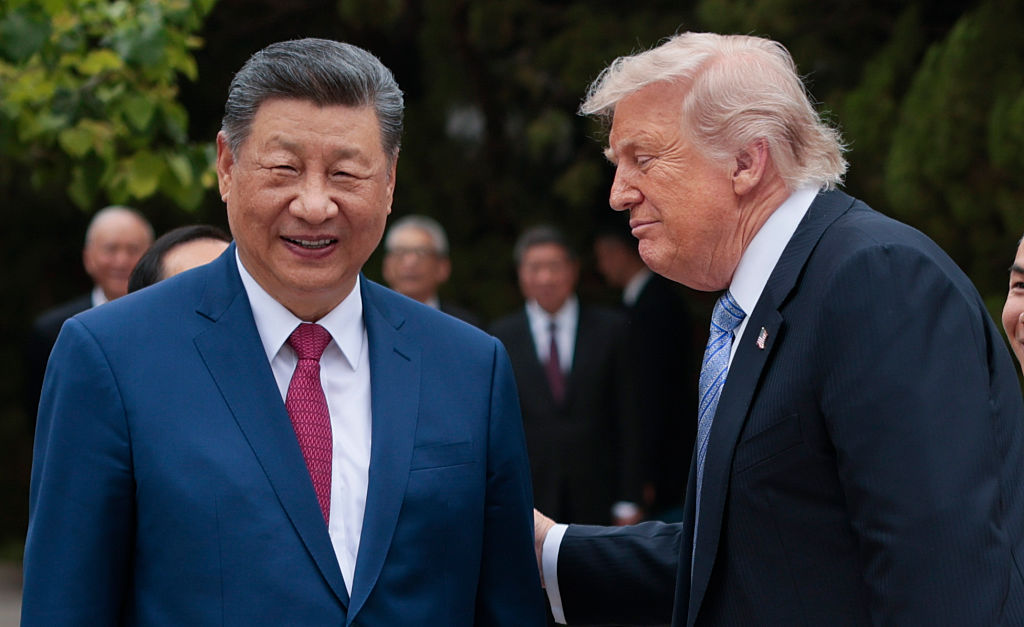
Reports sugget Zhipu AI  has released a new model that can rival leading US systems. Credit: Getty

Reports sugget Zhipu AI has released a new model that can rival leading US systems. Credit: Getty

July 1 2026 - 10:18am

China is trying to catch up with America on artificial intelligence. The Wall Street Journal has reported that Zhipu AI — one of China’s six “AI tiger” LLMs — has released a new model that can rival leading US systems, including Anthropic’s Mythos, in cybersecurity tasks such as pinpointing security bugs. While this marks a milestone in China’s drive to catch up with Western AI capabilities, strong performance on a single benchmark does not mean it has taken the lead. Chinese models still lag behind their Western counterparts in broader capabilities, such as autonomous operation. Skepticism is therefore warranted before resorting to hysterical conclusions, but complacency about the geopolitical implications of China’s AI advances would be an even greater mistake.

On the infrastructure side, Chinese AI is still constrained by access to advanced chips, with American labs way ahead in computing capacity as well as investment. Analysis from earlier this year suggests that Chinese models are likely to be at least a few months behind those in the US. But they are still continuing to make progress, or that the geopolitical importance of AI will be decided only by whose LLM has ventured deeper into the technological frontier. The practical applications of AI, countries’ to capture foreign markets, and the application of AI into the real economy will matter just as much.

Here, China may hold an advantage. As with its dominance across many critical supply chains, Beijing may not need to produce the most advanced AI systems — only those that are affordable and widely deployable. In doing so, it could consolidate global influence by supplying functional, low-cost AI at scale.

Beijing seems to be pursuing exactly that path, developing an AI “open-source” strategy that offers affordable, widely available AI models for companies and individuals to use and modify as they wish. The production of the DeepSeek AI model, which matched the performance of Silicon Valley tools such as ChatGPT at a fraction of the cost for users, created goodwill among Chinese models with developers.

The four most popular models on OpenRouter, an AI hardware platform for developers, are now all Chinese. The goal for China is not only to win the frontier-model race, but to make its systems the default layer of AI adoption across industries and global markets. For most economies, the choice is increasingly between an affordable tool they can deploy now and a more robust one that may be out of reach.

And while the countries adopting Chinese models may be exposed to political pressure and cyber threats from Beijing, safer and more capable alternatives matter little if they are unaffordable. American AI companies are already under pressure to monetize products whose operating costs are rising. If Chinese open-source models become the cheap default for startups, universities, governments and businesses across the developing world, then America’s AI lead will be eroded from below.

Perhaps more concerning for America in the long run is how AI can give Chinese manufacturing even more strength, through the ongoing integration of AI as a general-purpose technology. China’s new Five-Year Plan mentioned AI more than 50 times and includes an “AI+” action plan aimed at spreading AI across the economy.

Beijing has been pioneering automation of its critical infrastructure for years, with promising recent results in increasing warplane production capacity. In that regard, China’s open-model strategy and manufacturing dominance will reinforce each other. Cheap, adaptable models accelerate deployment across the real economy while those deployments generate real-world data and use cases that can feed back into further model improvement.

The United States should not dismiss the importance of its lead in the AI race. That lead worries Beijing, not least because a more automated Chinese economy would also become more vulnerable to AI-generated cyber threats. But nor should Washington assume that China cannot catch up with American capabilities over time.

This AI competition represents part of a broader struggle over tech supply chains and geopolitical influence. Decisions over whether to adopt US or Chinese models could produce a more fragmented global reality, with different regions relying on different cloud providers, chips and security structures. The result will likely be a global economy which is divided into competing spheres, rather than one which produces a single winner.


Miquel Vila is a political and geopolitical risk consultant focusing on industrial strategy, critical infrastructure and global supply chains.

miquelvilam