

X Close

Musk’s OpenAI bid won’t stop DeepSeek threat

Is Musk right about Chinese technology? Credit: Getty

Is Musk right about Chinese technology? Credit: Getty

February 11 2025 - 4:00pm

The US and the UK have today refused to sign a declaration on “inclusive and sustainable” AI at a summit in Paris. US Vice President JD Vance stated that America was withholding its signature because of Europe’s “excessive regulation” of the technology. The British delegation refused to specify why it has withdrawn its support, but it is likely tied to a potential deal emerging between the US and the UK to prevent the former imposing tariffs on the latter.

The chaos in Paris reflects deeper disruptions across the AI landscape. A few weeks ago, a Chinese company called DeepSeek released AI technology that massively undercut American equivalents — with some analysts putting the cost of using the company’s model at around 6% the price of its US alternative. DeepSeek claimed that the new platform used significantly less computer power, which led to a sharp downturn in the stock price of Nvidia, the American company that provides the graphics processing unit (GPU) chips needed to power the technology.

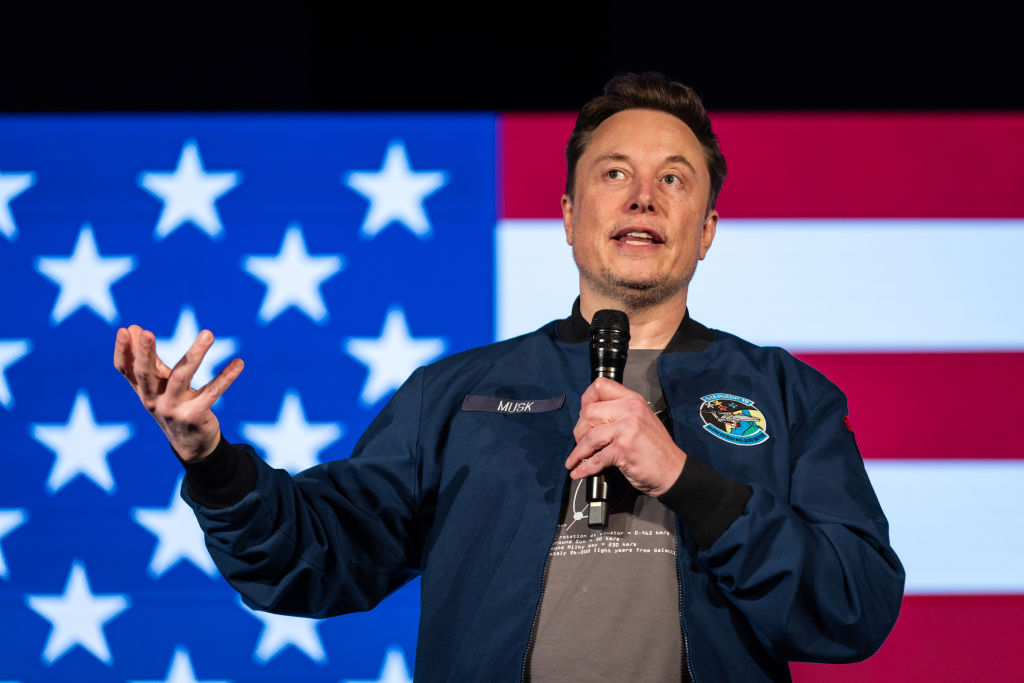
Yesterday, Elon Musk made an unsolicited bid to buy OpenAI, one of the leaders in the American AI space and a company which he co-founded almost a decade ago. Musk has seemingly pinned the blame for OpenAI’s failures on current CEO and fellow co-founder Sam Altman, calling him a “swindler” on social media. Altman has led the organization in a more commercial direction, partnering it with large firms in order to raise capital. Musk believes that the company should be more open-sourced and has suggested partnering it with Tesla. That DeepSeek is an open-source platform no doubt leads the X owner to think that his assessment has been vindicated.

What is Musk’s plan if he were to acquire OpenAI? Despite its undeniable efficiency and low cost, the entrepreneur has raised doubts about DeepSeek’s abilities, questioning whether it was really trained on a relatively small number of GPUs. The argument is that since China is restricted from buying these GPUs, its tech leaders have an incentive to mislead the public about how many they possess. Yet it is not clear whether this is the correct interpretation. Though there are some consultancy firms, such as SemiAnalysis, which make this claim, how they arrive at their estimates is less than obvious. And even if their methodology is robust, their results remain speculative.

The situation in Silicon Valley circles is one of confusion. Perhaps Musk is right, and the Chinese are hiding the real number of GPUs in their possession. But perhaps he is not, and DeepSeek really does represent a quantum leap in the training of AI platforms. If he is correct then the Chinese advance, while impressive, is not industry-destroying. If he is wrong, however, the initial hype around DeepSeek is largely justified and the entire industry may need a rethink.

This brings us back to the summit in Paris. Since the Americans are no longer clear about the realities of the AI sector, they may feel that it is unwise to bind themselves to any firm position. Over the next year or two, the impact of technologies such as DeepSeek will become more apparent — as will the structure of OpenAI and Silicon Valley’s approach to artificial intelligence more generally. At this point, it might be easier for the United States to articulate its vision. Until then, however, it seems that the new Trump administration believes the wisest move is to make no move at all.


Philip Pilkington is a macroeconomist and investment professional, and the author of The Reformation in Economics

philippilk

China is threatening America in the AI race

Reports sugget Zhipu AI  has released a new model that can rival leading US systems. Credit: Getty

Reports sugget Zhipu AI has released a new model that can rival leading US systems. Credit: Getty

July 1 2026 - 10:18am

China is trying to catch up with America on artificial intelligence. The Wall Street Journal has reported that Zhipu AI — one of China’s six “AI tiger” LLMs — has released a new model that can rival leading US systems, including Anthropic’s Mythos, in cybersecurity tasks such as pinpointing security bugs. While this marks a milestone in China’s drive to catch up with Western AI capabilities, strong performance on a single benchmark does not mean it has taken the lead. Chinese models still lag behind their Western counterparts in broader capabilities, such as autonomous operation. Skepticism is therefore warranted before resorting to hysterical conclusions, but complacency about the geopolitical implications of China’s AI advances would be an even greater mistake.

On the infrastructure side, Chinese AI is still constrained by access to advanced chips, with American labs way ahead in computing capacity as well as investment. Analysis from earlier this year suggests that Chinese models are likely to be at least a few months behind those in the US. But they are still continuing to make progress, or that the geopolitical importance of AI will be decided only by whose LLM has ventured deeper into the technological frontier. The practical applications of AI, countries’ to capture foreign markets, and the application of AI into the real economy will matter just as much.

Here, China may hold an advantage. As with its dominance across many critical supply chains, Beijing may not need to produce the most advanced AI systems — only those that are affordable and widely deployable. In doing so, it could consolidate global influence by supplying functional, low-cost AI at scale.

Beijing seems to be pursuing exactly that path, developing an AI “open-source” strategy that offers affordable, widely available AI models for companies and individuals to use and modify as they wish. The production of the DeepSeek AI model, which matched the performance of Silicon Valley tools such as ChatGPT at a fraction of the cost for users, created goodwill among Chinese models with developers.

The four most popular models on OpenRouter, an AI hardware platform for developers, are now all Chinese. The goal for China is not only to win the frontier-model race, but to make its systems the default layer of AI adoption across industries and global markets. For most economies, the choice is increasingly between an affordable tool they can deploy now and a more robust one that may be out of reach.

And while the countries adopting Chinese models may be exposed to political pressure and cyber threats from Beijing, safer and more capable alternatives matter little if they are unaffordable. American AI companies are already under pressure to monetize products whose operating costs are rising. If Chinese open-source models become the cheap default for startups, universities, governments and businesses across the developing world, then America’s AI lead will be eroded from below.

Perhaps more concerning for America in the long run is how AI can give Chinese manufacturing even more strength, through the ongoing integration of AI as a general-purpose technology. China’s new Five-Year Plan mentioned AI more than 50 times and includes an “AI+” action plan aimed at spreading AI across the economy.

Beijing has been pioneering automation of its critical infrastructure for years, with promising recent results in increasing warplane production capacity. In that regard, China’s open-model strategy and manufacturing dominance will reinforce each other. Cheap, adaptable models accelerate deployment across the real economy while those deployments generate real-world data and use cases that can feed back into further model improvement.

The United States should not dismiss the importance of its lead in the AI race. That lead worries Beijing, not least because a more automated Chinese economy would also become more vulnerable to AI-generated cyber threats. But nor should Washington assume that China cannot catch up with American capabilities over time.

This AI competition represents part of a broader struggle over tech supply chains and geopolitical influence. Decisions over whether to adopt US or Chinese models could produce a more fragmented global reality, with different regions relying on different cloud providers, chips and security structures. The result will likely be a global economy which is divided into competing spheres, rather than one which produces a single winner.


Miquel Vila is a political and geopolitical risk consultant focusing on industrial strategy, critical infrastructure and global supply chains.

miquelvilam