

X Close

Is the UK-US deal a blip in the global trade war?

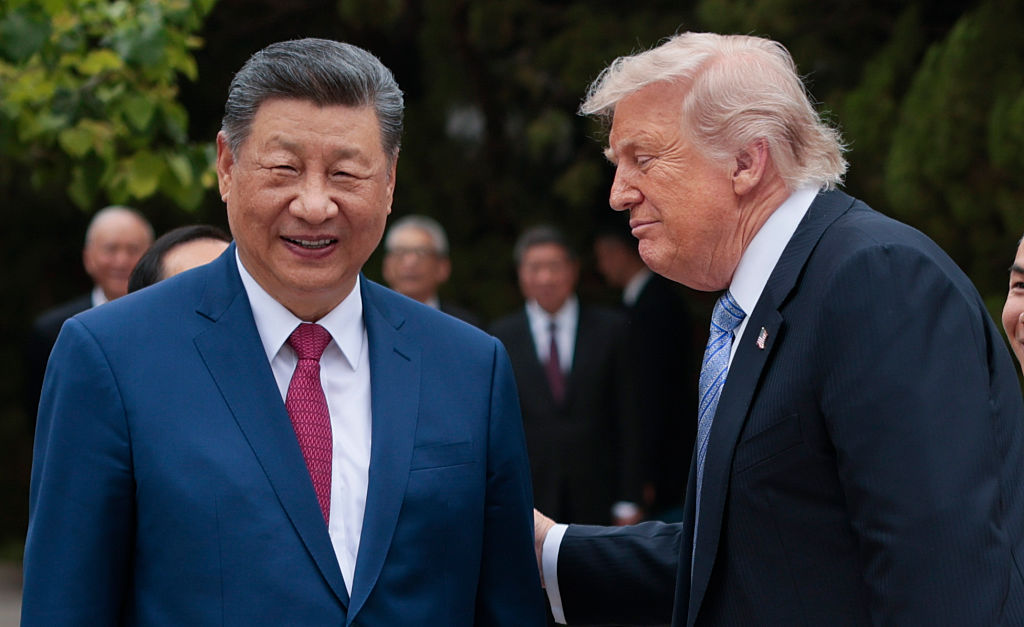
Tariff tweak or trade agreement? Credit: Getty

Tariff tweak or trade agreement? Credit: Getty

May 9 2025 - 10:30am

In war zones, groups of armed youths will often set up barricades on highways, and demand payment from anyone seeking to pass. It’s bad for the economy: but good for their pockets.

That’s Donald Trump’s approach to trade. After pretty much shutting down access to the US market with last month’s Liberation Day tariffs, he asked countries what they’ll pay, in the form of tariffs or sweetened access to their markets, in order to pass. The first country to negotiate access was Britain, whose trade deal with the United States was announced on Thursday.

What resulted was both better and worse than the previous situation: better than a week ago, in that the two countries have stepped back from the brink of a trade war which would have left both of them worse off, but worse than a year ago. Then, as per the calculations of Paul Dales at Capital Economics, the effective US tariff rate stood at 1%; today, it’s up to 11% now — better than the post-Liberation Day rate of 13%, but still not great.

Britain won’t pay this, of course; American consumers will. It would be as if the gangs at the barricade demanded local residents pay them to let the goods they want to buy enter their turf, but it may reflect the Trump administration’s willingness to raise consumption taxes in order to cut income taxes, which is itself an interesting change.

But the overall effect of the deal on both economies will be pretty modest, given that they each have more significant alternatives in other trading partners. It will limit short-term damage, but at the risk of inhibiting long-term potential. US markets seem to reflect this emerging consensus, the stock market having climbed out of the abyss it fell into after Liberation Day but still down modestly for the year. In the meantime, bond yields continue to feel upward pressure, and the dollar is weaker. In short, investors are pricing in slower growth and higher inflation for the US. Not quite the economic collapse feared after Liberation Day, more a long funk.

So it’s hard to get excited about this deal, though in fairness to British Prime Minister Keir Starmer, it’s probably the best he could obtain in the circumstances. He stood his ground on British food standards and the digital tax, possibly leaving the door open to a bigger deal with the more-important (to Britain) European Union later on. So when asked if British-American trade relations were now better or worse than when Trump took office, Starmer could be forgiven for replying it was the wrong question to ask. “You should be asking ‘is it better than it was yesterday?’” Besides, coming in the same week he announced a deal with India, it signals his government is taking a pragmatic approach to trade, in favor of more openness.

As for the US position, the good news is that Donald Trump is showing a willingness to heed the markets and make compromises. But whether other countries choose to follow Britain’s lead is an open question. They may not show the same willingness to compromise as Britain has, and some of the elements of the US-UK deal may violate WTO rules, which could become a bone of contention in their own talks.

Before long, we may be back to talk of a trade war taking precedence over deal-making. So this agreement may be a template for an emerging new world trading order, or it may be a false dawn that gives way to a resumption of trade-war hostilities.


John Rapley is an author and academic who divides his time between London, Johannesburg and Ottawa. His books include Why Empires Fall: Rome, America and the Future of the West (with Peter Heather, Penguin, 2023) and Twilight of the Money Gods: Economics as a Religion (Simon & Schuster, 2017).

jarapley

China is threatening America in the AI race

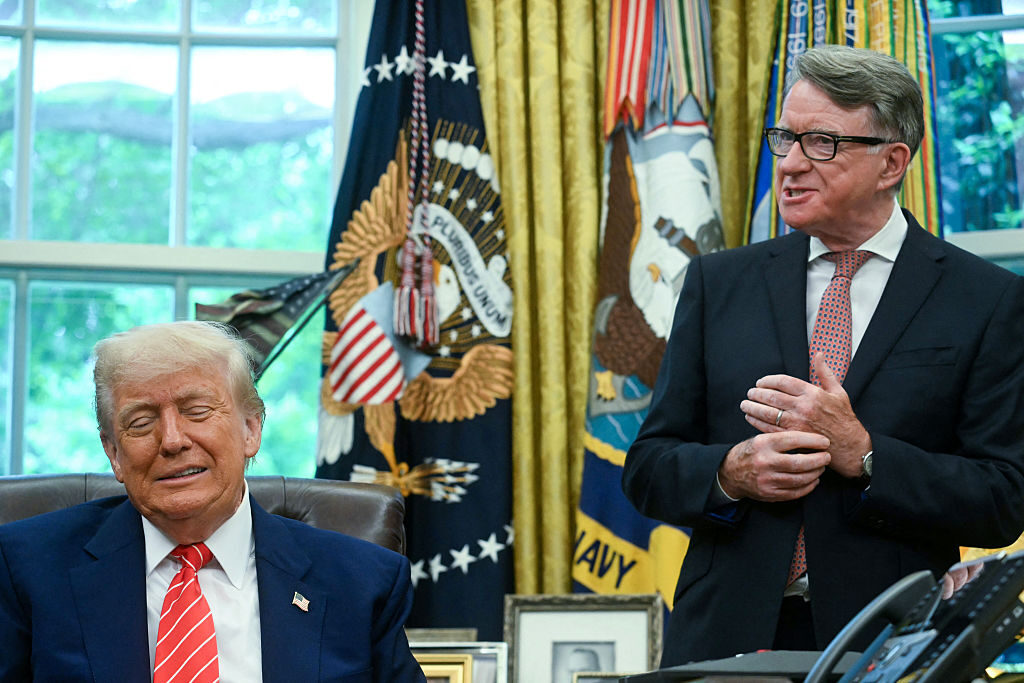
Reports sugget Zhipu AI  has released a new model that can rival leading US systems. Credit: Getty

Reports sugget Zhipu AI has released a new model that can rival leading US systems. Credit: Getty

July 1 2026 - 10:18am

China is trying to catch up with America on artificial intelligence. The Wall Street Journal has reported that Zhipu AI — one of China’s six “AI tiger” LLMs — has released a new model that can rival leading US systems, including Anthropic’s Mythos, in cybersecurity tasks such as pinpointing security bugs. While this marks a milestone in China’s drive to catch up with Western AI capabilities, strong performance on a single benchmark does not mean it has taken the lead. Chinese models still lag behind their Western counterparts in broader capabilities, such as autonomous operation. Skepticism is therefore warranted before resorting to hysterical conclusions, but complacency about the geopolitical implications of China’s AI advances would be an even greater mistake.

On the infrastructure side, Chinese AI is still constrained by access to advanced chips, with American labs way ahead in computing capacity as well as investment. Analysis from earlier this year suggests that Chinese models are likely to be at least a few months behind those in the US. But they are still continuing to make progress, or that the geopolitical importance of AI will be decided only by whose LLM has ventured deeper into the technological frontier. The practical applications of AI, countries’ to capture foreign markets, and the application of AI into the real economy will matter just as much.

Here, China may hold an advantage. As with its dominance across many critical supply chains, Beijing may not need to produce the most advanced AI systems — only those that are affordable and widely deployable. In doing so, it could consolidate global influence by supplying functional, low-cost AI at scale.

Beijing seems to be pursuing exactly that path, developing an AI “open-source” strategy that offers affordable, widely available AI models for companies and individuals to use and modify as they wish. The production of the DeepSeek AI model, which matched the performance of Silicon Valley tools such as ChatGPT at a fraction of the cost for users, created goodwill among Chinese models with developers.

The four most popular models on OpenRouter, an AI hardware platform for developers, are now all Chinese. The goal for China is not only to win the frontier-model race, but to make its systems the default layer of AI adoption across industries and global markets. For most economies, the choice is increasingly between an affordable tool they can deploy now and a more robust one that may be out of reach.

And while the countries adopting Chinese models may be exposed to political pressure and cyber threats from Beijing, safer and more capable alternatives matter little if they are unaffordable. American AI companies are already under pressure to monetize products whose operating costs are rising. If Chinese open-source models become the cheap default for startups, universities, governments and businesses across the developing world, then America’s AI lead will be eroded from below.

Perhaps more concerning for America in the long run is how AI can give Chinese manufacturing even more strength, through the ongoing integration of AI as a general-purpose technology. China’s new Five-Year Plan mentioned AI more than 50 times and includes an “AI+” action plan aimed at spreading AI across the economy.

Beijing has been pioneering automation of its critical infrastructure for years, with promising recent results in increasing warplane production capacity. In that regard, China’s open-model strategy and manufacturing dominance will reinforce each other. Cheap, adaptable models accelerate deployment across the real economy while those deployments generate real-world data and use cases that can feed back into further model improvement.

The United States should not dismiss the importance of its lead in the AI race. That lead worries Beijing, not least because a more automated Chinese economy would also become more vulnerable to AI-generated cyber threats. But nor should Washington assume that China cannot catch up with American capabilities over time.

This AI competition represents part of a broader struggle over tech supply chains and geopolitical influence. Decisions over whether to adopt US or Chinese models could produce a more fragmented global reality, with different regions relying on different cloud providers, chips and security structures. The result will likely be a global economy which is divided into competing spheres, rather than one which produces a single winner.


Miquel Vila is a political and geopolitical risk consultant focusing on industrial strategy, critical infrastructure and global supply chains.

miquelvilam