

X Close

Is Hezbollah’s grip on Lebanon loosening?

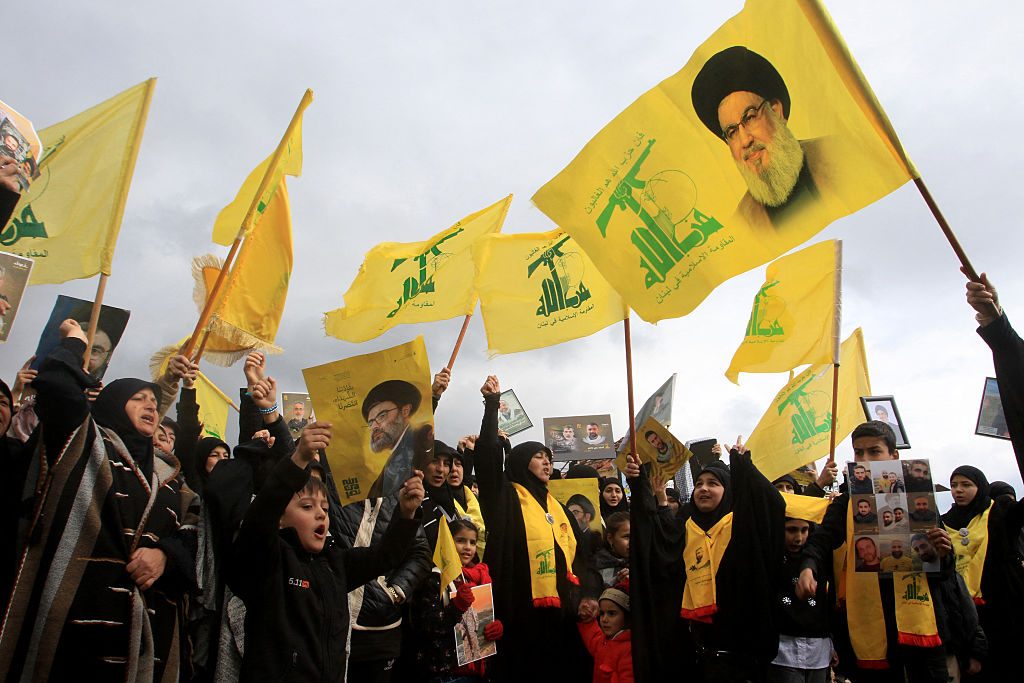
War with Israel has taken its toll on the Iranian proxy. Credit: Getty

War with Israel has taken its toll on the Iranian proxy. Credit: Getty

July 5 2025 - 1:00pm

Two years ago, even mentioning the prospect of Hezbollah’s disarmament in Lebanon was enough to elicit outrage and accusations of an attempt to foment sectarian strife. But in today’s Middle East the unthinkable has become the stuff of daily news headlines, and now it is Hezbollah itself that is weighing the prospect of downgrading its arsenal.

In the wake of its war with Israel, the removal of its ally Bashar al-Assad in Syria, and Israel’s war with Iran, Hezbollah has initiated a “strategic review” in which it is reevaluating its hierarchy structure, its political role in Lebanon, and even the size of its weapons stockpile. Although the group claims that total disarmament is not on the cards, it is considering giving up its deadliest weapons, including missiles and drones, in exchange for Israel’s withdrawal from the Lebanese border regions it still occupies and an end to its continued attacks on Hezbollah throughout the country.

As boundary-breaking as this move may be, it was also only a matter of time. The ground in Lebanon has shifted dramatically beneath Hezbollah’s feet over the last six months, especially with the rise of Joseph Aoun to the presidency and Nawaf Salam to the role of prime minister, with both men opposing the group. Calls from Lebanese public figures for Hezbollah to lay down its arms are now far from taboo. Indeed, they are arguably becoming commonplace, and disarmament is increasingly viewed by the country’s politicos as a key part of getting Lebanon out of the multi-pronged crisis it now faces after years of financial chaos and the largest war it has seen in nearly two decades.

This is far from the end of Hezbollah. But due to a combination of sheer necessity and the cold realities of a new Middle Eastern order, the move is understandable. Israel will continue to be its rhetorical rival; but practically speaking, its focus will turn elsewhere. It will concentrate on serving its Shi’a base and navigating a shifting domestic political landscape in which its weapons are no longer seen as an insurance policy against Israel, but instead as a target on Lebanon’s back. In doing so, it will be accelerating a transformation which many groups across Iran’s proxy network in Iraq, Gaza, and beyond are likely to mimic: safeguarding the influence of political Shiism in the region not expressly through militarism, but through localized soft power and socio-economic influence over individual Shi’a communities.

As it stands, Lebanese Shi’a are caught in a bind: they remain dependent on Hezbollah and its allies for political and economic support, but the group continues to have limited means to assist them. In short, the conflicts with Israel since 2024 have left Iran and its proxies exposed, not just militarily but financially. Lebanon’s task is truly gargantuan; according to the World Bank, Israeli strikes last year have resulted in a total of $11 billion in reconstruction needs, with around 163,000 housing units damaged or destroyed, mostly in the Shi’a-majority south and east of the country. Yet unlike in 2006, after Israel’s previous war with Hezbollah, international donors are hardly keen to give Lebanon a helping hand this time around due to the country’s deepening economic turmoil and a political elite unable — or unwilling — to do anything about it. Of course, the US has also refused to help with reconstruction until Hezbollah disarms.

Within such an environment, if Hezbollah were to refuse to budge on its weapons, it would expose itself not only to the ire of non-Shi’a Lebanese, but potentially to political repercussions as well. And if it hopes to retain its reach even among Lebanese Shi’a, opening the door for reconstruction is a must, as is channeling its now-limited resources to supporting their communities, which have borne the brunt of the violence from which Hezbollah promised to protect them.

This emerging realignment is hardly the magic pill that will fix Lebanon’s myriad problems. But it may be the first step toward creating a more dynamic political landscape in which power is dispensed through institutions, rather than through force. Optimism in modern Lebanon is often tantamount to delusion, and here too, even if one obstacle is cleared, others will appear on the horizon. But a voluntary reduction in Hezbollah’s weapons was once truly the stuff of fantasy and the fact it is finally happening is something Lebanese of all denominations should celebrate.


Michal Kranz is a freelance journalist reporting on politics, society and defence in Eastern Europe and the Middle East. He runs The Eastern Flank, a Substack newsletter focused on Eastern European geopolitics.
Michal_Kranz

China is threatening America in the AI race

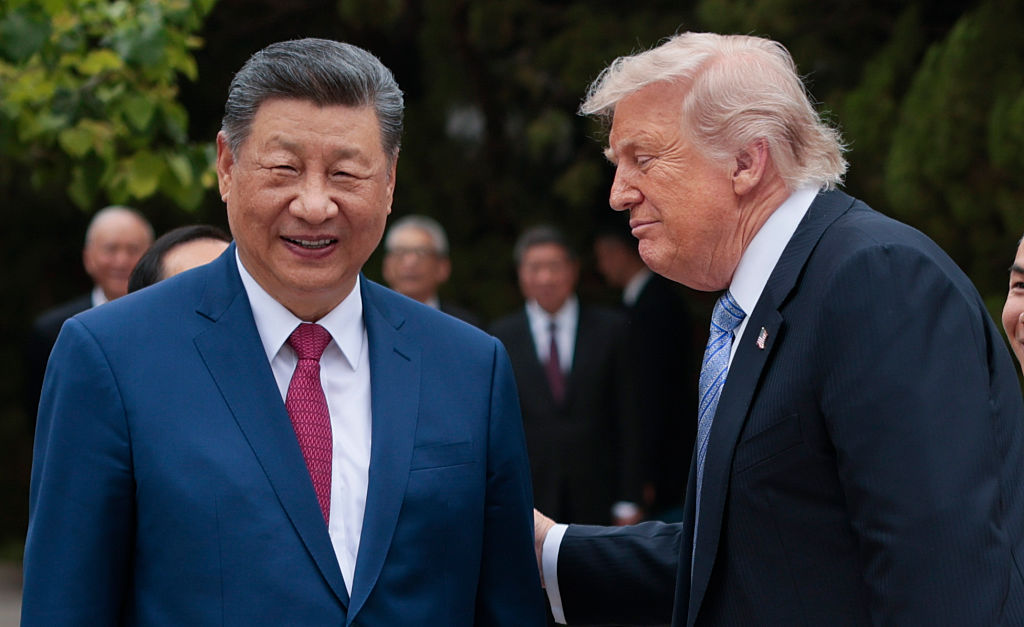
Reports sugget Zhipu AI  has released a new model that can rival leading US systems. Credit: Getty

Reports sugget Zhipu AI has released a new model that can rival leading US systems. Credit: Getty

July 1 2026 - 10:18am

China is trying to catch up with America on artificial intelligence. The Wall Street Journal has reported that Zhipu AI — one of China’s six “AI tiger” LLMs — has released a new model that can rival leading US systems, including Anthropic’s Mythos, in cybersecurity tasks such as pinpointing security bugs. While this marks a milestone in China’s drive to catch up with Western AI capabilities, strong performance on a single benchmark does not mean it has taken the lead. Chinese models still lag behind their Western counterparts in broader capabilities, such as autonomous operation. Skepticism is therefore warranted before resorting to hysterical conclusions, but complacency about the geopolitical implications of China’s AI advances would be an even greater mistake.

On the infrastructure side, Chinese AI is still constrained by access to advanced chips, with American labs way ahead in computing capacity as well as investment. Analysis from earlier this year suggests that Chinese models are likely to be at least a few months behind those in the US. But they are still continuing to make progress, or that the geopolitical importance of AI will be decided only by whose LLM has ventured deeper into the technological frontier. The practical applications of AI, countries’ to capture foreign markets, and the application of AI into the real economy will matter just as much.

Here, China may hold an advantage. As with its dominance across many critical supply chains, Beijing may not need to produce the most advanced AI systems — only those that are affordable and widely deployable. In doing so, it could consolidate global influence by supplying functional, low-cost AI at scale.

Beijing seems to be pursuing exactly that path, developing an AI “open-source” strategy that offers affordable, widely available AI models for companies and individuals to use and modify as they wish. The production of the DeepSeek AI model, which matched the performance of Silicon Valley tools such as ChatGPT at a fraction of the cost for users, created goodwill among Chinese models with developers.

The four most popular models on OpenRouter, an AI hardware platform for developers, are now all Chinese. The goal for China is not only to win the frontier-model race, but to make its systems the default layer of AI adoption across industries and global markets. For most economies, the choice is increasingly between an affordable tool they can deploy now and a more robust one that may be out of reach.

And while the countries adopting Chinese models may be exposed to political pressure and cyber threats from Beijing, safer and more capable alternatives matter little if they are unaffordable. American AI companies are already under pressure to monetize products whose operating costs are rising. If Chinese open-source models become the cheap default for startups, universities, governments and businesses across the developing world, then America’s AI lead will be eroded from below.

Perhaps more concerning for America in the long run is how AI can give Chinese manufacturing even more strength, through the ongoing integration of AI as a general-purpose technology. China’s new Five-Year Plan mentioned AI more than 50 times and includes an “AI+” action plan aimed at spreading AI across the economy.

Beijing has been pioneering automation of its critical infrastructure for years, with promising recent results in increasing warplane production capacity. In that regard, China’s open-model strategy and manufacturing dominance will reinforce each other. Cheap, adaptable models accelerate deployment across the real economy while those deployments generate real-world data and use cases that can feed back into further model improvement.

The United States should not dismiss the importance of its lead in the AI race. That lead worries Beijing, not least because a more automated Chinese economy would also become more vulnerable to AI-generated cyber threats. But nor should Washington assume that China cannot catch up with American capabilities over time.

This AI competition represents part of a broader struggle over tech supply chains and geopolitical influence. Decisions over whether to adopt US or Chinese models could produce a more fragmented global reality, with different regions relying on different cloud providers, chips and security structures. The result will likely be a global economy which is divided into competing spheres, rather than one which produces a single winner.


Miquel Vila is a political and geopolitical risk consultant focusing on industrial strategy, critical infrastructure and global supply chains.

miquelvilam