




X Close

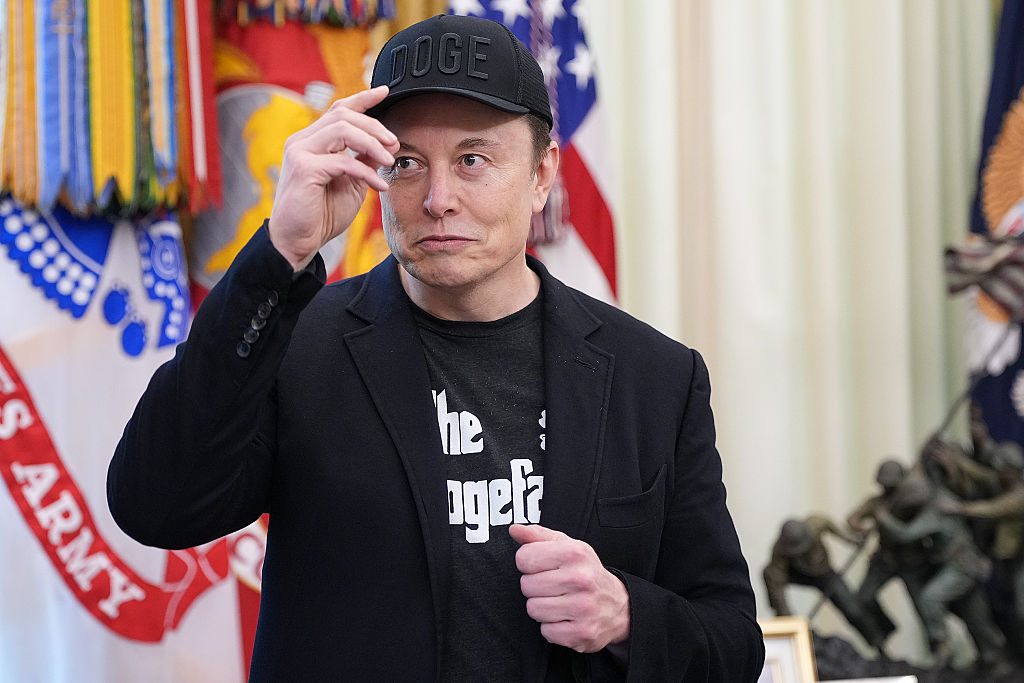
Elon Musk is on the path to political exile

Nowhere left to go. Credit: Getty

Nowhere left to go. Credit: Getty

June 8 2025 - 1:00pm

The epic partnership between Donald Trump and Elon Musk is over and is giving way to what promises to be an equally epic fight. Ostensibly, their breakup is over the administration’s “big, beautiful bill.” But the deeper logic of their relationship, that between two titanic egos, suggested that any such collaboration was always going to be fragile — and temporary.

With no sign of a rapprochement, speculation is rife about whether the X mogul will defect. It wasn’t too long ago, after all, when Musk enjoyed a positive (and lucrative) relationship with the Democratic establishment. Silicon Valley’s Rep. Ro Khanna, along with a few others, are hoping to take him back, saying: “We should ultimately be trying to convince him that the Democratic Party has more of the values that he agrees with.” Yet Khanna may be misreading the room, if not inhabiting a different reality altogether.

Judging by the visceral reactions from other prominent Democrats, they are not likely to forgive or forget Musk’s transgressions against their sacred cows. DOGE has cut down many of the federal government structures and institutions held dear by Democratic constituencies (even as Musk firms like Tesla and Space X continued to benefit from state largesse). Rep. Ritchie Torres even called Musk’s “decimation” of government “an unforgivable sin.” Perhaps graver still, Musk has dedicated all his cultural influence to the war on woke, blasting the progressive “mind virus” and boosting hard-Right forces at home and abroad. As Leftist tribune Rep. Alexandria Ocasio-Cortez put it: “I don’t associate myself with someone who does Nazi salutes in public.” In other words, the bad blood is real.

So where does this leave Musk? Spurned by both sides, he may realize that he’s become a pariah and try to forge a way back into Trump’s good graces. However, he might also find that the privileged spot he once enjoyed at the president’s side will be taken by then.

For one, Steve Bannon, his nemesis within MAGA world, has been howling for his blood, calling for his immigration history to be investigated. And even more threatening to Musk’s status is the prospect that a rival tech tycoon will simply replace him as “most favored oligarch.” Meta’s Mark Zuckerberg, Amazon’s Jeff Bezos, and OpenAI’s Sam Altman have all proven to be just as nakedly ambitious and transactional in their own dealings with the administration but in a way that is far more disciplined — and less flamboyant. They know better than to try to steal the show from Trump, a lesson Musk has never learned.

There could be another option: Musk forms a political coalition of his own, a third force of sorts that would be distinct from MAGA and the Left. Indeed, Musk has already called for a “new political party that actually represents the 80% in the middle”. But, of course, as Trump himself discovered long ago, there are only two paths to power in America, red and blue. Having alienated both, Musk may have to watch from the sidelines as all the perks and contracts once lavished on him by Republicans and Democrats alike go to someone else.

Michael Cuenco is Senior Editor at American Affairs.
1TrueCuencoism

China is threatening America in the AI race

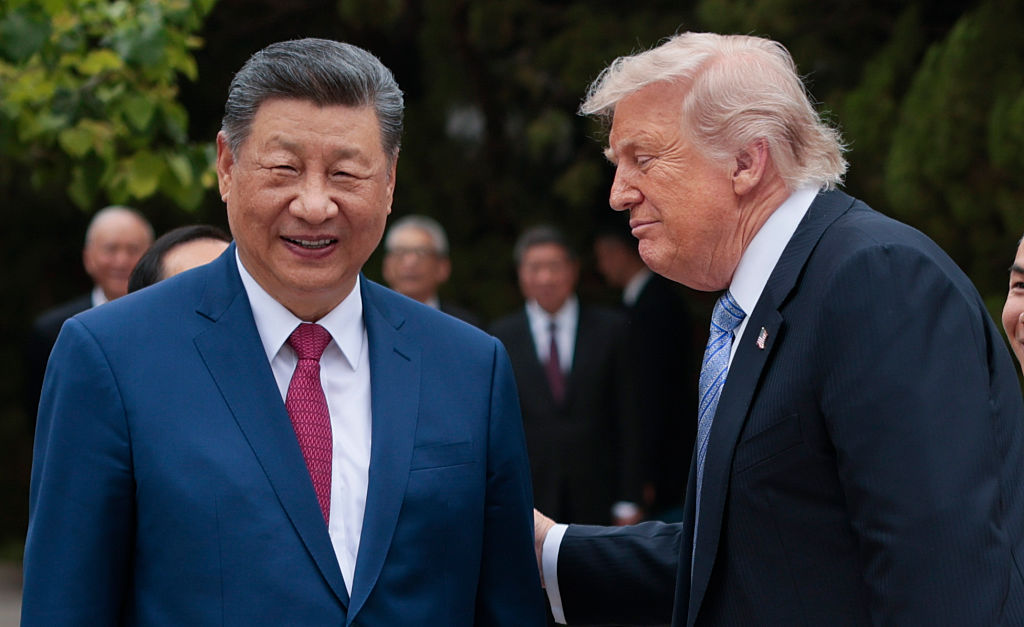
Reports sugget Zhipu AI  has released a new model that can rival leading US systems. Credit: Getty

Reports sugget Zhipu AI has released a new model that can rival leading US systems. Credit: Getty

July 1 2026 - 10:18am

China is trying to catch up with America on artificial intelligence. The Wall Street Journal has reported that Zhipu AI — one of China’s six “AI tiger” LLMs — has released a new model that can rival leading US systems, including Anthropic’s Mythos, in cybersecurity tasks such as pinpointing security bugs. While this marks a milestone in China’s drive to catch up with Western AI capabilities, strong performance on a single benchmark does not mean it has taken the lead. Chinese models still lag behind their Western counterparts in broader capabilities, such as autonomous operation. Skepticism is therefore warranted before resorting to hysterical conclusions, but complacency about the geopolitical implications of China’s AI advances would be an even greater mistake.

On the infrastructure side, Chinese AI is still constrained by access to advanced chips, with American labs way ahead in computing capacity as well as investment. Analysis from earlier this year suggests that Chinese models are likely to be at least a few months behind those in the US. But they are still continuing to make progress, or that the geopolitical importance of AI will be decided only by whose LLM has ventured deeper into the technological frontier. The practical applications of AI, countries’ to capture foreign markets, and the application of AI into the real economy will matter just as much.

Here, China may hold an advantage. As with its dominance across many critical supply chains, Beijing may not need to produce the most advanced AI systems — only those that are affordable and widely deployable. In doing so, it could consolidate global influence by supplying functional, low-cost AI at scale.

Beijing seems to be pursuing exactly that path, developing an AI “open-source” strategy that offers affordable, widely available AI models for companies and individuals to use and modify as they wish. The production of the DeepSeek AI model, which matched the performance of Silicon Valley tools such as ChatGPT at a fraction of the cost for users, created goodwill among Chinese models with developers.

The four most popular models on OpenRouter, an AI hardware platform for developers, are now all Chinese. The goal for China is not only to win the frontier-model race, but to make its systems the default layer of AI adoption across industries and global markets. For most economies, the choice is increasingly between an affordable tool they can deploy now and a more robust one that may be out of reach.

And while the countries adopting Chinese models may be exposed to political pressure and cyber threats from Beijing, safer and more capable alternatives matter little if they are unaffordable. American AI companies are already under pressure to monetize products whose operating costs are rising. If Chinese open-source models become the cheap default for startups, universities, governments and businesses across the developing world, then America’s AI lead will be eroded from below.

Perhaps more concerning for America in the long run is how AI can give Chinese manufacturing even more strength, through the ongoing integration of AI as a general-purpose technology. China’s new Five-Year Plan mentioned AI more than 50 times and includes an “AI+” action plan aimed at spreading AI across the economy.

Beijing has been pioneering automation of its critical infrastructure for years, with promising recent results in increasing warplane production capacity. In that regard, China’s open-model strategy and manufacturing dominance will reinforce each other. Cheap, adaptable models accelerate deployment across the real economy while those deployments generate real-world data and use cases that can feed back into further model improvement.

The United States should not dismiss the importance of its lead in the AI race. That lead worries Beijing, not least because a more automated Chinese economy would also become more vulnerable to AI-generated cyber threats. But nor should Washington assume that China cannot catch up with American capabilities over time.

This AI competition represents part of a broader struggle over tech supply chains and geopolitical influence. Decisions over whether to adopt US or Chinese models could produce a more fragmented global reality, with different regions relying on different cloud providers, chips and security structures. The result will likely be a global economy which is divided into competing spheres, rather than one which produces a single winner.


Miquel Vila is a political and geopolitical risk consultant focusing on industrial strategy, critical infrastructure and global supply chains.

miquelvilam