




 Prefer us on Google

March 11 2025 - 6:00pm
The Right-wing podcast world has not been covering itself in glory recently. Last week Joe Rogan, by some measures the most influential media figure in the United States, made a minor shockwave by hosting Ian Carroll, a social media influencer who over the past year has risen from near-total obscurity to viral fame by pushing a host of crackpot antisemitic conspiracy theories. Here is a non-exhaustive list of the claims Carroll has endorsed or flirted with: that Israel was responsible for 9/11 assassinated John F. Kennedy, and controls the US government through an international “Zionist mafia” — a term that Carroll acknowledged was a euphemism for “Jewish cabal” (of which Jeffrey Epstein was a part).
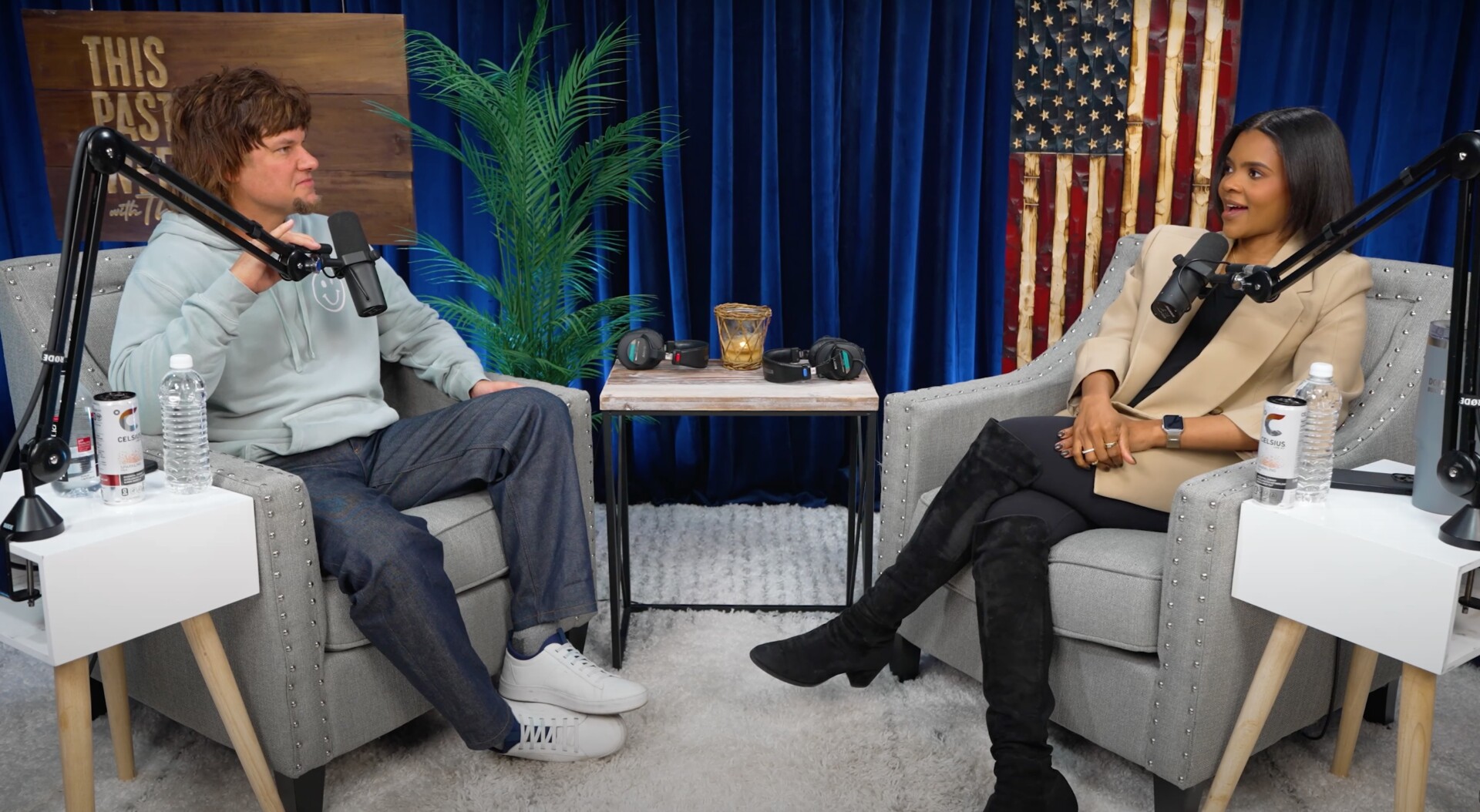
Rogan is also set to air an episode soon with Darryl Cooper, aka MartyrMade, a “revisionist” popular historian famous for claiming on Tucker Carlson’s show last year that Winston Churchill was the chief “villain” of the Second World War. But he wasn’t the only Right-leaning podcaster to wander into this territory. On the same day that Rogan hosted Carroll, Theo Von, the ninth most popular podcaster in America, hosted Candace Owens, the formerly mainstream MAGA influencer who has claimed, among other things, that Judaism is a “pedophile-centric religion that believes in demons” and that the modern state of Israel was founded by a cult of child abusers.
On the same day, Carlson himself released a softball interview with the Emir of Qatar, framed as a counterpoint to the “media” attacks on the Gulf state designed to prepare the American people for a “new war against Iran”. He followed up with a post on the massacre of civilians in Syria by forces affiliated with the new interim government, which he blamed on the successful “neocon” efforts to overthrow Bashar al-Assad. “Neocon projects in the Middle East invariably destroy ancient Christian communities, from Iraq to Gaza and in many places in between. Can this be an accident? You wonder,” he said.
Huh? While the violence in Syria is deplorable, Christians have scarcely been targeted; the AFP could confirm only seven Christian deaths as of Tuesday, compared to hundreds of Alawites and Sunni Muslims. And it has nothing to do with “neocons” — a slippery term that can refer to national security hawks or supporters of Israel, but is frequently deployed in antisemitic discourse in the US as a euphemism for Jews. While most American foreign-policy hawks despised Assad as a Russian and Iranian proxy, the state primarily responsible for his overthrow was Turkey.
Meanwhile, Qatar — now praised by Carlson as an honorary member of the anti-“neocon” war party — was long the primary external sponsor of anti-Assad Syrian jihadist groups like Jabhat al-Nusra, the local al-Qaeda affiliate to which the current government traces its roots. Carlson is smart enough to be coy with his rhetoric, but the overall impression he gives is that the recent intra-Muslim violence in Syria — sponsored by Turkey, Qatar and Iran — is actually the fault of Israel. It’s the job of the Ian Carrolls and Candace Owenses of the world to make the connection to the “Jewish cabal” more explicit.
One could say a lot about the mainstreaming of antisemitic conspiracy theories in the podcast sphere, but the main problem is that they are dumb, and leave those who believe in them unable to discern real-world causes and effects. For example, it is true that there is a pro-Israel lobby in the United States, financed both by the state of Israel and the American Jewish community. It is also true that since 2016, China, Turkey, Qatar, Saudi Arabia, and the United Arab Emirates have all spent more on foreign lobbying than Israel has.
Qatar in particular is an extremely sophisticated player in the elite level of American politics, spending freely on think tanks, universities, K-12 education, and lobbyists, and buying off politicians with abandon. When Robert Menendez, the former chair of the powerful Senate Foreign Relations Committee, was sentenced to federal prison in January, it was for taking bribes from Qatar and Egypt. Reducing to the “Jews” or “Israel” the vastly complicated interplay of interests that go into formulating US government policy is a recipe for perpetual confusion.
Of course, there is no way of knowing whether Carlson has taken money from the Qataris or the Saudis (he interviewed a Saudi royal and major X investor last month), and it is unlikely that Rogan is on any sort of foreign payroll. But it seems like a better than even bet that conspiracy-brained content on the Right is being boosted by foreign sources. We know, for instance, that organized Chinese botnets helped to raise the profile of “America First” influencer Jackson Hinkle as soon as he began posting pro-“Axis of Resistance” content in the wake of 7 October; that Chinese influence operations have been pushing similar messages through far-Left networks; that Right-wing influencers have been caught taking absurd sums of money from Russia; and that all sorts of domestic political actors, including major-party PACs, have been paying influencers on the sly. Carroll has been approvingly cited by Iranian state TV, and one of Carlson’s favorite anti-“neocon” interlocutors, Jeffrey Sachs, is a regular on Chinese state television who has personally pocketed millions from the UAE.
In other words, it looks like an op and smells like an op, even if we don’t yet know whose. But if there’s one thing you should understand about American politics in 2025, it’s that ops aren’t limited to the “Zionist mafia”.