

X Close

Does IMF growth outlook vindicate Brexit?

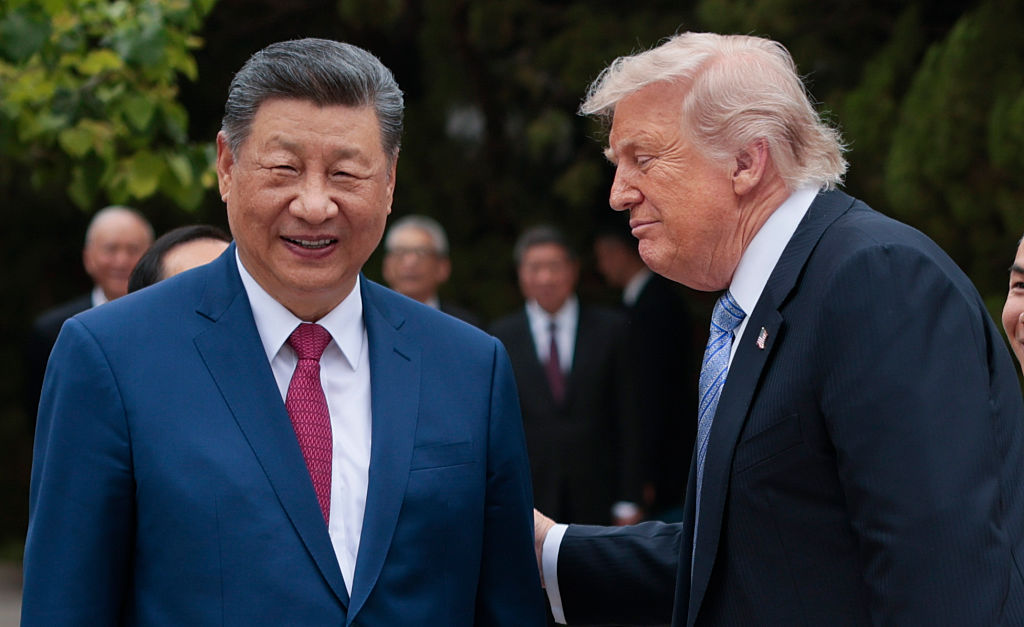
'For the Labour government, this is another adverse wind.' Credit: Getty

'For the Labour government, this is another adverse wind.' Credit: Getty

April 24 2025 - 7:00am

There was little cheer for anyone in the International Monetary Fund’s growth outlook, published on Tuesday. The finance agency projects a major shock as the result of Donald Trump’s tariffs. Should those stay in place, the IMF holds that the world will experience an economic slowdown that could cost around $1 trillion. For the US, it means a downgrade of expected growth from 1.5% to around 1.1%. The only solace, perhaps, is that Britain is set to enjoy better growth than the eurozone.

For the Labor government, this is another adverse wind. Keir Starmer came to power promising to focus on growth, but so far little has materialized. These global conditions will only make the task more complicated, in turn putting further strain on Labor’s domestic policies. More public spending will require either more borrowing or more taxation — neither of which is politically beneficial to the party, as shown by recent rows over inheritance tax, winter fuel payments, and the child benefit cap.

Labor was elected last year primarily because of public frustration with a lack of growth and the decline of public services. Voters sensed that they were paying more and more for less and less, and blamed this on the Tories. Labor’s current unpopularity is driven mainly by a failure to deliver on either front. Global trends will make this harder, but the public is unlikely to be forgiving.

The question for British politics is who will benefit from this. Normally, economic struggles would help the Opposition, but this feels like a departure from normality. It is rare for a government to struggle this much this quickly. The Conservatives remain distrusted on fiscal issues following their failures in office, while Reform UK — the other major Right-of-center party — has no track record to speak of. For both, however, performing better than European counterparts might provide some electoral leverage.

If, over the next few years, Britain continues to outperform European peers — something the IMF data suggests is likely — it may appear to vindicate Brexit. This, in turn, could be a political gift for the Right, becoming a key point of difference when set alongside Labor — a way of arguing that they have the real economic foresight and the ability to make long-term decisions. This is especially true of Nigel Farage, who lacks the baggage of the last Tory government. It may also help reinvigorate the political debates that saw many older Labor voters switch Right for the first time in 2019, while rendering it harder for progressive parties to make the case for greater economic integration with the EU.

There is a sting, however, for conservatives. Since this latest hit to growth arrives downwind of Trump’s tariffs, there is a risk that any closeness to him will tarnish them, too. For now, both the Tories and Reform want to play up their chances of winning a trade deal from the White House. Trump’s popularity, however, is plummeting among British voters. If he is seen as the cause of more economic turmoil, this association could become even more toxic.

What is clear is that a new wave of economic uncertainty has been unleashed. The IMF predicts a global contraction. For Britain, already tattered after a lost decade and a half of slow growth, this could be painful. The effects on our politics are harder to predict. For some, it will vindicate breaking with the EU; for others, it is a warning of what can sit in Trump’s wake. Perhaps, most of all, it will encourage those who believe what is needed now is a radical break with the politics of stagnation.


John Oxley is a corporate strategist and political commentator. His Substack is Joxley Writes.

Mr_John_Oxley

China is threatening America in the AI race

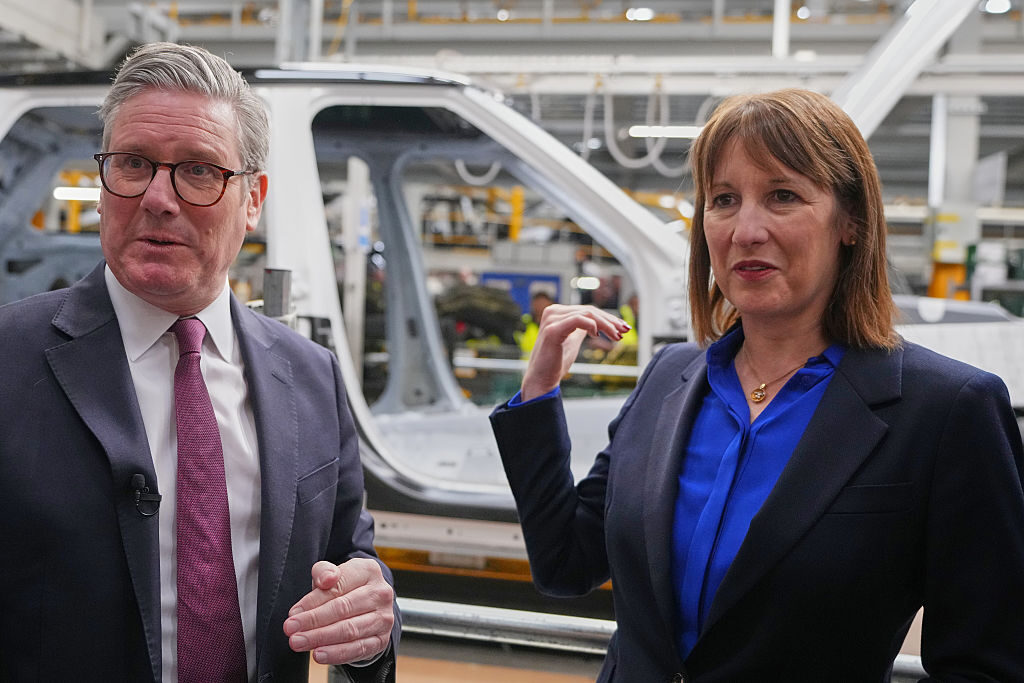
Reports sugget Zhipu AI  has released a new model that can rival leading US systems. Credit: Getty

Reports sugget Zhipu AI has released a new model that can rival leading US systems. Credit: Getty

July 1 2026 - 10:18am

China is trying to catch up with America on artificial intelligence. The Wall Street Journal has reported that Zhipu AI — one of China’s six “AI tiger” LLMs — has released a new model that can rival leading US systems, including Anthropic’s Mythos, in cybersecurity tasks such as pinpointing security bugs. While this marks a milestone in China’s drive to catch up with Western AI capabilities, strong performance on a single benchmark does not mean it has taken the lead. Chinese models still lag behind their Western counterparts in broader capabilities, such as autonomous operation. Skepticism is therefore warranted before resorting to hysterical conclusions, but complacency about the geopolitical implications of China’s AI advances would be an even greater mistake.

On the infrastructure side, Chinese AI is still constrained by access to advanced chips, with American labs way ahead in computing capacity as well as investment. Analysis from earlier this year suggests that Chinese models are likely to be at least a few months behind those in the US. But they are still continuing to make progress, or that the geopolitical importance of AI will be decided only by whose LLM has ventured deeper into the technological frontier. The practical applications of AI, countries’ to capture foreign markets, and the application of AI into the real economy will matter just as much.

Here, China may hold an advantage. As with its dominance across many critical supply chains, Beijing may not need to produce the most advanced AI systems — only those that are affordable and widely deployable. In doing so, it could consolidate global influence by supplying functional, low-cost AI at scale.

Beijing seems to be pursuing exactly that path, developing an AI “open-source” strategy that offers affordable, widely available AI models for companies and individuals to use and modify as they wish. The production of the DeepSeek AI model, which matched the performance of Silicon Valley tools such as ChatGPT at a fraction of the cost for users, created goodwill among Chinese models with developers.

The four most popular models on OpenRouter, an AI hardware platform for developers, are now all Chinese. The goal for China is not only to win the frontier-model race, but to make its systems the default layer of AI adoption across industries and global markets. For most economies, the choice is increasingly between an affordable tool they can deploy now and a more robust one that may be out of reach.

And while the countries adopting Chinese models may be exposed to political pressure and cyber threats from Beijing, safer and more capable alternatives matter little if they are unaffordable. American AI companies are already under pressure to monetize products whose operating costs are rising. If Chinese open-source models become the cheap default for startups, universities, governments and businesses across the developing world, then America’s AI lead will be eroded from below.

Perhaps more concerning for America in the long run is how AI can give Chinese manufacturing even more strength, through the ongoing integration of AI as a general-purpose technology. China’s new Five-Year Plan mentioned AI more than 50 times and includes an “AI+” action plan aimed at spreading AI across the economy.

Beijing has been pioneering automation of its critical infrastructure for years, with promising recent results in increasing warplane production capacity. In that regard, China’s open-model strategy and manufacturing dominance will reinforce each other. Cheap, adaptable models accelerate deployment across the real economy while those deployments generate real-world data and use cases that can feed back into further model improvement.

The United States should not dismiss the importance of its lead in the AI race. That lead worries Beijing, not least because a more automated Chinese economy would also become more vulnerable to AI-generated cyber threats. But nor should Washington assume that China cannot catch up with American capabilities over time.

This AI competition represents part of a broader struggle over tech supply chains and geopolitical influence. Decisions over whether to adopt US or Chinese models could produce a more fragmented global reality, with different regions relying on different cloud providers, chips and security structures. The result will likely be a global economy which is divided into competing spheres, rather than one which produces a single winner.


Miquel Vila is a political and geopolitical risk consultant focusing on industrial strategy, critical infrastructure and global supply chains.

miquelvilam