




X Close

Two years in, Elon Musk’s X is a fascinating failure

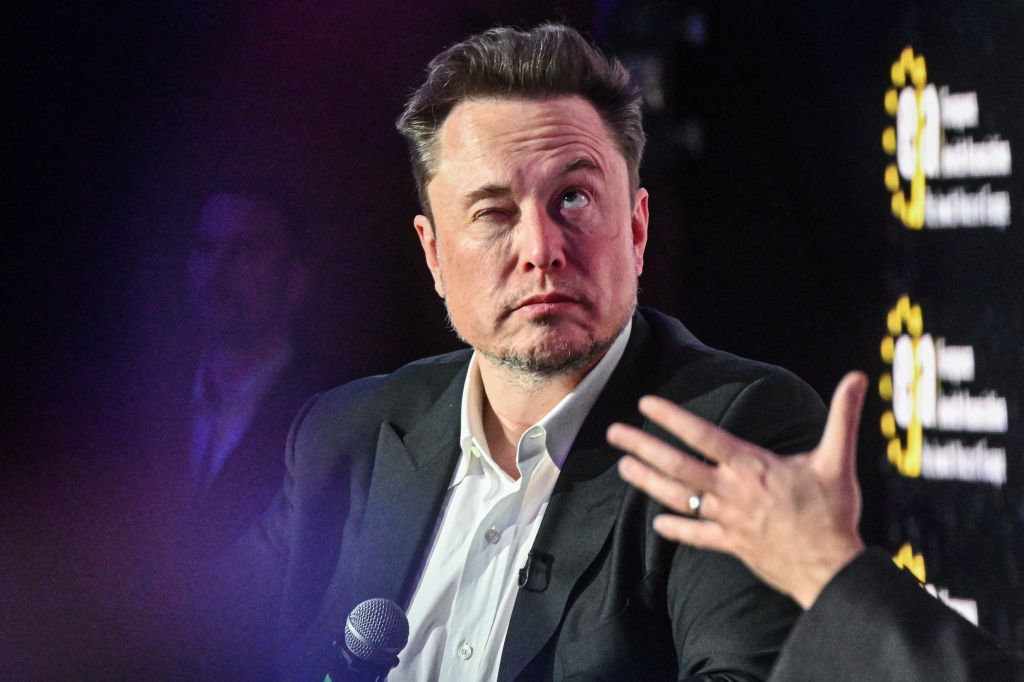
The platform is haemorrhaging money. Credit: Getty

The platform is haemorrhaging money. Credit: Getty

October 27 2024 - 8:00am

As Elon Musk marks his second anniversary as Twitter/X’s owner today, his $44 billion experiment in digital democracy has produced a peculiar paradox: the platform has become simultaneously more culturally vital and financially imperiled than ever before. Rapidly shorn of most of its original workforce in a manner that impressed fellow CEOs, the platform transformed from the world’s polite town square into social media’s raucous underground fight club — a space where previously marginalized voices now brawl in plain sight with establishment figures who haven’t yet fled to safer digital shores.

By welcoming back accounts suspended by the previous regime — from Donald Trump and Alex Jones to countless anonymous accounts — Musk has transformed X. Underground subcultures built around colorful Right-leaning characters like the “Bronze Age Pervert”, “Lomez”, and “Pariah the Doll” have emerged from the shadows of smoke-filled private group chats into the mainstream discourse, creating a messier but more authentic digital space.

Given that most of the Left-liberal media and political figures who threatened to leave are still hanging around, this new incarnation of X matters precisely because it’s the last place where different ideological camps still meaningfully clash. You can, for example, watch Right-wing political science professor Wilfred Reilly trade barbs with liberal fashion influencer “The Menswear Guy”, or pick sides as Leftist publisher Nathan J. Robinson clashes with contrarian critic Wesley Yang over what The New York Times decides to publish on its op-ed page. While Facebook retreats from news sharing and contentious debate, X remains the closest approximation of a digital public square, even if it’s a more fractious one.

But the numbers are brutal and only getting worse. X’s user growth has practically flatlined — managing to add just four million new daily users over the past year, bringing the total to 251 million. For perspective, that’s a measly 1.6% increase, a far cry from the platform’s glory days when Twitter routinely posted double-digit growth.

Musk’s great subscription gambit, meant to wean the platform off its advertising addiction, is a moonshot that failed to land. Despite endless tinkering with features like Grok AI and pricing tiers, X Premium’s mobile revenue since 2021 amounts to pocket change in tech terms about $200 million total. Even with the most generous assumptions about subscriptions — imagining most users opted for the premium tier — that amounts to around 1.4 million paying customers. That’s less than 1% of X’s daily active users willing to pay for the privilege of a blue checkmark and reduced ads.

The advertising exodus tells a similarly grim story. Risk-averse marketing executives have moved away from X, with Kantar’s latest survey suggesting a quarter of them plan to slash spending next year. The platform’s brand safety rating has dropped to 4% — a number so low it makes other social media sites, hardly bastions of elevated discourse, look like squeaky clean gated communities.

When powerhouse liberal-mainstream firms like Apple and Disney, not to mention institutions like the World Bank, are pulling their ads over concerns about appearing next to extremist content (such as this 13,000-like post arguing that the world would be a better place if Germany had won the Second World War), you know something’s fundamentally broken in the business model. That said, all three of them still maintain accounts, with the World Bank posting multiple times per day. Indeed, the platform has proven remarkably resistant to replacement, despite the breathless media coverage greeting each new challenger. Neither Meta’s Threads, nor Mastodon, nor Bluesky has managed to replicate X’s unique combination of reach, simple functionality, and real-time discourse.

Two years in, X stands as social media’s most fascinating ongoing failure — a platform that succeeded in becoming exactly what its owner envisioned while hemorrhaging money in the process. It’s too culturally significant to die, yet too toxic to thrive financially. For the foreseeable future, expect X to continue its precarious and provocative existence as the internet’s last and perhaps only genuine public square. Musk might never make his $44 billion investment back, but he’s created something unique: a platform too important to bite the dust, even as it seems determined to do exactly that.


Oliver Bateman is a historian and journalist based in Pittsburgh. He blogs, vlogs, and podcasts at his Substack, Oliver Bateman Does the Work

MoustacheClubUS

China is threatening America in the AI race

Reports sugget Zhipu AI  has released a new model that can rival leading US systems. Credit: Getty

Reports sugget Zhipu AI has released a new model that can rival leading US systems. Credit: Getty

July 1 2026 - 10:18am

China is trying to catch up with America on artificial intelligence. The Wall Street Journal has reported that Zhipu AI — one of China’s six “AI tiger” LLMs — has released a new model that can rival leading US systems, including Anthropic’s Mythos, in cybersecurity tasks such as pinpointing security bugs. While this marks a milestone in China’s drive to catch up with Western AI capabilities, strong performance on a single benchmark does not mean it has taken the lead. Chinese models still lag behind their Western counterparts in broader capabilities, such as autonomous operation. Skepticism is therefore warranted before resorting to hysterical conclusions, but complacency about the geopolitical implications of China’s AI advances would be an even greater mistake.

On the infrastructure side, Chinese AI is still constrained by access to advanced chips, with American labs way ahead in computing capacity as well as investment. Analysis from earlier this year suggests that Chinese models are likely to be at least a few months behind those in the US. But they are still continuing to make progress, or that the geopolitical importance of AI will be decided only by whose LLM has ventured deeper into the technological frontier. The practical applications of AI, countries’ to capture foreign markets, and the application of AI into the real economy will matter just as much.

Here, China may hold an advantage. As with its dominance across many critical supply chains, Beijing may not need to produce the most advanced AI systems — only those that are affordable and widely deployable. In doing so, it could consolidate global influence by supplying functional, low-cost AI at scale.

Beijing seems to be pursuing exactly that path, developing an AI “open-source” strategy that offers affordable, widely available AI models for companies and individuals to use and modify as they wish. The production of the DeepSeek AI model, which matched the performance of Silicon Valley tools such as ChatGPT at a fraction of the cost for users, created goodwill among Chinese models with developers.

The four most popular models on OpenRouter, an AI hardware platform for developers, are now all Chinese. The goal for China is not only to win the frontier-model race, but to make its systems the default layer of AI adoption across industries and global markets. For most economies, the choice is increasingly between an affordable tool they can deploy now and a more robust one that may be out of reach.

And while the countries adopting Chinese models may be exposed to political pressure and cyber threats from Beijing, safer and more capable alternatives matter little if they are unaffordable. American AI companies are already under pressure to monetize products whose operating costs are rising. If Chinese open-source models become the cheap default for startups, universities, governments and businesses across the developing world, then America’s AI lead will be eroded from below.

Perhaps more concerning for America in the long run is how AI can give Chinese manufacturing even more strength, through the ongoing integration of AI as a general-purpose technology. China’s new Five-Year Plan mentioned AI more than 50 times and includes an “AI+” action plan aimed at spreading AI across the economy.

Beijing has been pioneering automation of its critical infrastructure for years, with promising recent results in increasing warplane production capacity. In that regard, China’s open-model strategy and manufacturing dominance will reinforce each other. Cheap, adaptable models accelerate deployment across the real economy while those deployments generate real-world data and use cases that can feed back into further model improvement.

The United States should not dismiss the importance of its lead in the AI race. That lead worries Beijing, not least because a more automated Chinese economy would also become more vulnerable to AI-generated cyber threats. But nor should Washington assume that China cannot catch up with American capabilities over time.

This AI competition represents part of a broader struggle over tech supply chains and geopolitical influence. Decisions over whether to adopt US or Chinese models could produce a more fragmented global reality, with different regions relying on different cloud providers, chips and security structures. The result will likely be a global economy which is divided into competing spheres, rather than one which produces a single winner.


Miquel Vila is a political and geopolitical risk consultant focusing on industrial strategy, critical infrastructure and global supply chains.

miquelvilam