




X Close

Trump’s threat to walk away leaves Ukraine exposed

Who will he blame? Credit: Getty

Who will he blame? Credit: Getty

April 19 2025 - 8:00am

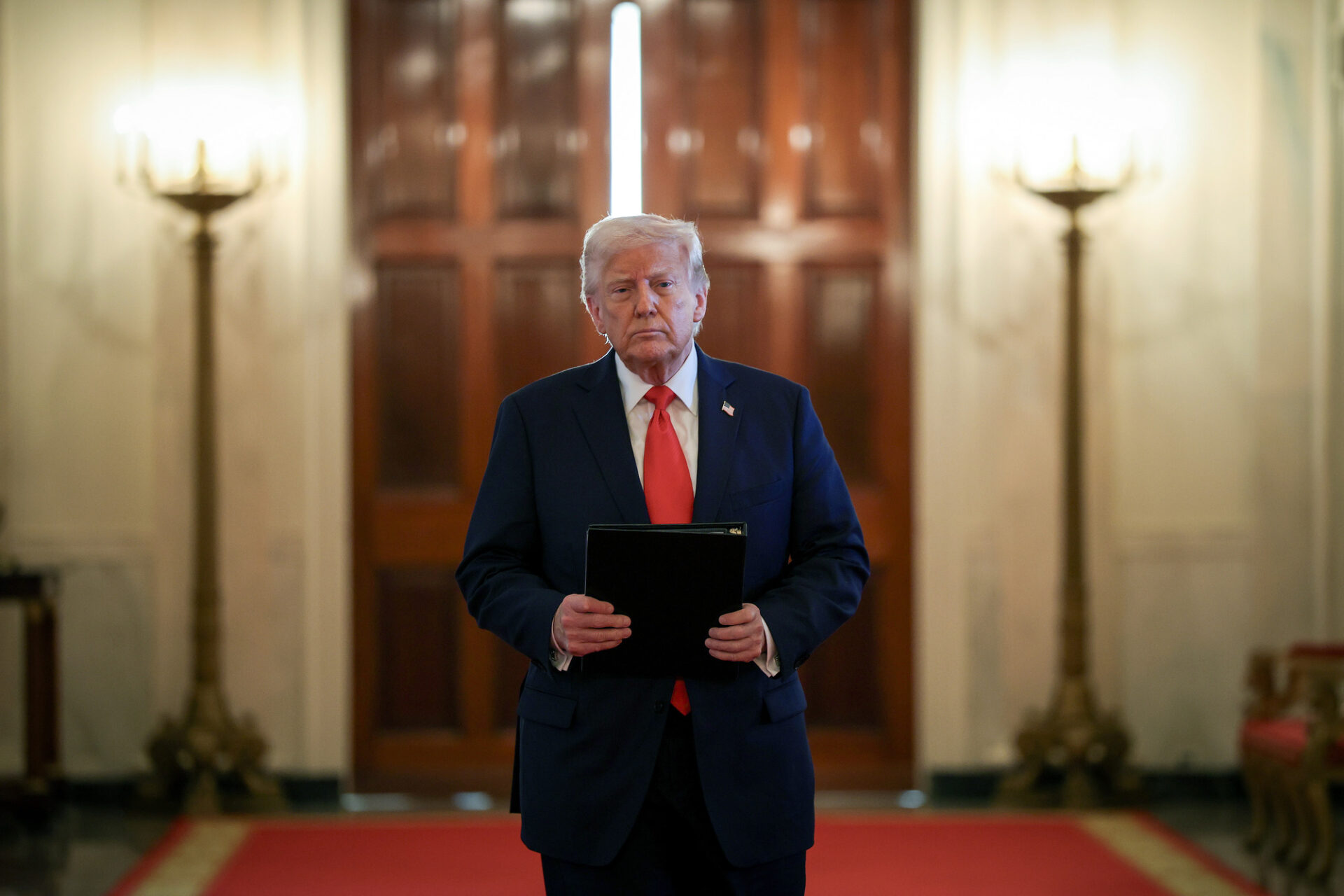
The Trump administration has warned that if there is not an early agreement on an end to the war in Ukraine, the US will “walk away” from the peace process. In Trump’s words: “Now if, for some reason, one of the two parties makes it very difficult, we’re just going to say, ‘You’re foolish, you’re fools, you’re horrible people,’ and we’re going to just take a pass”. This leads to some obvious questions: which side will Trump and his team blame for obstruction? What if Trump sees both as to blame? And what does “walking away” actually mean?

The risk is that the US administration will simply set a ceasefire as the goal. This would be tempting in terms of an early “win” for Trump. It would also make allocating blame easy, since — as has already occurred — Ukraine would accept a ceasefire due to its weaker military position and the possibility of leaving its key demands unresolved; and Russia would reject a ceasefire because it has the advantage militarily, and does not want to end the war until certain outcomes (including Ukrainian NATO membership and a European “reassurance force” for Ukraine) are formally and definitely excluded.

The US would then blame Russia and “walk away” from the negotiations. But would the Trump administration by the same token continue open-ended military aid to Ukraine? And would it abandon its hopes of reducing US military commitments in Europe? Or would it reduce aid and continue withdrawal? If the latter, then while it might have blamed Russia, it would actually have punished Ukraine and the EU. And if as a result Russia achieved a major victory, then Trump would still be faced by a choice between humiliation and once again giving much greater help to Ukraine, or even backing a potentially disastrous direct European military intervention.

If the US wishes to extricate itself from the Ukrainian imbroglio with reasonable confidence that it will not be dragged back in, the Trump administration should set its own clear, fixed and non-negotiable basic terms for a peace settlement, and require both parties to accept or reject them publicly and categorically. It is of course possible that one or both sides would accept some but not others; but at least that could allow a decision on who was most — albeit not exclusively — to blame for preventing peace.

As far as I can see, on the basis of Ukrainian and Russian statements and of common sense, the basic and irreducible terms of peace are roughly the following: both sides would have to agree that the armistice line should run where the battle-line runs. Both would have to guarantee, under pain of sanctions, not to change this line by force. The status of the occupied and disputed territories would then be left for future negotiation.

Ukraine would have to agree formally to give up the hope of NATO membership and a European reassurance force in Ukraine, and renounce certain categories of weapons (notably long-range missiles). Russia would have to abandon its hopes of “regime change” in Kyiv, and of wider reductions in the Ukrainian armed forces. Sanctions against Russia could be suspended, but with a “snap-back” clause guaranteeing that they would automatically resume if Russia restarted the war. Russia’s seized assets could be paid into a UN fund for Ukraine’s reconstruction, to be divided between independent Ukraine and the Russian-occupied territories.

Ukraine would have good reasons to accept such a deal, because if US aid were to be withdrawn, Ukraine’s chances of holding the line against Russia would be radically reduced; and also because only with an end of the fighting can begin economic reconstruction and the (very difficult) path towards membership of the EU. Russia would have good reasons, because it offers a serious chance of a wholly new relationship with the US, and also of a radical reduction of US forces in Europe and close to Russia’s borders. A UN peacekeeping force in Ukraine could also be used as the basis for a new international consultative mechanism on European security based on the UN Security Council.

So if the Trump administration were to put forward such a set of terms, both sides would be foolish to reject them. But then, it is not for nothing that Barbara Tuchman’s famous study of state decision-making before and during war was entitled The March of Folly. To reject a reasonable peace, the Russian and Ukrainian leaderships would not have to be exceptionally stupid. They would have to be just exactly as stupid as past leaders of Athens, Rome, Britain, the United States and many, many more.


Anatol Lieven is a former war correspondent and Director of the Eurasia Program at the Quincy Institute for Responsible Statecraft in Washington DC.

lieven_anatol

China is threatening America in the AI race

Reports sugget Zhipu AI  has released a new model that can rival leading US systems. Credit: Getty

Reports sugget Zhipu AI has released a new model that can rival leading US systems. Credit: Getty

July 1 2026 - 10:18am

China is trying to catch up with America on artificial intelligence. The Wall Street Journal has reported that Zhipu AI — one of China’s six “AI tiger” LLMs — has released a new model that can rival leading US systems, including Anthropic’s Mythos, in cybersecurity tasks such as pinpointing security bugs. While this marks a milestone in China’s drive to catch up with Western AI capabilities, strong performance on a single benchmark does not mean it has taken the lead. Chinese models still lag behind their Western counterparts in broader capabilities, such as autonomous operation. Skepticism is therefore warranted before resorting to hysterical conclusions, but complacency about the geopolitical implications of China’s AI advances would be an even greater mistake.

On the infrastructure side, Chinese AI is still constrained by access to advanced chips, with American labs way ahead in computing capacity as well as investment. Analysis from earlier this year suggests that Chinese models are likely to be at least a few months behind those in the US. But they are still continuing to make progress, or that the geopolitical importance of AI will be decided only by whose LLM has ventured deeper into the technological frontier. The practical applications of AI, countries’ to capture foreign markets, and the application of AI into the real economy will matter just as much.

Here, China may hold an advantage. As with its dominance across many critical supply chains, Beijing may not need to produce the most advanced AI systems — only those that are affordable and widely deployable. In doing so, it could consolidate global influence by supplying functional, low-cost AI at scale.

Beijing seems to be pursuing exactly that path, developing an AI “open-source” strategy that offers affordable, widely available AI models for companies and individuals to use and modify as they wish. The production of the DeepSeek AI model, which matched the performance of Silicon Valley tools such as ChatGPT at a fraction of the cost for users, created goodwill among Chinese models with developers.

The four most popular models on OpenRouter, an AI hardware platform for developers, are now all Chinese. The goal for China is not only to win the frontier-model race, but to make its systems the default layer of AI adoption across industries and global markets. For most economies, the choice is increasingly between an affordable tool they can deploy now and a more robust one that may be out of reach.

And while the countries adopting Chinese models may be exposed to political pressure and cyber threats from Beijing, safer and more capable alternatives matter little if they are unaffordable. American AI companies are already under pressure to monetize products whose operating costs are rising. If Chinese open-source models become the cheap default for startups, universities, governments and businesses across the developing world, then America’s AI lead will be eroded from below.

Perhaps more concerning for America in the long run is how AI can give Chinese manufacturing even more strength, through the ongoing integration of AI as a general-purpose technology. China’s new Five-Year Plan mentioned AI more than 50 times and includes an “AI+” action plan aimed at spreading AI across the economy.

Beijing has been pioneering automation of its critical infrastructure for years, with promising recent results in increasing warplane production capacity. In that regard, China’s open-model strategy and manufacturing dominance will reinforce each other. Cheap, adaptable models accelerate deployment across the real economy while those deployments generate real-world data and use cases that can feed back into further model improvement.

The United States should not dismiss the importance of its lead in the AI race. That lead worries Beijing, not least because a more automated Chinese economy would also become more vulnerable to AI-generated cyber threats. But nor should Washington assume that China cannot catch up with American capabilities over time.

This AI competition represents part of a broader struggle over tech supply chains and geopolitical influence. Decisions over whether to adopt US or Chinese models could produce a more fragmented global reality, with different regions relying on different cloud providers, chips and security structures. The result will likely be a global economy which is divided into competing spheres, rather than one which produces a single winner.


Miquel Vila is a political and geopolitical risk consultant focusing on industrial strategy, critical infrastructure and global supply chains.

miquelvilam