



X Close

Trump’s move to shutter CFPB is anti-populist

More Wall Street than Main Street. Credit: Getty

More Wall Street than Main Street. Credit: Getty

February 12 2025 - 4:30pm

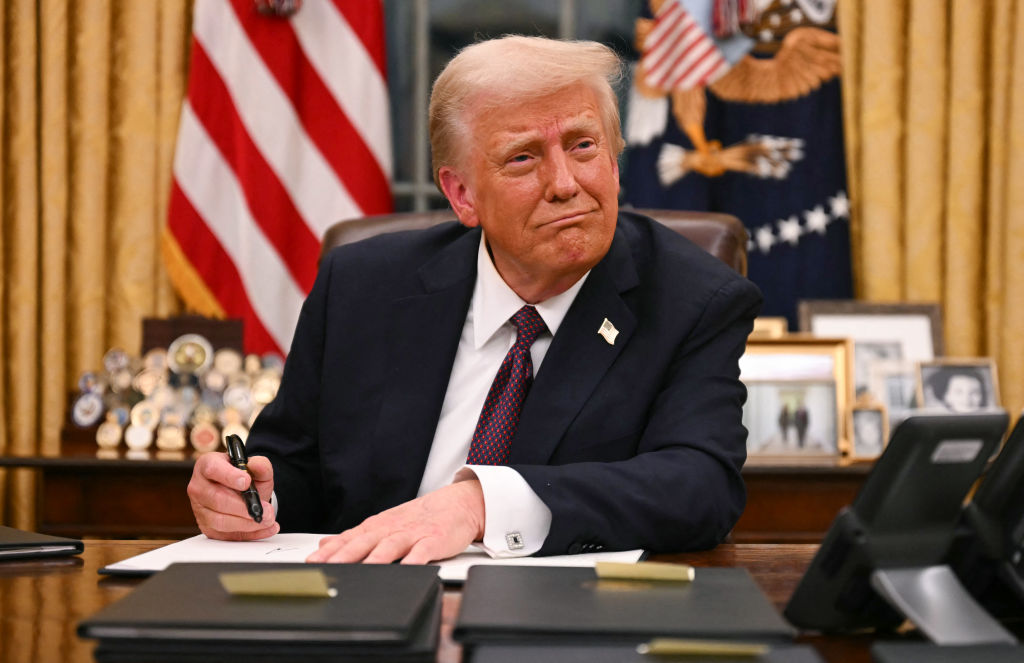
Donald Trump’s administration has wasted no time signaling its economic priorities. Just weeks into his second term, the White House issued a remarkable statement on the Consumer Financial Protection Bureau (CFPB) that, at least on the surface, appears to mark a decisive shift away from the economic populism that helped fuel Trump’s return to power.

The CFPB, born from the ashes of the 2008 financial crisis, was designed to be America’s first comprehensive financial watchdog. Now it faces an uncertain future under Trump, with his administration branding the agency a “woke, weaponized arm of the bureaucracy” that “leverages its power against certain industries and individuals disfavored by so-called ‘elites’.” Despite framing the CFPB in language that will appeal to the MAGA base, this rhetoric masks a straightforward assault on basic consumer protections. For one thing, Trump’s team has targeted the Bureau’s recent decision to ban medical debt from credit reports — a move that would have helped an estimated 15 million Americans by preventing debt collectors from using unpaid hospital bills to wreck their credit scores.

Many of these bills stem from insurance disputes or hospital billing errors rather than financial irresponsibility. Yet Trump’s statement, drawing directly from banking industry complaints and interviews from figures at Right-leaning think tanks such as the Heritage Foundation, characterizes this protection as “government overreach” and claims the agency “unilaterally buried $50 billion in medical debt”. Similar logic drives the administration’s opposition to CFPB limits on overdraft fees, which disproportionately impact working-class Americans — precisely the demographic Trump won over during the general election with promises to fight the establishment.

This shift has caught some of Trump’s erstwhile allies off guard. Independent journalist Glenn Greenwald, who has often found himself aligned with the President’s foreign policy positions, expressed surprise at moves to gut the CFPB, noting that it represents “the opposite of the economic populism claimed by MAGA”. In a recent conversation with Greenwald, anti-monopolist writer Matt Stoller placed the CFPB within a broader post-2008 phenomenon that united both Left and Right. “There was a perception across the spectrum,” he said, “that we had gotten to a point where massive financial institutions and corporations had centralized so much power in Washington that ordinary Americans just had no voice any longer.”

So is Trump betraying the economic populists? As ever, it is hard to draw out a clear theme from the President’s first three weeks in office. Alongside his assault on the CFPB, Trump has rolled out proposals aimed at working-class voters, including the elimination of federal taxes on tips, social security payments, and overtime pay — a move that would directly benefit millions of service workers but bleed revenue, unless DOGE cost-cutting measures can offset this. His administration is also pursuing a fairly aggressive stance toward Big Tech through the Federal Trade Commission, with new chair Andrew Ferguson hiring some outspoken industry critics. But as Stoller has warned, the MAGA movement still risks “falling into the trap that Democrats fell into under Obama” by getting “fooled by the Wall Street and Big Tech parts of their coalition into supporting things that are bad for Americans”.

The strategy mirrors Trump’s first-term playbook, when his signature tax cuts benefited corporations and the wealthy but also delivered enough economic growth — including record-low unemployment and a soaring stock market before Covid hit — to keep his base satisfied. Now he’s betting on repeating the formula. Nevertheless, MAGA diehards such as Steve Bannon have warned about this tendency, viewing Trump’s courting of Elon Musk and his selection of Wall Street veteran Scott Bessent as Treasury Secretary as betrayals of the movement’s populist origins. But Trump, like Ronald Reagan and other Republican presidents before him, appears to be calculating that these decisions can drive enough gains to his base to maintain their loyalty. Now that the President’s campaigning days are over, he will be more unpredictable than ever — even if it comes at the cost of some abandoned campaign promises.


Oliver Bateman is a historian and journalist based in Pittsburgh. He blogs, vlogs, and podcasts at his Substack, Oliver Bateman Does the Work

MoustacheClubUS

China is threatening America in the AI race

Reports sugget Zhipu AI  has released a new model that can rival leading US systems. Credit: Getty

Reports sugget Zhipu AI has released a new model that can rival leading US systems. Credit: Getty

July 1 2026 - 10:18am

China is trying to catch up with America on artificial intelligence. The Wall Street Journal has reported that Zhipu AI — one of China’s six “AI tiger” LLMs — has released a new model that can rival leading US systems, including Anthropic’s Mythos, in cybersecurity tasks such as pinpointing security bugs. While this marks a milestone in China’s drive to catch up with Western AI capabilities, strong performance on a single benchmark does not mean it has taken the lead. Chinese models still lag behind their Western counterparts in broader capabilities, such as autonomous operation. Skepticism is therefore warranted before resorting to hysterical conclusions, but complacency about the geopolitical implications of China’s AI advances would be an even greater mistake.

On the infrastructure side, Chinese AI is still constrained by access to advanced chips, with American labs way ahead in computing capacity as well as investment. Analysis from earlier this year suggests that Chinese models are likely to be at least a few months behind those in the US. But they are still continuing to make progress, or that the geopolitical importance of AI will be decided only by whose LLM has ventured deeper into the technological frontier. The practical applications of AI, countries’ to capture foreign markets, and the application of AI into the real economy will matter just as much.

Here, China may hold an advantage. As with its dominance across many critical supply chains, Beijing may not need to produce the most advanced AI systems — only those that are affordable and widely deployable. In doing so, it could consolidate global influence by supplying functional, low-cost AI at scale.

Beijing seems to be pursuing exactly that path, developing an AI “open-source” strategy that offers affordable, widely available AI models for companies and individuals to use and modify as they wish. The production of the DeepSeek AI model, which matched the performance of Silicon Valley tools such as ChatGPT at a fraction of the cost for users, created goodwill among Chinese models with developers.

The four most popular models on OpenRouter, an AI hardware platform for developers, are now all Chinese. The goal for China is not only to win the frontier-model race, but to make its systems the default layer of AI adoption across industries and global markets. For most economies, the choice is increasingly between an affordable tool they can deploy now and a more robust one that may be out of reach.

And while the countries adopting Chinese models may be exposed to political pressure and cyber threats from Beijing, safer and more capable alternatives matter little if they are unaffordable. American AI companies are already under pressure to monetize products whose operating costs are rising. If Chinese open-source models become the cheap default for startups, universities, governments and businesses across the developing world, then America’s AI lead will be eroded from below.

Perhaps more concerning for America in the long run is how AI can give Chinese manufacturing even more strength, through the ongoing integration of AI as a general-purpose technology. China’s new Five-Year Plan mentioned AI more than 50 times and includes an “AI+” action plan aimed at spreading AI across the economy.

Beijing has been pioneering automation of its critical infrastructure for years, with promising recent results in increasing warplane production capacity. In that regard, China’s open-model strategy and manufacturing dominance will reinforce each other. Cheap, adaptable models accelerate deployment across the real economy while those deployments generate real-world data and use cases that can feed back into further model improvement.

The United States should not dismiss the importance of its lead in the AI race. That lead worries Beijing, not least because a more automated Chinese economy would also become more vulnerable to AI-generated cyber threats. But nor should Washington assume that China cannot catch up with American capabilities over time.

This AI competition represents part of a broader struggle over tech supply chains and geopolitical influence. Decisions over whether to adopt US or Chinese models could produce a more fragmented global reality, with different regions relying on different cloud providers, chips and security structures. The result will likely be a global economy which is divided into competing spheres, rather than one which produces a single winner.


Miquel Vila is a political and geopolitical risk consultant focusing on industrial strategy, critical infrastructure and global supply chains.

miquelvilam
