




X Close

Trump’s Genius Act is an attack on the Fed

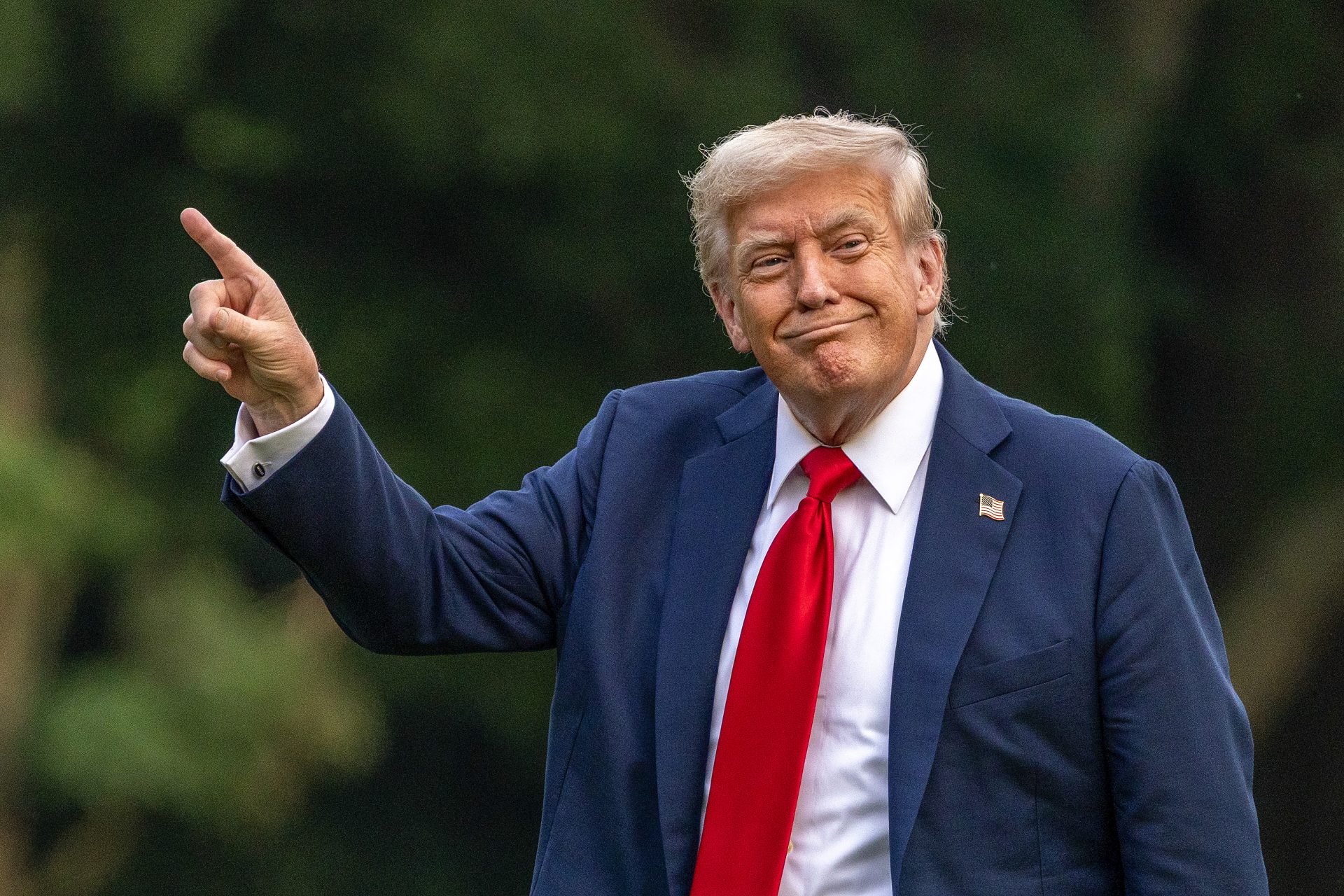
Trump sees an opportunity to advance his own agenda. Credit: Getty

Trump sees an opportunity to advance his own agenda. Credit: Getty

July 19 2025 - 5:00pm

Cryptocurrencies are having a moment. With Congress this week passing the Genius Act to regulate stablecoins, the door has now opened for institutional investors to rush into the crypto space. Accordingly, Bitcoin and other cryptocurrencies are soaring. This may not end well.

Since the turn of the millennium, the world economy has tripled in size. But the global money supply and stock market capitalization have each grown fivefold. This wasn’t accidental. After the dotcom crash and then the 2008 financial crisis, central banks adopted ultra-loose monetary stances and pumped far more money into the economy than its growth required. The reason given was that by lowering the cost of credit, they could stimulate investment and restart economies after the Great Recession.

That’s not how their many critics, on both the Left and the Right, saw things. In their view, this was nothing more than a thinly-veiled attempt to help bail out the bankers who caused the crash by inflating asset values through an age-old trick: currency debasement. As a sort of guerrilla assault on the system, Bitcoin was then born, created to hack this policy with a new form of money that, unlike that managed by central banks, had its supply fixed. That meant it could only rise in value.

Fast-forward to today, and Bitcoin is now worth nearly $120,000. It turned out to be the best investment early adopters could have ever made. Now Trump is rewarding them handsomely, with favorable policies and government patronage. His administration is also turning its attention to stablecoins — cryptocurrencies backed by assets like the US dollar, designed to be more reliable than purely digital tokens. The Genius Act (Guiding and Establishing National Innovation for US Stablecoins Act) brings these coins under regulatory oversight, enabling formal-sector institutions to trade in them legally and securely.

More than a mere payoff, though, Trump appears to see an opportunity to advance his own agenda. Specifically, he aims to undermine the Federal Reserve, whose monetary policy he wants to reverse. Because stablecoins are backed by US treasury paper, formalizing their use will encourage demand for bonds, which will help keep down interest rates. More broadly, regulations which allow crypto to be used as collateral for bank loans should boost the supply of credit, raising money supply even as the Fed tries to reduce it.

This boost in the money supply could turn into a bubble which eventually ends in a crash. Equally, it could produce the outcome that resulted from the Fed’s easy-money policy four years ago, a surge in inflation. Neither scenario ends well. Regardless, though, crypto will have made it to the inside — instead of exploiting currency debasement, it will henceforth help accelerate it. Although it will be a guaranteed path to riches until it isn’t, time may reveal its creation to have been one of the most effective guerrilla attacks ever — a sleeper cell planted in the financial system.


John Rapley is an author and academic who divides his time between London, Johannesburg and Ottawa. His books include Why Empires Fall: Rome, America and the Future of the West (with Peter Heather, Penguin, 2023) and Twilight of the Money Gods: Economics as a Religion (Simon & Schuster, 2017).

jarapley

China is threatening America in the AI race

Reports sugget Zhipu AI  has released a new model that can rival leading US systems. Credit: Getty

Reports sugget Zhipu AI has released a new model that can rival leading US systems. Credit: Getty

July 1 2026 - 10:18am

China is trying to catch up with America on artificial intelligence. The Wall Street Journal has reported that Zhipu AI — one of China’s six “AI tiger” LLMs — has released a new model that can rival leading US systems, including Anthropic’s Mythos, in cybersecurity tasks such as pinpointing security bugs. While this marks a milestone in China’s drive to catch up with Western AI capabilities, strong performance on a single benchmark does not mean it has taken the lead. Chinese models still lag behind their Western counterparts in broader capabilities, such as autonomous operation. Skepticism is therefore warranted before resorting to hysterical conclusions, but complacency about the geopolitical implications of China’s AI advances would be an even greater mistake.

On the infrastructure side, Chinese AI is still constrained by access to advanced chips, with American labs way ahead in computing capacity as well as investment. Analysis from earlier this year suggests that Chinese models are likely to be at least a few months behind those in the US. But they are still continuing to make progress, or that the geopolitical importance of AI will be decided only by whose LLM has ventured deeper into the technological frontier. The practical applications of AI, countries’ to capture foreign markets, and the application of AI into the real economy will matter just as much.

Here, China may hold an advantage. As with its dominance across many critical supply chains, Beijing may not need to produce the most advanced AI systems — only those that are affordable and widely deployable. In doing so, it could consolidate global influence by supplying functional, low-cost AI at scale.

Beijing seems to be pursuing exactly that path, developing an AI “open-source” strategy that offers affordable, widely available AI models for companies and individuals to use and modify as they wish. The production of the DeepSeek AI model, which matched the performance of Silicon Valley tools such as ChatGPT at a fraction of the cost for users, created goodwill among Chinese models with developers.

The four most popular models on OpenRouter, an AI hardware platform for developers, are now all Chinese. The goal for China is not only to win the frontier-model race, but to make its systems the default layer of AI adoption across industries and global markets. For most economies, the choice is increasingly between an affordable tool they can deploy now and a more robust one that may be out of reach.

And while the countries adopting Chinese models may be exposed to political pressure and cyber threats from Beijing, safer and more capable alternatives matter little if they are unaffordable. American AI companies are already under pressure to monetize products whose operating costs are rising. If Chinese open-source models become the cheap default for startups, universities, governments and businesses across the developing world, then America’s AI lead will be eroded from below.

Perhaps more concerning for America in the long run is how AI can give Chinese manufacturing even more strength, through the ongoing integration of AI as a general-purpose technology. China’s new Five-Year Plan mentioned AI more than 50 times and includes an “AI+” action plan aimed at spreading AI across the economy.

Beijing has been pioneering automation of its critical infrastructure for years, with promising recent results in increasing warplane production capacity. In that regard, China’s open-model strategy and manufacturing dominance will reinforce each other. Cheap, adaptable models accelerate deployment across the real economy while those deployments generate real-world data and use cases that can feed back into further model improvement.

The United States should not dismiss the importance of its lead in the AI race. That lead worries Beijing, not least because a more automated Chinese economy would also become more vulnerable to AI-generated cyber threats. But nor should Washington assume that China cannot catch up with American capabilities over time.

This AI competition represents part of a broader struggle over tech supply chains and geopolitical influence. Decisions over whether to adopt US or Chinese models could produce a more fragmented global reality, with different regions relying on different cloud providers, chips and security structures. The result will likely be a global economy which is divided into competing spheres, rather than one which produces a single winner.


Miquel Vila is a political and geopolitical risk consultant focusing on industrial strategy, critical infrastructure and global supply chains.

miquelvilam