




X Close

Trump’s fraud crackdown is an easy win

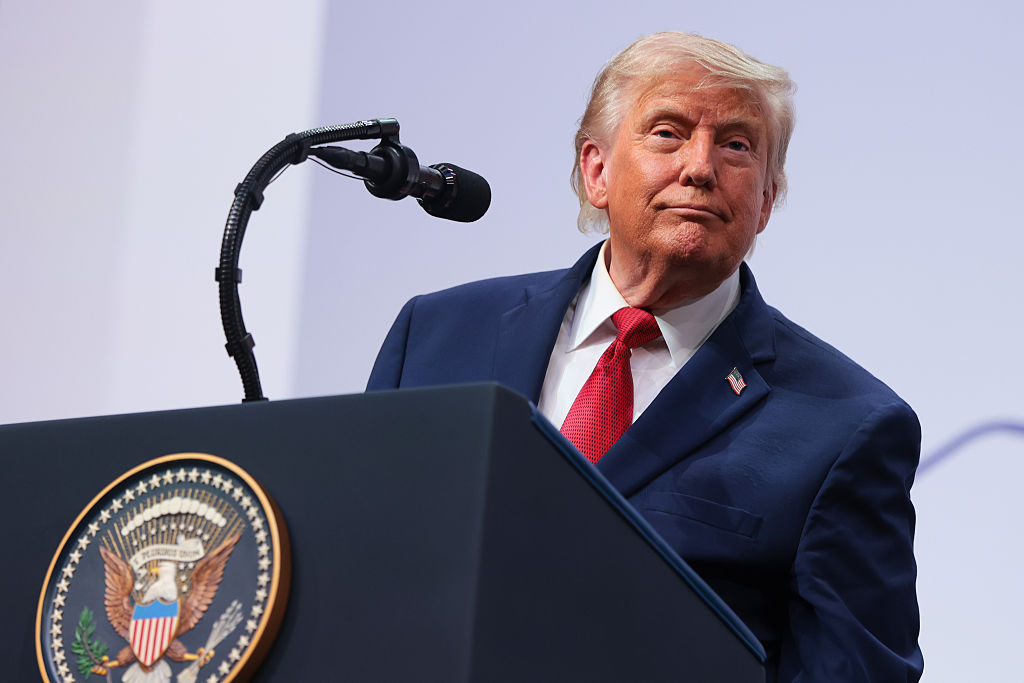
Trump’s fraud crackdown is a clear sign that he still understands American voters. Credit: Getty

Trump’s fraud crackdown is a clear sign that he still understands American voters. Credit: Getty

June 24 2026 - 7:31pm

Donald Trump’s “full-scale war on fraud” is the kind of low-hanging fruit that populists know how to pick. Yesterday, the Trump Justice Department charged 455 people, including 90 doctors, involved in fraud schemes totaling an alleged $6.5 billion. According to CNN, “The cases included fraudulent wound care claims, which resulted in $2 billion in Medicare payments to one Arizona company and another $906 million scheme in Texas.” The DOJ also zoomed in on alleged Medicaid fraud to the tune of $518 million in false claims.

The spirit of DOGE lives on, even as the task force slipped its mortal coil late last year. Nick Shirley’s viral video probe into Minneapolis-area fraud almost certainly inspired the administration to lean further into crackdowns. In Trump’s State of the Union address, months after Shirley’s video ripped through the national discourse, he appointed JD Vance “anti-fraud Czar”, raising eyebrows among some in the pundit class who speculated it could be a kiss of death.

Trump announced a Fraud Task Force helmed by Vance just three months ago. Only one month after that announcement, the task force said it “had identified nearly $6.3 billion in government contracts believed to be tied to potentially fraudulent businesses”.

The public relations opportunities for this success are endless. High-ranking Trump officials now hold press conferences in communities around the country — from Vance in Maine to Dr Oz in Los Angeles — getting favorable coverage in local outlets for taking on a cause with which no one can really argue. Some of the cases involve, for example, tragic deaths and opioid addiction. Others involve non-citizens, further allowing the administration to lean into more palatable elements of its illegal immigration crackdown.

For the MAHA movement helmed by Robert F. Kennedy Jr. and augmented by Oz, anti-fraud crackdowns also offer an easy win since so many of the investigations are focused on false claims filed to Medicare and Medicaid. Politically, it allows MAHA — and MAGA more broadly — to distinguish their movements from the unpopular status quo and the Washington swamp. They’re not tolerating business as usual, so the message goes. As sprawling and serious allegations of self-dealing wash over Trump, threatening his reputation as an enemy of elites, it’s easy to see why the White House is eagerly chasing these cases. Vance himself framed the issue this way in May.

In response, the Democrats have argued that Trump is targeting blue states — California and Minnesota feature heavily in the investigations. The average voter cares much less about that than the eye-popping figures in these charges. In context, the sums recouped seem to amount to a relatively minor fraction of the federal budget. But millions and billions are meaningful to people who work hard, pay taxes, and then see so many bad actors get away with predatory conduct.

During the Biden administration, a government report found “that between $233 billion and $521 billion in federal money could be lost annually to fraud in a first-of-its-kind government-wide estimate”, CNN reported. “That represents 3% to 7% of average federal obligations.”

Rather than surrender to the inevitable losses in a country as big as the US, Trump correctly sensed — as did Elon Musk in the DOGE era — a massive political opportunity. Trust in the federal government has declined since the Johnson administration, tanking from 77% at its 1964 high to 17% now. The low point in Pew’s data was 15% in 2011, after the Great Recession and the bitter Obamacare debate. But it’s barely recovered since.

Whether the task force is actually successful at making structural changes to these programs that clearly require them, and whether the efforts are conducted with great precision, the anti-fraud thrust is one area where Trump’s populist instincts remain sharp. As Democrats credibly accuse him of slashing the safety net and enriching his family, Trump’s administration can plant seeds of doubt about that narrative by touting efforts which strengthen safety net programs, prioritize vulnerable American citizens, and make the federal government feel less wasteful.

“Amazingly, Dumocrats are fighting us all the way,” Trump posted of the fraud crackdowns in early June. “This is something that I am surprised at, because I thought this would be a Bipartisan effort.” He knows the message is a strong one.


Emily Jashinsky is UnHerd‘s Washington correspondent.

emilyjashinsky

China is threatening America in the AI race

Reports sugget Zhipu AI  has released a new model that can rival leading US systems. Credit: Getty

Reports sugget Zhipu AI has released a new model that can rival leading US systems. Credit: Getty

July 1 2026 - 10:18am

China is trying to catch up with America on artificial intelligence. The Wall Street Journal has reported that Zhipu AI — one of China’s six “AI tiger” LLMs — has released a new model that can rival leading US systems, including Anthropic’s Mythos, in cybersecurity tasks such as pinpointing security bugs. While this marks a milestone in China’s drive to catch up with Western AI capabilities, strong performance on a single benchmark does not mean it has taken the lead. Chinese models still lag behind their Western counterparts in broader capabilities, such as autonomous operation. Skepticism is therefore warranted before resorting to hysterical conclusions, but complacency about the geopolitical implications of China’s AI advances would be an even greater mistake.

On the infrastructure side, Chinese AI is still constrained by access to advanced chips, with American labs way ahead in computing capacity as well as investment. Analysis from earlier this year suggests that Chinese models are likely to be at least a few months behind those in the US. But they are still continuing to make progress, or that the geopolitical importance of AI will be decided only by whose LLM has ventured deeper into the technological frontier. The practical applications of AI, countries’ to capture foreign markets, and the application of AI into the real economy will matter just as much.

Here, China may hold an advantage. As with its dominance across many critical supply chains, Beijing may not need to produce the most advanced AI systems — only those that are affordable and widely deployable. In doing so, it could consolidate global influence by supplying functional, low-cost AI at scale.

Beijing seems to be pursuing exactly that path, developing an AI “open-source” strategy that offers affordable, widely available AI models for companies and individuals to use and modify as they wish. The production of the DeepSeek AI model, which matched the performance of Silicon Valley tools such as ChatGPT at a fraction of the cost for users, created goodwill among Chinese models with developers.

The four most popular models on OpenRouter, an AI hardware platform for developers, are now all Chinese. The goal for China is not only to win the frontier-model race, but to make its systems the default layer of AI adoption across industries and global markets. For most economies, the choice is increasingly between an affordable tool they can deploy now and a more robust one that may be out of reach.

And while the countries adopting Chinese models may be exposed to political pressure and cyber threats from Beijing, safer and more capable alternatives matter little if they are unaffordable. American AI companies are already under pressure to monetize products whose operating costs are rising. If Chinese open-source models become the cheap default for startups, universities, governments and businesses across the developing world, then America’s AI lead will be eroded from below.

Perhaps more concerning for America in the long run is how AI can give Chinese manufacturing even more strength, through the ongoing integration of AI as a general-purpose technology. China’s new Five-Year Plan mentioned AI more than 50 times and includes an “AI+” action plan aimed at spreading AI across the economy.

Beijing has been pioneering automation of its critical infrastructure for years, with promising recent results in increasing warplane production capacity. In that regard, China’s open-model strategy and manufacturing dominance will reinforce each other. Cheap, adaptable models accelerate deployment across the real economy while those deployments generate real-world data and use cases that can feed back into further model improvement.

The United States should not dismiss the importance of its lead in the AI race. That lead worries Beijing, not least because a more automated Chinese economy would also become more vulnerable to AI-generated cyber threats. But nor should Washington assume that China cannot catch up with American capabilities over time.

This AI competition represents part of a broader struggle over tech supply chains and geopolitical influence. Decisions over whether to adopt US or Chinese models could produce a more fragmented global reality, with different regions relying on different cloud providers, chips and security structures. The result will likely be a global economy which is divided into competing spheres, rather than one which produces a single winner.


Miquel Vila is a political and geopolitical risk consultant focusing on industrial strategy, critical infrastructure and global supply chains.

miquelvilam