




X Close

New York primary results show Democrats’ far-Left pivot

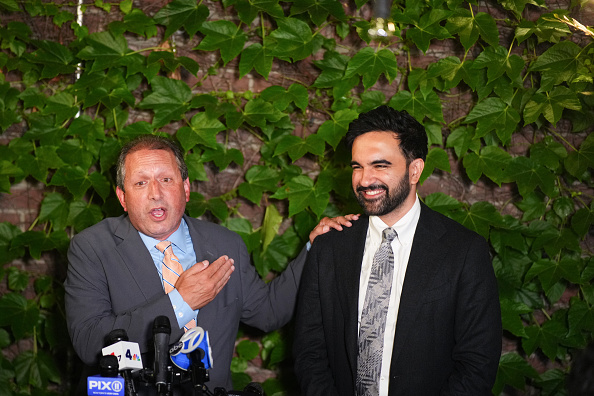
Mamdani-backed Brad Lander won in a landslide against Dan Goldman. Credit: Getty

Mamdani-backed Brad Lander won in a landslide against Dan Goldman. Credit: Getty

June 24 2026 - 11:30am

The remaking of the Democratic Party is well underway, as last night’s New York City primaries make clear. In three key races, Zohran Mamdani backed candidates who unseated progressive Democrats who, only a few years ago, would have been viewed as the Left flank of the party. In New York’s 10th district, Brad Lander ousted incumbent Dan Goldman in a landslide; in the 13th, Darializa Avila Chevalier narrowly beat incumbent Adriano Espaillat; and in the 7th, Claire Valdez beat out Antonio Reynoso.

While these results may be read as proof of the Democratic Socialists of America’s popularity, it remains to be seen whether such far-Left candidates could appeal to more moderate voters outside the major cities. Yet what they undoubtedly show is a burgeoning gap between mainstream Democrats and DSA-affiliated candidates.

In the winners of last night’s race, these beliefs are clear. Lander, Chevalier and Valdez all appeared in an advertisement with Zohran Mamdani during the New York Knicks’ playoff run, where they vowed to abolish ICE, “block billionaires from buying our elections”, and “stand up to bad landlords and greedy corporations”.

Lander, the subpar former comptroller who finished third in the mayoral race last November, became a Mamdani accomplice during the crowded election, frequently fawning over the Mayor. Lander made a name for himself by attacking Aipac and has been quick to refer to Israel’s campaign in Gaza as a genocide. His opponent in last night’s race, Goldman, refused to follow the party into its spiral of anti-Zionism, and has no hesitancy about condemning Hamas. At the same time, though, Goldman also urged President Biden to broker a ceasefire in 2024 and called attention to “the situation for the civilian population in Gaza [which] is dire and desperate”. But for the Democratic Socialists, even moderate condemnation, which considers both sides in the conflict, is anathema.

Chevalier, who is currently a PhD student who studies “how the US immigration system criminalizes Black immigrants from Latin America,” narrowly ousted Espaillat. The latter is the head of the Congressional Hispanic Caucus, who originally entered the US as an illegal immigrant, in a heavily Hispanic district. While Mamdani backed Chevalier, Espaillat had the support of House Minority Leader Hakeem Jeffries — certainly no moderate — and the Congressional Black Caucus. At one point, this may have been enough to have earned Espaillat support from the far Left, but clearly his views were not as radical as Chevalier’s.

While Lander holds his cards close to his chest, Chevalier touts her ideology proudly. In an interview before the election, Chevalier refused to agree that murderers should be sent to prison. A day after October 7, Chevalier attended an anti-Israel rally where protesters burned an Israeli flag in Times Square. She defended her actions as advocacy for “human dignity”. Chevalier has also come under fire for social media posts where she described using the American flag as a rag towel and admonished black and Arab men for “fetishizing ugly colonizer women”. On election day, Chevalier stormed off a popular Dominican radio show after being questioned for an old social media post where she described the Dominican flag as “violent”.

Finally, Valdez beat Antonio Reynoso, the former Brooklyn Borough President and the chosen successor to outgoing Congresswoman Nydia Velázquez. Despite Reynoso himself being a harsh critic of Israel, Valdez centered the race around support for the Middle Eastern country. After a pro-Reynoso ad aired by Real Fight NYC, Valdez said that the commercial was truly sponsored by Aipac because they “have created PACs with innocuous sounding names — and which never reveal their actual agenda — to funnel millions against anti-apartheid candidates”. In reality, Real Fight NYC was connected to the American Federation of Teachers, not Aipac. Valdez, for her part, was bankrolled by her own super PACs and had to embarrassingly rescind her claim of total independence. On policy, Valdez advocates for the seizure of private property for “public or community ownership” and also supports expanding public labor unions, among a swath of other Leftist policies.

The New Democrat position was best summed up by Mamdani ally Brian Romero at a Brooklyn campaign rally: “Abolish ICE, Free Palestine and tax the motherfucking rich!” Last night’s results are telling of the future direction of New York politics. Democrats are increasingly standing far-Left candidates that are even more radical in their beliefs and policy proposals than progressives. Given the popularity of Zohran Mamdani nationwide, it is reasonable to believe that these candidates who performed so strongly last night may be a bellwether for where the Democrats are moving ideologically.

Josh Appel is a policy analyst at the Manhattan Institute.


China is threatening America in the AI race

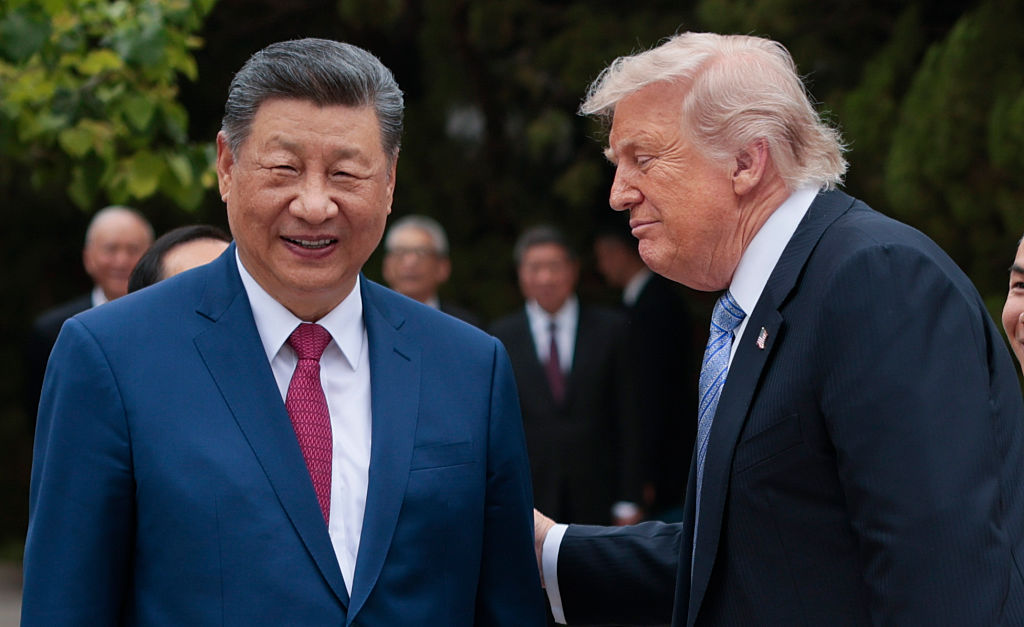
Reports sugget Zhipu AI  has released a new model that can rival leading US systems. Credit: Getty

Reports sugget Zhipu AI has released a new model that can rival leading US systems. Credit: Getty

July 1 2026 - 10:18am

China is trying to catch up with America on artificial intelligence. The Wall Street Journal has reported that Zhipu AI — one of China’s six “AI tiger” LLMs — has released a new model that can rival leading US systems, including Anthropic’s Mythos, in cybersecurity tasks such as pinpointing security bugs. While this marks a milestone in China’s drive to catch up with Western AI capabilities, strong performance on a single benchmark does not mean it has taken the lead. Chinese models still lag behind their Western counterparts in broader capabilities, such as autonomous operation. Skepticism is therefore warranted before resorting to hysterical conclusions, but complacency about the geopolitical implications of China’s AI advances would be an even greater mistake.

On the infrastructure side, Chinese AI is still constrained by access to advanced chips, with American labs way ahead in computing capacity as well as investment. Analysis from earlier this year suggests that Chinese models are likely to be at least a few months behind those in the US. But they are still continuing to make progress, or that the geopolitical importance of AI will be decided only by whose LLM has ventured deeper into the technological frontier. The practical applications of AI, countries’ to capture foreign markets, and the application of AI into the real economy will matter just as much.

Here, China may hold an advantage. As with its dominance across many critical supply chains, Beijing may not need to produce the most advanced AI systems — only those that are affordable and widely deployable. In doing so, it could consolidate global influence by supplying functional, low-cost AI at scale.

Beijing seems to be pursuing exactly that path, developing an AI “open-source” strategy that offers affordable, widely available AI models for companies and individuals to use and modify as they wish. The production of the DeepSeek AI model, which matched the performance of Silicon Valley tools such as ChatGPT at a fraction of the cost for users, created goodwill among Chinese models with developers.

The four most popular models on OpenRouter, an AI hardware platform for developers, are now all Chinese. The goal for China is not only to win the frontier-model race, but to make its systems the default layer of AI adoption across industries and global markets. For most economies, the choice is increasingly between an affordable tool they can deploy now and a more robust one that may be out of reach.

And while the countries adopting Chinese models may be exposed to political pressure and cyber threats from Beijing, safer and more capable alternatives matter little if they are unaffordable. American AI companies are already under pressure to monetize products whose operating costs are rising. If Chinese open-source models become the cheap default for startups, universities, governments and businesses across the developing world, then America’s AI lead will be eroded from below.

Perhaps more concerning for America in the long run is how AI can give Chinese manufacturing even more strength, through the ongoing integration of AI as a general-purpose technology. China’s new Five-Year Plan mentioned AI more than 50 times and includes an “AI+” action plan aimed at spreading AI across the economy.

Beijing has been pioneering automation of its critical infrastructure for years, with promising recent results in increasing warplane production capacity. In that regard, China’s open-model strategy and manufacturing dominance will reinforce each other. Cheap, adaptable models accelerate deployment across the real economy while those deployments generate real-world data and use cases that can feed back into further model improvement.

The United States should not dismiss the importance of its lead in the AI race. That lead worries Beijing, not least because a more automated Chinese economy would also become more vulnerable to AI-generated cyber threats. But nor should Washington assume that China cannot catch up with American capabilities over time.

This AI competition represents part of a broader struggle over tech supply chains and geopolitical influence. Decisions over whether to adopt US or Chinese models could produce a more fragmented global reality, with different regions relying on different cloud providers, chips and security structures. The result will likely be a global economy which is divided into competing spheres, rather than one which produces a single winner.


Miquel Vila is a political and geopolitical risk consultant focusing on industrial strategy, critical infrastructure and global supply chains.

miquelvilam