








January 28 2025 - 6:45pm
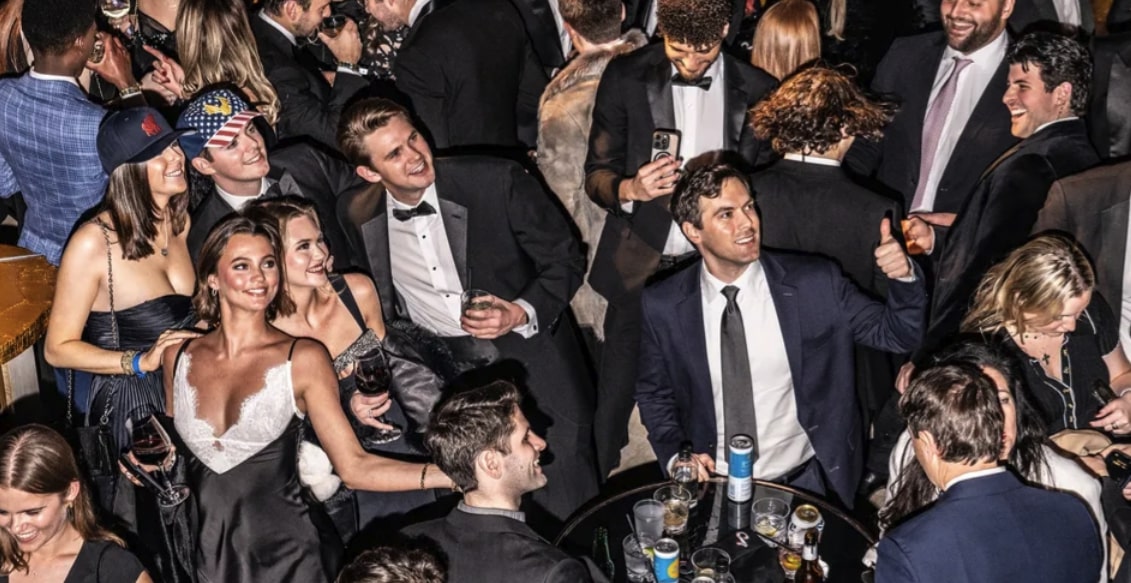
What began as investments by the likes of Peter Thiel in “anti-woke” art festivals and alternative media has evolved into a full-throated youth movement. As this week’s New York magazine cover story explores, this trend has particularly taken off among a subsection of educated urbanites who view progressive orthodoxy as the new establishment to rebel against. The scene today, housed in glamorous DC spots, marks a cultural shift every bit as significant as the transition from Sixties counterculture to Eighties yuppie excess.
As the New York dispatch, written by Brock Colyar, argues, these aren’t the stereotypical MAGA warriors of liberal imagination. They’re young, well-connected, and very online — crypto nerds, influencer e-girls, and what Colyar calls “gays of all stripes”. Many come from liberal backgrounds, including former Bernie Sanders supporters and Joe Biden voters who now see themselves as cultural rebels. They refer to themselves not as Republicans but as members of “the movement”.
Just as Wall Street’s “greed is good” ethos eventually displaced and mocked the earnest idealism of the hippie and New Age generations which preceded it, today’s young Right has learned to wield irony like a weapon, turning woke-scold pieties into punchlines. The old Left-winger went from being a moral authority to a figure of mockery in less than a decade, and today’s progressive activists are headed for a similar fate.
The money men behind this cultural shift understand exactly what they’re doing. An investment in making “anti-woke” attitudes fashionable, like investments in attacking critical race theory or steering kids away from college, has helped disconnect the next generation from ossified power structures saturated with progressive rhetoric. When Thiel bankrolled early experiments such as the New People’s Cinema Club in 2022, he wasn’t just funding art — he was seeding a movement.
The strategy has worked. When one partygoer tells New York that she’s excited about “rounding up illegals”, the laughter conceals a truth that many progressives find hard to swallow. Recent polling shows 66% of Americans now support deporting illegal immigrants, including shocking numbers of young urban voters who would have rushed to cancel each other for supporting such policies a few years ago. The late conservative tastemaker Andrew Breitbart knew the score: first you change how people talk, then you change how they think, then you change how they vote. Arynne Wexler, a conservative influencer with over a quarter of a million Instagram followers who is quoted in the New York story, has little trouble echoing Breitbart: “Culture is upstream of politics.”
What makes this moment different from previous attempts at conservative cool is that it has authentic cultural credibility. “You can be urban, live in a condo, go to Casa Cipriani, and still be normal and vote for Donald Trump,” according to one partygoer in the New York article. Even institutions that were once reliable bastions of progressivism are adapting. TikTok, long viewed as a Gen-Z liberal stronghold until Donald Trump became an unlikely champion of its continued existence, recently became an official sponsor of conservative influencer events. The platform’s shift mirrors broader changes in youth culture, where transgression against progressive orthodoxy has become its own social currency.
The Left seems to have been caught flat-footed by all this, still operating on an outdated playbook where conservative automatically equals cringe. While Democrats chase celebrity endorsements from ubiquitous but hardly transgressive stars like Taylor Swift and Beyoncé, the Right has built an entire ecosystem of podcasters, artists, and tastemakers who make rebellion against progressivism feel thrilling and new. As one conservative publicist told New York: “MAGA is MTV for Gen Z […] Meanwhile, Democrats sound like ’80s Republicans protesting rap songs.” As with all trends, the tide comes in then goes out.
Of course, this whole scene could implode tomorrow. Movements built on irony and transgression have a way of eating themselves. While the Right’s long-term investment in culture is paying unexpected dividends, the real question is what happens next. What’s particularly striking in New York‘s reporting is how these new conservative influencers relate to Trump himself. He’s their Beyoncé, not their Reagan: more aging cultural icon than avant-garde messiah. Whether you find all of this thrilling or terrifying probably depends on your politics. Either way, it’s working.
The transformation of American culture in the Eighties showed how quickly seemingly permanent social changes can be reversed when the right combination of money, media, and generational ennui align. Today’s young Right-wingers appear to have not just studied that playbook carefully, but iterated and improved on it. They’re doing something more important than winning elections — they’re winning the culture war by making their opponents look like the establishment squares the Left once mocked. What’s more, they’re discarding the old trappings of this decaying worldview, like DEI programs, even as they keep the party going.
Oliver Bateman is a historian and journalist based in Pittsburgh. He blogs, vlogs, and podcasts at his Substack, Oliver Bateman Does the Work
 MoustacheClubUS